
 E-Paper



‘3 billion hours of Indian content watched globally on Netflix alone last year’
Ted Sarandos of Netflix highlighted the success of local stories, noting 3 billion hours of Indian content viewed globally last year, urging authenticity in filmmaking.

 Prefer HTon Google


MUMBAI: Ted Sarandos, co-chief executive officer of Netflix, said that stories which are more local get the maximum response, as the viewers want to watch something new. He said that Indian content was receiving an encouraging response, as around 3 billion hours of Indian content was watched around the world on Netflix alone last year. Sarandos made the revelation in a chat with Bollywood actor Saif Ali Khan at the World Audio Visual and Entertainment Summit (WAVES 2025) event going on at the Jio World Convention Centre in Mumbai.
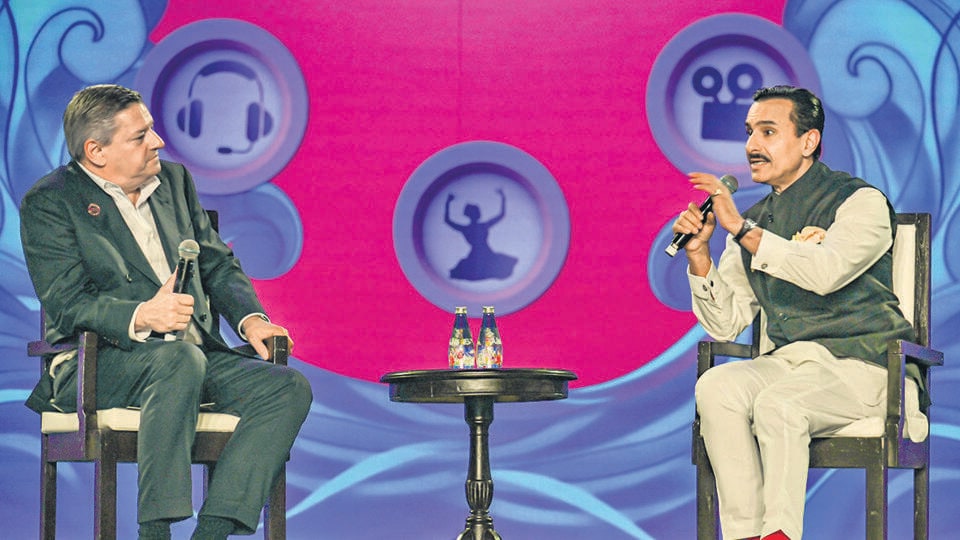
Replying to questions based on the topic ‘Streamlining the New India: Culture, Creativity & Creative Capital’, Sarandos advised Indian filmmakers to not attempt reverse engineering based on their supposition of what a ‘global’ movie is supposed to look like.
“I think the most interesting thing is that if you try to engineer something to be global, you are making it for nobody,” he said. “The content that has proven to be the most global and watched the most outside of its country of origin has been content that is the most locally authentic.” Sarandos was responding to a question by Saif Ali Khan who asked it on behalf of Indian creators who aim for their content to be taken globally.
“People won’t recognise the world you’ve created but they will recognise the thing that is local to them,” said Sarandos. Citing Alfonso Cuaron’s 2018 Oscar winner ‘Roma’, he said that when the renowned Mexican filmmaker asked him if he could come and present the film in India, he did not know whether Indian audiences were going to like it. “And then when it was released in India, the shows were sold out,” said Sarandos. “People loved it so much that it got a standing ovation. Not because there was an Indian person in the cast, but because it was a story about fairness. It was a story about class, which was quite recognisable to Indian people.”
The Netflix co-CEO further said that their production in storytelling in India was incredibly impactful. After COVID-19, when things got back to normal, they invested in India in a way that created $2 billion of economic impact from productions which had 20,000 cast and crew jobs.
“Last year, around three billion hours of Indian content was watched on Netflix around the world, which is about 60 million hours a week,” he revealed. “So every week of last year, there was a title from India in the Global Top Ten. In productions, Netflix has done 150 original films and web series. We have filmed in 90 different cities around India.”
Commenting on online streaming, Saif Ali Khan said that for artists, streaming was like a massive creative playground with no school bell. “It is a creative revolution and speaking of revolutionary steps, streaming has been a true disruptor,” he said. “The pace, the access and the reach are mind-blowing.”
Sarandos also stressed that cinema theatres and online streaming could co-exist. “People just want to see movies,” he said. “I do think they can coexist in the same way they already do. With streaming in place, you can deliver movies that are very obscure. It isn’t all one kind of big movie for the world. It’s what kind of movies you like and you can pick those. So that’s the opportunity.”


Stay updated with all the Breaking News and Latest News from Mumbai. Click here for comprehensive coverage of top Cities including Bengaluru, Delhi, Hyderabad, and more across India along with Stay informed on the latest happenings in World News.


