
 E-Paper



Ad regulation must keep up with new media architecture
A television in the living room was traditionally considered a family screen. A mobile phone was considered a personal screen. Streaming has completely blurred that distinction, Anand said. And increasingly so, given the recent rise in connected TV homes equipped for streaming which is driving OTT platforms like Netflix, Prime Video and others to launch more content for family viewing

 Prefer HTon Google


MUMBAI: During last fortnight’s India versus New Zealand cricket match, a condom brand ran several ads on over-the-top (OTT) video streaming service Sony LIV in the day, sparking a debate on whether these should have been carried given that families with young children were watching the game together. A brand consultant pointed out that in 2017 the Information and Broadcasting ministry had barred suggestive condom ads on television before 10 pm.
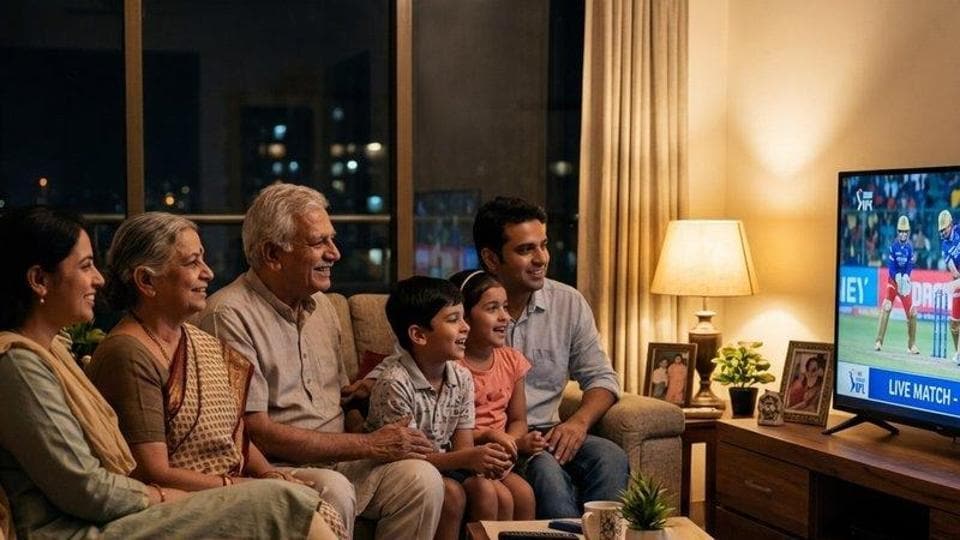
Although the rule has been applicable for TV, times have changed since then, and streaming has become widespread. Live sports is watched not just on satellite TV but by millions on apps like Sony LIV and JioHotstar, often together on inter-enabled smart TVs also called a connected TV (CTV).
Manisha Kapoor, CEO and secretary general of advertising industry’s regulatory body, the Advertising Standards Council of India (ASCI), said that for condom advertising, the ministry of information & broadcasting, through Rules 7(7) and 7(8) of the Cable Television Networks Rules (1994), has said that TV channels can air condom advertisements considered inappropriate or indecent for children only between 10 pm and 6 am.
“It is important to note that only inappropriate or indecent ads of the category are subject to this rule, and that there is no blanket prohibition on condom advertising outside these hours. However, given the cultural context in India, consumers tend to feel uncomfortable viewing ads of this category with family and children, even if they are not explicit,” she said.
Also, ads on streaming services are not directly governed by the Advertising Code laid down by the Cable TV & Network Act, she said. But consumers do not necessarily distinguish between a live sporting event watched on linear TV and the same event streamed on a connected TV, and in many cases sporting events are watched together as a family, she added.
Ujjwal Anand, managing partner, Dentsu Creative Webchutney, said the regulatory treatment of traditional TV and streaming may be different, but the principles of responsible advertising should not change simply because the screen changes. “A screen is no longer a reliable indicator of the audience watching it,” he said.
A television in the living room was traditionally considered a family screen. A mobile phone was considered a personal screen. Streaming has completely blurred that distinction, Anand said. And increasingly so, given the recent rise in connected TV homes equipped for streaming which is driving OTT platforms like Netflix, Prime Video and others to launch more content for family viewing.
The Ormax Media OTT Audience Report 2026 pegged India’s digital video universe at 664.9 million users that grew 11% over last year. But connected TV audiences grew a steep 60% over the same period to touch 206.9 million. The bulk of the audience growth came from streaming apps.
Streaming is no longer synonymous with private, individual viewing, said ASCI’s Kapoor. “Increasingly, the same content is being watched together on connected TVs in family environments. Advertising safeguards, therefore, need to take account of who is likely to see an advertisement, not simply which technology delivers it,” she said.
The ecosystem-wide framing is consistent with ASCI’s existing position that prevention requires stronger pre-publication checks, responsible marketing and greater platform accountability, with brands, agencies, platforms and the wider advertising ecosystem all having roles to play, Kapoor noted. In fact, in digital media, “the ability to target and distribute advertising more precisely should ideally translate into greater responsibility, not a lower threshold of care,” she added.
Dentsu’s Anand said advertising condoms should not automatically be treated as something embarrassing or unsuitable for society, as they are an important part of responsible sexual health, contraception and disease prevention. Ads done tastefully should be treated differently from the overtly suggestive or provocative creatives, he said.
“Streaming platforms should be able to apply contextual advertising filters, particularly around live sports and other high family viewership environments. Where technology permits, users should have better control over categories of advertising they wish to restrict on shared devices,” Anand said.
The regulatory and self-regulatory ecosystem needs to keep evolving with shifts in viewing behaviour, Manisha Kapoor said. This does not necessarily mean replicating every TV rule on digital platforms, she said. “Digital media has different capabilities, including audience targeting and age-related controls, which should be part of the solution. But where advertising is likely to reach children or family audiences, regulators, platforms, advertisers and self-regulatory bodies should continuously examine whether the existing safeguards remain adequate,” Kapoor said. ASCI’s own monitoring shows that advertising activity and compliance challenges have shifted online. In the financial year 2025-26, 97.3% of advertisements scrutinised by ASCI appeared on digital media.
But creating a separate rulebook for every new platform would be an administrative nightmare, Anand said. He suggested a move from time-based regulation to context-based regulation. For instance, a 4 pm cricket match, a late-night comedy show and an adult-oriented programme are three very different viewing environments. The suitability of an advertisement should take the nature of the content and its likely audience into account, he said.
Secondly, traditional television never had access to tools that streaming has, like audience segmentation, contextual targeting, household profiles and ad-serving controls. “These should be used more intelligently to prevent inappropriate creative from appearing in environments with a significant child audience,” he said. Thirdly, platforms selling the inventory should also be made accountable for the advertising experience they create.
Countries like the UK and Australia stand out for global best practices in advertising codes. The UK is known for different codes and common responsibility and Australia for stronger industry codes and public accountability, Anand said. “What is particularly relevant is the UK’s updated guidance on age-restricted online advertising, which asks advertisers to make responsible use of available targeting tools and avoid exposing protected age groups to inappropriate advertising,” he said.
At ASCI, proactive, suo motu monitoring is an important part of its consumer-protection framework. In 2025-26, 93% of the advertisements scrutinised came through proactive monitoring, mostly through ASCI’s internal digital-ad monitoring system, while 7% related to external complaints. In the digital ecosystem this matters a lot because the scale, speed and fragmentation of advertising make a purely complaints-led model inadequate, Kapoor said. ASCI’s objective is to move the ecosystem from reactive compliance to preventive responsibility, Kapoor said.
The more mature systems demonstrate three useful principles: clear separation of broadcast and digital rules, audience protection through scheduling and targeting, and transparent mechanisms for complaints and enforcement, Anand said.

Stay updated with all the Breaking News and Latest News from Mumbai. Click here for comprehensive coverage of top Cities including Bengaluru, Delhi, Hyderabad, and more across India along with Stay informed on the latest happenings in World News.


