
 E-Paper



Backroom strategies that worked
As the agitation took a violent turn three days after Jarange-Patil went on hunger strike a second time, Shinde and Fadnavis held an all-party meeting and succeeded in isolating Jarange-Patil over the demand that all Marathas should be given Kunbi certificates


The ruling alliance, especially Chief Minister Eknath Shinde-led Shiv Sena, has heaved a sigh of relief with the withdrawal of hunger strike by Maratha reservation activist Manoj Jarange-Patil. Much to the surprise of many, Jarange-Patil climbed down from his demand that all Marathas across Maharashtra be given benefits of reservation by including them in the Other Backward Classes (OBC) category by considering them as Kunbis, a sub caste of Marathas. He has now accepted the state’s offer of Kunbi certificates to those Marathas who can show documents where they were originally mentioned as Kunbis in government records before Independence. This number won’t be significant, which helps the government as the move is unlikely to invite strong objection from the OBC community.
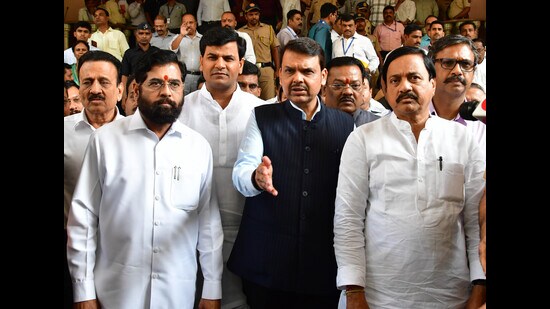
So how was the peace brokered? It now emerges that the entire episode was handled by chief minister Eknath Shinde and deputy chief minister Devendra Fadnavis.
As the agitation took a violent turn three days after Jarange-Patil went on hunger strike a second time, Shinde and Fadnavis held an all-party meeting and succeeded in isolating Jarange-Patil over the demand that all Marathas should be given Kunbi certificates. With the Opposition too agreeing that the OBC quota should not be touched for Marathas, the government got a boost.
Meanwhile, backchannel communication with the activist was already opened by Shinde through a source. He then established direct communication with Jarange-Patil. He was helped by legislator Bachchu Kadu who camped at Antarvali Sarati village for two days and tried to convince Jarange-Patil that his demand for blanket reservation for all Marathas in OBC category would not stand the scrutiny of the courts.
With the signs that Jarange-Patil was willing to talk, a negotiation team was set up. Fadnavis used his skills to convince two retired high court judges, M G Gaikwad and Sunil Shukre to join the negotiation team. The words of Gaikwad carries weight. He headed the state backward class commission and had submitted a report that enabled the Fadnavis-led government to provide reservation for Marathas earlier. The presence of these two judges, who are well versed with the law, helped convince the activist.
Although the activist has called off his strike for now, Shinde’s problems are not over yet. The Cm has to deliver on the promises made to Jarange-Patil. The main issue of Maratha reservation is far from resolved and Jarange-Patil has decided to tour the state during the two months he has given the government to take decisions.
Significantly, the other deputy chief minister - Ajit Pawar - was absent during the entire exercise, both in September when Jarange-Patil first sat on hunger strike and now as he was down with dengue. But Shinde is not complaining.
Attempt to remove Patole fails
An attempt of the Maratha leaders in the Congress to remove Nana Patole as state Congress president seems to have fizzled out. According to a source, the Maratha leaders in the state have been given a clear indication that Patole won’t be removed. This is in line with Congress’s push for Other Backward Classes (OBC) leadership across India. Patole comes from Kunbi caste, a large section of which supported Congress in Vidarbha in the last elections. In Maharashtra, the Congress is harping on two factors, OBC and Vidarbha. That is why two top leaders of the party, state Congress chief and Opposition leader in the assembly are both OBCs from Vidarbha region. This has made the Maratha leaders unhappy but the fact remains that the party has more hopes from these two factors. Besides, several partymen think Patole is openly taking on BJP which most Congress leaders in the state are avoiding. They are wary of action by central agencies against them.
No winter vacations for Speaker’s office
This year, assembly Speaker Rahul Narwekar and his staff will probably miss out on the year-end vacation. Following Supreme Court’s directives that hearing on disqualification petitions against chief minister Eknath Shinde and his MLAs should be completed and decision be taken by December 31, Narwekar’s office is working overtime. There were 39 petitions filed by two rival factions which are now clubbed into six but still the entire process and the related paperwork will take a significant amount of time, say officials from Speaker’s office. To add to their woes, the winter session of the state legislature will begin in Nagpur from December 7. Its duration is expected to be at least a fortnight which will also keep Narwekar and his staff busy. It’s going to be a frenetic December for them. And even the first month of 2024 could be the same. Narwekar will have to complete the hearing on disqualification petition filed by rival factions of the Nationalist Congress Party and deliver his order by January 31.


Stay updated with all the Breaking News and Latest News from Mumbai. Click here for comprehensive coverage of top Cities including Bengaluru, Delhi, Hyderabad, and more across India along with Stay informed on the latest happenings in World News.


