
 E-Paper



HC junks pleas questioning Bhendi Bazar redevelopment
MUMBAI: The Bombay High Court on Friday dismissed two petitions challenging the legal validity of a regulation under the Development Control and Promotion Regulations 2034 (DCPR) under which the Bhendi Bazar cluster development scheme was executed by the Saifee Burhani Upliftment Trust (SBUT)

 Prefer HTon Google


MUMBAI: The Bombay High Court on Friday dismissed two petitions challenging the legal validity of a regulation under the Development Control and Promotion Regulations 2034 (DCPR) under which the Bhendi Bazar cluster development scheme was executed by the Saifee Burhani Upliftment Trust (SBUT).
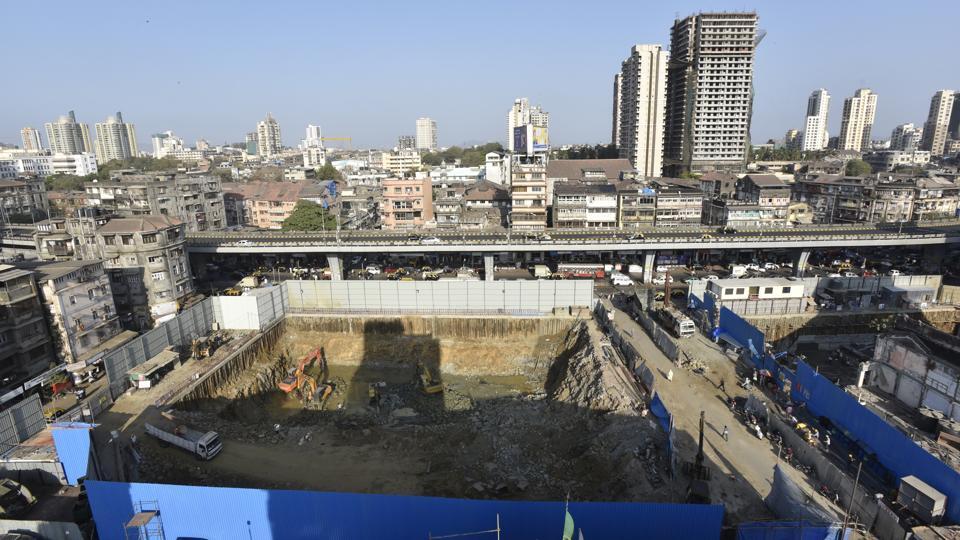
The petitioners, themselves beneficiaries of the scheme executed on 66,264.72 sq m land, had urged the court to quash the orders under which their land was acquired in 2019, and the 2020 notice for taking possession of their property. A division bench of Justices MS Karnik and Shreeram Shirsat turned down the petitions, saying they were “wholly misdirected” and “based on a misunderstanding of the concept of public purpose”.
The petitioners were the minority opposed to the cluster scheme and former residents of the Lucky building that was already demolished in the course of the redevelopment project. They had argued that since the land on which the Bhendi Bazaar redevelopment is being carried out was not designated or reserved in the development plan for a “public purpose”, its acquisition was beyond the provisions of the Maharashtra Regional Town Planning Act (MRTP). They said the project was being carried out by SBUT, a private entity, and thus, no “public purpose” was being served.
The petitioners argued that under the MRTP Act, land could be acquired only for the planning authority and not for a developer like SBUT. They emphasised that the concept of the cluster development scheme was not envisaged in the MRTP Act and yet, under the subordinate legislation of DCPR, substantive rights had been created for SBUT and the scheme was being foisted on the petitioners.
Advocate-general Milind Sathe, however, argued that in such a situation, where congested residential and commercial areas are required to be redeveloped as part of the Urban Renewal Scheme (URS), if the conditions under the Development Control Regulations (DCR) are met, it would certainly be a “public purpose”. Just because the cluster development was being executed by SBUT, it did not mean the planning authority had abdicated its role, Sathe said.
While the petitioner said their building had not been declared dilapidated or dangerous before it was acquired, the state government said it was a category ‘A’ cessed building over a 100 years old and need not have been declared dilapidated separately.
Representing the SBUT, senior counsel Birendra Saraf told the court that the non-consenting landowners to the cluster scheme, including the petitioners, were about 7%. He said the petitioners were aware of the scheme since 2011 and yet they chose to file the petition in 2021, after the compensation award for the land had been passed and they had sought its enhancement.
The judges said the petitioners had stressed on “public purpose” under the DCPR regulation but their arguments were “based on a complete misunderstanding of the manner in which urban renewal schemes operate”.
The public character of such a URS is not diluted because it is implemented with the assistance of a promoter or developer, the judges said. The cluster scheme benefits the public at large “as those living in congested areas in almost subhuman conditions are given tenements of larger size, with excellent common facilities, including broad roads, proper drainage and other such facilities, which contributes towards better living conditions,” the court observed.
While the petitioners were opposed to the scheme, an overwhelming majority of residents had supported it. “It is settled law that private interest must give way to larger public interest and public good. In any case, it is not as if the property of the petitioners has been taken away without compensation,” the court observed.
Stay updated with all the Breaking News and Latest News from Mumbai. Click here for comprehensive coverage of top Cities including Bengaluru, Delhi, Hyderabad, and more across India along with Stay informed on the latest happenings in World News.


