
 E-Paper





Leena Raghunath Baliga (byline: Linah Baliga) is Associate Editor with nearly two decades of experience in journalism,and has earlier worked with TOI, DNA and Mumbai Mirror specialising in civic affairs, urban governance and political reporting. Based in Mumbai, she has looked into the functioning of civic administration, public policy and governance, with a particular focus on the Brihanmumbai Municipal Corporation (BMC), urban infrastructure, housing, redevelopment and city planning. Over the years, she has consistently reported on issues that directly impact citizens, including municipal administration, public health, BEST, environmental concerns, major infrastructure projects and state government policies affecting urban development. Her reporting combines on-ground reporting, making complex civic and governance issues accessible to readers while ensuring accountability in civic administration. She has extensively covered political developments that shape urban policy. Her work has also focused on redevelopment policies, affordable housing and the implementation of major infrastructure projects across Mumbai.She continues to chronicle the evolving and changing landscape of Asia's richest municipal corporation. When she isn't chasing stories or poring over civic documents, she enjoys dabbling in art and unwinding with music. An avid rock 'n' roll enthusiast, she has an anachronistic taste in music, with a playlist that happily skips across decades, filled with timeless classics.
How citizens, architects kept Mahalaxmi Racecourse makeover above ground
The underground component of the wider makeover of the racecourse was scrapped thanks to a sustained campaign by the Mumbai Architects Collective (MAC), a group of city-based architects and urban planners


MUMBAI: It’s being seen as a major win for urban planning in Mumbai – the BMC’s decision to walk back its plan to excavate under the historic Mahalaxmi Racecourse, one of Mumbai’s last large open spaces, to create world-class sports facilities, an entertainment hub and a massive parking lot. “Every Olympic sport you can think of will be represented here,” Hafeez Contractor, the architect of the plan, had said. Urban planners and a group of architects said it would be a colossal mistake.
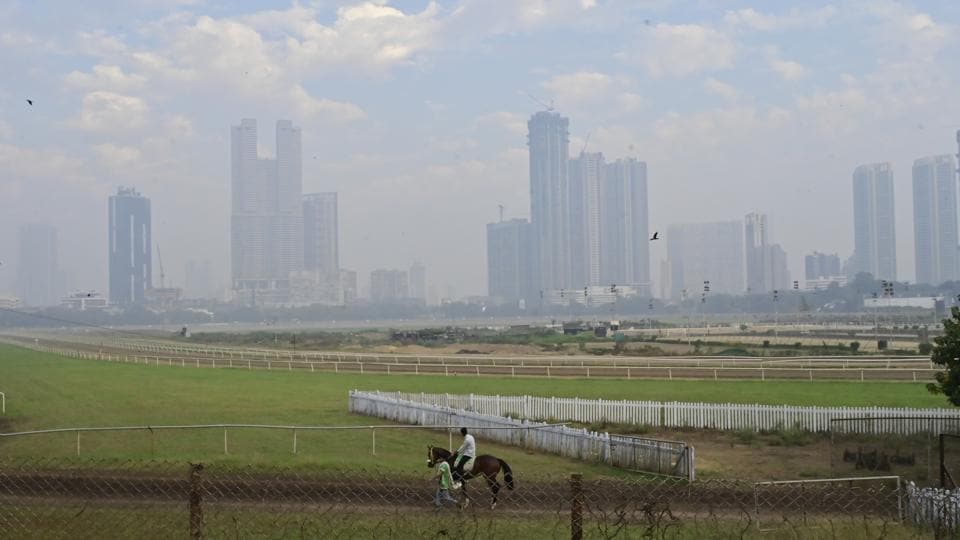
The underground component of the wider makeover of the racecourse was scrapped thanks to a sustained campaign by the Mumbai Architects Collective (MAC), a group of city-based architects and urban planners. They argued that, every monsoon, the racecourse transforms into a temporary lake, holding rainwater and allowing it to percolate into the ground. This natural flood-buffering function would be destroyed by underground construction, impacting areas beyond the surrounding neighbourhoods.
After nearly over a year’s sustained campaign by the MAC, municipal commissioner Ashwini Bhide scrapped the underground plan for the racecourse makeover. She also agreed to the collective’s demand to preserve the 120 acres as an open green space without elaborate landscaping as originally planned.
“We know that the racecourse is low-lying and that during the monsoon, a temporary lake forms there. Fish and migratory birds visit the area, and it becomes a huge holding pond for the city. Almost half the central area goes under water and the water percolates. If you concrete the area underneath, it would be a disaster and also lead to groundwater depletion,” said Rahul Kadri, partner and principal architect of IM Kadri Architects and a member of MAC.
Kadri said the BMC should now focus on improving the ground’s existing use as a democratic public space, where thousands of children play cricket and football and attend various classes, without excluding people from poorer neighbourhoods.
Architect P K Das of PK Das and Associates, said, “We are very clear about what our city should be in the future, particularly given the climate change crisis and the need to make cities people-centric and sustainable. With architects involved, there is an alternative vision to what is being thrust upon the city,” he said.
The campaign began on January 30, 2023, when MAC wrote to the chief minister and the municipal commissioner, making a case for converting the Mahalaxmi Racecourse into a centrally located public park. Pointing out that Mumbai had barely 1.1 sq m of open space per person against the World Health Organization’s recommended 9 sq m, the collective argued that the racecourse offered a rare opportunity to create a large, accessible green lung in the heart of the city.
MAC renewed its appeal on September 24, 2024, stressing that all public open spaces in Mumbai must remain accessible to citizens in perpetuity and under public control.
However, in August 2025, HT reported that the BMC was exploring the possibility of developing a world-class sports hub and a parking lot for 5,000 cars beneath the racecourse. The plan included a ravine-based water management system that would circle the racecourse. Then municipal commissioner Bhushan Gagrani said that while the racecourse itself would not be disturbed, the civic body was exploring the possibility of using two-level basement space for sports, entertainment and parking facilities.
Concerned that the underground development would permanently alter the character and ecological functions of the ground, MAC wrote to the chief minister and municipal commissioner again, opposing the proposal. The letter was written on February 19, 2026.
Architect Samarth Das of PK Das and Associates said MAC had initially come together to collectively voice its concerns over the Coastal Road gardens, managing to bring around 110 architects on board to petition the authorities. Following HT’s report on the proposed racecourse development, the collective began examining the two projects as an integrated landscape, including their subway connections and links with Metro Line 3.
“The first concern was that these projects should not be looked at merely in terms of developing large tracts of land, but through their ecological performance. We focused on storm water management and flood-risk prevention rather than beautification,” he said.
Das said underground construction would add pressure on Mumbai’s already strained storm-water drainage systems, particularly given the racecourse’s proximity to the sea and the impact of high tides on drainage.
“The racecourse is a large holding ground during storms and heavy rain surges. We cannot replace that land area with mechanical or physical systems. The park should be open and accessible to everyone, with less focus on beautification and greater emphasis on ecology,” he said.
Das said that while the vision of a 120-acre central park in the racecourse was welcome, the focus should be on trees, shade and reducing the urban heat-island effect rather than creating a manicured flower garden. A tree-rich landscape would also improve air quality and the microclimate of surrounding neighbourhoods.
The collective had also argued that if additional parking was required, it should be accommodated beneath roads and impermeable surfaces rather than public parks and open grounds. It cited successful campaigns to save Patwardhan Park in Bandra and Pushpa Narsee Park in Juhu from being converted into parking facilities.
Alan Abraham of Abraham John Architects, who had spearheaded MAC, said scrapping the underground facilities is a step towards protecting one of Mumbai’s most valuable public open spaces. He hoped it would lead to an integrated plan for the racecourse and Coastal Road gardens, creating a continuous, accessible public landscape under public stewardship.
For Mumbai, which has one of the lowest per-capita open-space ratios among major cities in the world, this is an opportunity to preserve one of its largest contiguous green spaces for future generations.
ABOUT THE AUTHOR

Stay updated with all the Breaking News and Latest News from Mumbai. Click here for comprehensive coverage of top Cities including Bengaluru, Delhi, Hyderabad, and more across India along with Stay informed on the latest happenings in World News.


