
 E-Paper



Maharashtra votes 2024: Why unemployment continues to dog governments past and present
The focus on urban jobs will not help ease the situation in the state because 60 percent of all those employed continue to work in rural areas

 Prefer HTon Google


Even as the air hung heavy with the impending Lok Sabha election, Baramati saw an unusual fair in March this year – a jobs fair. Eager to display their new-found political camaraderie to Baramatikars, deputy chief ministers Ajit Pawar, whose home turf it is, and Devendra Fadnavis flanked Maharashtra chief minister Eknath Shinde at the inauguration of the two-day jobs fair called the Namo Maharozgar Melava. High on name-recall, emotion, promises and spectacle, the fair was the second in three months that the government had organised. The launch edition was in Nagpur in December last year.
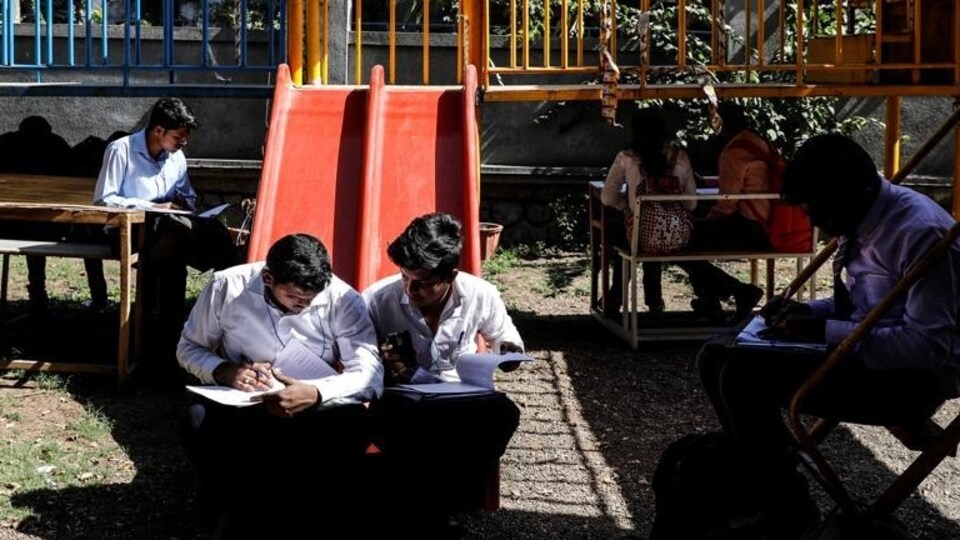
The state Department of Skills, Employment, Entrepreneurship and Innovation, under pressure to show that the government had taken care of employment, particularly of the young, went all out to get the topmost private companies to recruit, running up bills worth a few crores. However, to its dismay, it found that fewer than the registered employers showed up in Baramati – 222 against 345 registered – and, worse, only 1,285 were recruited from the 22,048 aspirants though the fair showed 55,072 jobs. The department took pains to point out that more than 10,000 aspirants had been shortlisted and might hear back from the recruiters, but there were no guarantees. The Nagpur fair saw 552 companies participate and 11,097 aspirants from a total of 60,000 offered jobs or sent offer letters online.
If this scenario does not inspire confidence at a time that India’s unemployment picture is grim, with 83 percent of those between 15 and 29 years unemployed, as the International Labour Organisation told us recently, there are several reasons. Some are political, others fundamental economic ones. At the core of this rather dismal situation lies the fact that Maharashtra’s governments, successive and of whichever party, have paid scarce attention to job-creation and employment potential, or had a plan for it in the changing economic scenario.
In a nutshell, since 1991, governments ignored four trends. One was of the falling employment in agriculture and allied sectors, given the agrarian crisis and unproductive small land holdings, pushing people into becoming farm labourers or relying on the state’s Employment Guarantee Scheme and later the MNREGA. This meant people migrated to cities in search of work. The second trend was that, in the post-liberalisation phase, the nature of urban economy transformed from manufacturing-based to services-driven, which meant fewer jobs with full employment benefits and more contractual work. This, lately, includes gig work in which there isn’t even contractual employment.
Thirdly, governments ignored the fact that public sector would employ fewer and fewer people in this economic model which meant more people in the job market. Government and PSU job vacancies have not been filled or the work has been outsourced to private contractors and consultants. And lastly, the increasing spread of automation has meant changes in the nature of jobs and skill requirements, which should have been anticipated and ground laid for, but was not.
This last trend is where schemes like Skill India would have been useful but were not entirely so. According to a recent survey by the National Skill Development Corporation with CMIE, the source of skill acquisition was hereditary for 19 percent while 38 percent learned on the job and 32 percent did self-learning. Importantly, 54 percent of the informally skilled people employed were in the non-agriculture occupations – the share of people employed in agriculture fell from nearly 70 percent in 1961 to 45 percent in 2001 and has been declining since – which only underscores the importance of skilling programmes especially for jobs in cities and towns across Maharashtra.
Yet, the focus on urban jobs will not help ease the situation in the state because, the same survey shows, 60 percent of all those employed continue to work in rural areas. With six of every ten people who want to work seeking it in villages, there is little elbow room for governments to address the unemployment situation squarely and sensitively without paying attention here. The approach, so far, has been to allow the rural situation to slide or function within its seasonal cycles – sugarcane cutting contractual labour in Marathwada or western Maharashtra is an example – or to simply incentivise industries to set up operations here.
The former has led to untold miseries – poor remuneration, family disruptions, women forced to undergo early hysterectomies, child brides, lack of education and so on. The latter has hardly come good on its promises. When all this failed, governments fell back on the EGS, which was originally devised in Maharashtra back in 1977 to tackle the severe drought-led situation, and topped with the MNREGA work. With lakhs of aspirants for a few thousand jobs, seen repeatedly in police or similar recruitment drives, jobs – and reservation – has become a political issue. In cities like Mumbai, it comes down to limited and provocative measures like reserving autorickshaw licences for Maharashtrian youth.
Another equally urgent issue is of women’s labour force participation. Data shows that the female labour force participation rate in the state is 24 percent compared to 72 percent for men. Women constitute nearly 70 percent of the people who are unskilled and unemployed though women make the majority of the workforce in rural areas and as farm labourers. In cities, more women than men are in the informal sectors and, often, without basic income guarantees or benefits.
Every major investment announced in the state is tagged with the potential jobs created but no audit has confirmed this. The state’s Economic Survey 2022-23 showed that 18 percent of all investment in India was in Maharashtra with 21,442 projects and an investment of staggering ₹17.5 lakh crores. How many lakhs, or even thousand, jobs created is unclear. With a reluctant private sector that’s on the lookout to keep wage bills low, a largely sluggish economy, and a chasm between the reforms needed in rural and urban employment, the government’s work is cut out.
However, job fairs hardly make the grade; half of the employed reported that they got their jobs through family-friends network, according to the NSDC-CMIE survey. The timing of these fairs was not lost as they did in the wake of the pro-reservation agitation by organisations representing the Marathas, especially Manoj Jarange-Patil who upped the ante in September last year with protests marches and deadlines to the government, then went on a hunger strike this January. Jobs are hard to come by, whether in the public or private sector. This reality is well-known. Yet, those in power must keep the hopes of job aspirants alive and display action such as job fairs.
Smruti Koppikar is a Mumbai-based independent journalist, essayist and city chronicler. This article is part of an 8-segment series about issues that are crucial to Maharashtra’s development.


