
 E-Paper



Savitri becomes first leopard at Mumbai’s SGNP to be radio-collared
In a first, a female leopard was radio-collared and released back into the wild at the Sanjay Gandhi National Park (SGNP) on Saturday


In a first, a female leopard was radio-collared and released back into the wild at the Sanjay Gandhi National Park (SGNP) on Saturday.
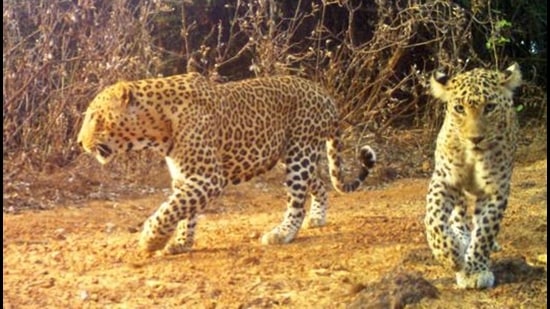
Savitri, named after the social reformer and educationist Savitribai Phule, became the first leopard to be radio-collared at SGNP. The two-year-long project to radio-collar leopards was initiated in 2018 when the park authorities signed a memorandum of understanding (MoU) with the Wildlife Conservation Society – India (WCS). The project is aimed at tracking and understanding the animal’s movement.
G Mallikarjuna, director, SGNP, said, “We are hoping that Savitri will help us understand leopards better. Under this project, a total of five leopards will be radio-collared and tracked.”
The collars work by sending signals via satellite, which researchers can then use to investigate where the animal is and what it is doing.
The key goals of this project are to obtain knowledge on how humans and leopards interact with each other, and how each adapts to the presence of the other. The collars will help gather information on how leopards move across major roads such as Ghodbandar Road and understand their use of space and time in the SGNP landscape. This data will then help provide management recommendations concerning the way these big cats move in the landscape and conflict mitigation based on the results of the study.
Dr Vidya Athreya, WCS, said, “In 2008, when we radio-collared leopards in rural India, it changed the narrative of how big cats behave. It helped us understand that they are more shy than they are aggressive. This project at SGNP will give us yet another level of insight as in Mumbai, a high density of people live in such proximity to big cats. It will also help us track their pathway and understand how they cross busy roads such as the Ghodbunder Road. This will then help us manage them better to bring down mortality.”
Stay updated with all the Breaking News and Latest News from Mumbai. Click here for comprehensive coverage of top Cities including Bengaluru, Delhi, Hyderabad, and more across India along with Stay informed on the latest happenings in World News.


