
 E-Paper



Heft in lightness: Literary icon Milan Kundera dies at 94
Reporting on the trial of Adolf Eichmann, Hannah Arendt showed us the sheer banality of this evil – standing in the Jerusalem court, the Nazi bureaucrat mentioned in passing the role of doctors, in “killing and other medical matters”, with a normalcy that shook the judge

 Prefer HTon Google


Sometime in the 20th century, when humanity was trying to come to terms with the terrifying novelty of modern totalitarianism, Milan Kundera showed people that when horror crosses a certain threshold of human endurance, one explodes in fatal laughter. The ultimate nature of that laugh is the defining lesson of existentialism. Nazism had already shown the world the unique modernity of this horror – as the philosopher Zygmunt Bauman said, a frenzy of violence can kill 60 people; to kill six million, one needs lists and filing cabinets, a neat bureaucracy.
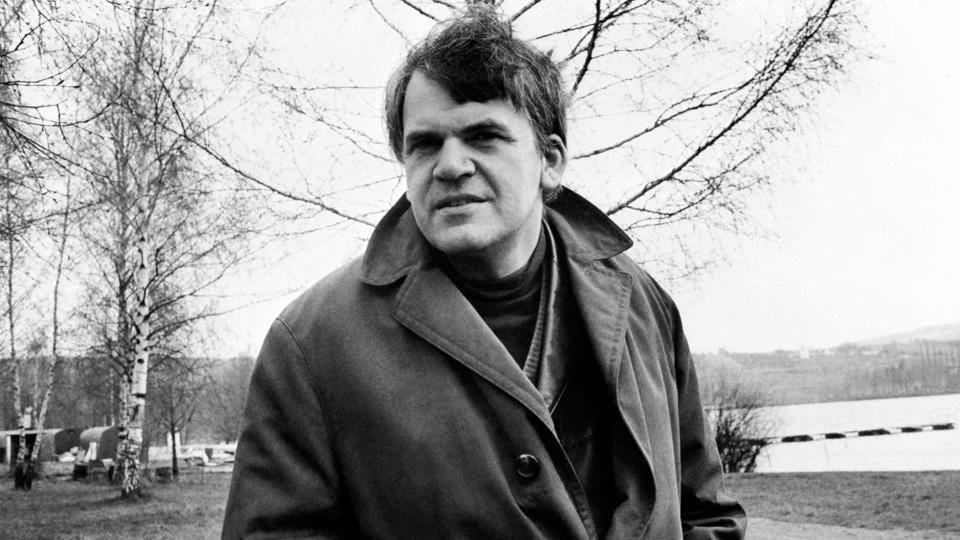
Reporting on the trial of Adolf Eichmann, Hannah Arendt showed us the sheer banality of this evil – standing in the Jerusalem court, the Nazi bureaucrat mentioned in passing the role of doctors, in “killing and other medical matters”, with a normalcy that shook the judge. But notwithstanding the hi-tech modernity of genocide, the absurdity of this horror has also revealed itself as unrelentingly Shakespearean, as the Polish critic and concentration camp survivor Jan Kott wrote in his book Shakespeare Our Contemporary. That’s what the court jester of King Lear did – the “poor, bare, forked animal”, alone on the wild heath, laughing at the enormity of his tragedy.
The reality of totalitarianism was only just beginning. Stalinism and the Iron Curtain took off where Hitler left, and Milan Kundera was the one with the courage to play Lear’s fool to the horror and the suppression that followed in eastern Europe. The Book of Laughter and Forgetting was the first Kundera that I read – to be soon blown away by this entirely new emotion that I didn’t know could exist. New, untranslatable emotions were Kundera’s trump card. Remember that scene from the novel where a woman, a professional swimmer, beat her boyfriend easy after a little while of pretending to let him keep up with her? The boyfriend, his male ego irreparably damaged, had an outburst of tearful anger – he even slaps her, as far as I remember. He was suffering from that emotion called “litost” in Czech – burning misery arising from one’s own wrongdoing, one for which, Kundera reminded us, no word existed in English. But it wasn’t just the micro feelings in episodes – the books floated in the absurd ethereality of an impossible cocktail – pain, suffering, oblivion, comedy, chronicling without fail the unbearable lightness of being. Such were the Shakespeares of postmodern absurdity in Europe – Italo Calvino had the vocabulary for that labyrinthine levitation, as it existed in the semiotic sleuth work of Umberto Eco. There was music in that levitation, as it was in his training – and there was music in his mockery, recalling his Irish predecessor, James Joyce, in the way Stephen Dedalus held up “the cracked looking glass of a servant.”
But Kundera’s exile from his native Czechoslovakia was an affair of far greater doom than the Irish author’s voluntary self-exile in Paris and Trieste. His Czech citizenship was revoked by the communist regime at whom the writer had poured his deadly laughter. Like another Irishman, the playwright and novelist Samuel Beckett, who knew a thing or two about laughing at the endgame of a world locked in a nuclear stalemate, Kundera started to write in French. It was going to be a long life, with the Czech Republic finally restoring his citizenship in 2019 – and a life that saw the long arc of political nightmares that was to plague the modern western world. One who grew up under the shadow of Nazism would also live in the post-truth world of Donald Trump.
But it wasn’t that his novelistic verities in the personal sphere always met the approval of the liberal. There is a hardened ruthlessness about many of his female characters that feminists have often found misogynistic. And like his friend Philip Roth, his most memorable male characters take the craft of philandering to a whole other planetary level, sometimes with genius female accomplices. Such a disturbingly memorable moment comes when the wildly promiscuous male character in The Book of Laughter and Forgetting meets a new woman who schemes to strike a friendship with his wife, who takes the credit of introducing her husband, not knowing she is already her husband’s lover. The best way to foolproof an affair, the narrator implies, is to make sure that your mistress “enters” your life as your wife’s friend, not yours. The pride of that discovery, and the trust in friendship, will insure you against the suspicion of infidelity for a long stretch.
The absurdity and cruelty in human relationships, and the absurd cruelty of ideologically driven state rule – Kundera threw the acid of his laughter on both in equal measure. Alfred Nobel’s will makes it clear that the award for literature is to be given at least as much for idealism as for literary merit. Not even his worst enemy can accuse Kundera of being an idealist, and it’s no surprise to me at least why in spite of many whispers and bets, he never won the Nobel. But all over the world, as we slowly approach the centenary of his birth, bruised and bloody laughter at totalitarianism is the most deeply lingering breath with which Milan Kundera leaves us.
Saikat Majumdar, professor of English & Creative Writing at Ashoka University, is the author, most recently, of the novel The Middle Finger.


