
 E-Paper



‘They brought us here for work, now we live in darkness’
“The struggle of man against power is the struggle of memory against forgetting.” With these words, invoking the Czechoslovakian writer Milan Kundera, Anand Teltumbde, the civil rights activist, released a report on the struggle of the Jai Bhim Nagar basti in Powai, which made headlines when it was demolished on June 6, 2024.

 Prefer HTon Google


MUMBAI: “The struggle of man against power is the struggle of memory against forgetting.” With these words, invoking the Czechoslovakian writer Milan Kundera, Anand Teltumbde, the civil rights activist, released a report on the struggle of the Jai Bhim Nagar basti in Powai, which made headlines when it was demolished on June 6, 2024.
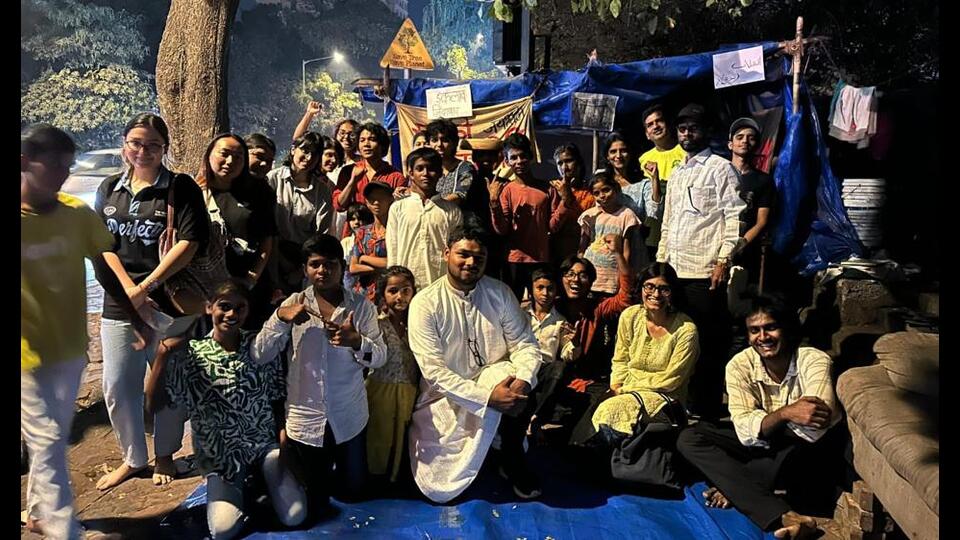
Teltumbde was commenting on the work of the students-youth organisation COLLECTIVE Mumbai and their documentation of the basti. In the eight months since, 600 families have dwindled to just 30-odd families, who have been living on the footpath behind Powai Plaza. “No one is listening to us,” said Shrimati Chauhan, one of the residents, speaking at the virtual meet. “They brought us here for work, and now that the work is over, they want us gone. We live in darkness.”
Chauhan and the other residents of the basti have survived one monsoon already, most of them in makeshift homes. “The criminal case, currently ongoing, has lost steam after the MLA candidate from the Congress, who is funding the case, Naseem Khan, lost the fight. The SIT report too, ordered by the Bombay High Court, is pending. No action has been taken after the FIR on the officials for facilitating the demolition and those involved in the violence on the day of the demolition,” said Adarsh Priyadarshi, from COLLECTIVE Mumbai.
The students are gearing to help launch a civil case in the Bombay High Court on behalf of the residents. It’s the only thread of hope for those who continue to stay on. Ambiguities around evictions exist, explained Gautam Bhatia, constitutional law scholar, because of two factors: absence of the right to housing/shelter in the Constitution; and the ambiguous position of previous judgements on the issue.
“The Olga Tellis case, oft-cited for evictions, is two-faced: while it recognized the rights of pavement dwellers – to shelter and livelihood – despite not being owners of the land, it also permitted their dislocation with prior notice, and permitted exceptions,” he said. “Courts have been sympathetic to slum-dwellers in some instances and antagonistic at others, to the point that the judgement they receive boils down to chance of which judge is chosen for the case.”
Teltumbde recalled his experience fighting against slum demolitions as a part of the Navjavan Bharat Sabha in the 1980s. “There was a much greater possibility of winning then. We had opposed the demolition of Subhash Nagar in Cuffe Parade, taking the help of celebrities to reach a compromise with the government to get them rehabilitated in Goregaon, a place now called Sangharsh Nagar. Things changed for the worse with liberalization in the 1990s and Sharad Pawar’s government’s new Development and Control Regulations (DCR), 1991,” he said.
The COLLECTIVE Mumbai report documents the history of the settlement circa 1968. It says the land was then owned by Tara Swaroop, who gifted it to her son Ajay Mohan. Soon, ten different buyers claimed Mohan had sold it to them. He went to court in 1985 and secured a stay order, and went on to sell the land in 1998 to Midtown Construction and Developers. By then, the Hiranandani group had already begun to develop its flagship township in Powai.
Several cases followed. The land was resold by Mohan to a subsidiary of Hiranandani, Lake View Developers, only to have the Supreme Court reject them as owners in 2007. A fire, however, swept through Jai Bhim Nagar soon after, gutting 150 homes. It is only then, said the report, that Suhas Joshi, a Hiranandani representative, received permission to build temporary workers’ housing on the plot.
Attempts to evict the workers, many of them migrants from other states who had helped build the 250-acre Hiranandani empire, began in 2017. The residents resisted, filing three civil suits. Finally, the settlement was razed in June 2024.

Stay updated with all the Breaking News and Latest News from Mumbai. Click here for comprehensive coverage of top Cities including Bengaluru, Delhi, Hyderabad, and more across India along with Stay informed on the latest happenings in World News.


