
 E-Paper



‘Until the lion learns how to write, every story will glorify the hunter’
Waghmare’s politics became evident from his first, ‘I Am Not a Witch’ which held a lens to the mistreatment of Maharashtra’s underprivileged women. Both his ‘Battle of Bhima Koregaon’ and ‘There Is No Caste Discrimination in IITs?’ have received much critical acclaim

 Prefer HTon Google


MUMBAI: Documentary filmmaker Somnath Waghmare is over the moon. His documentary ‘Chaityabhumi’ recently premiered at the London School of Economics (LSE) -- where Dr Ambedkar earned his second doctorate -- and will soon be screened at Columbia University, New York City, where he earned his first doctorate.
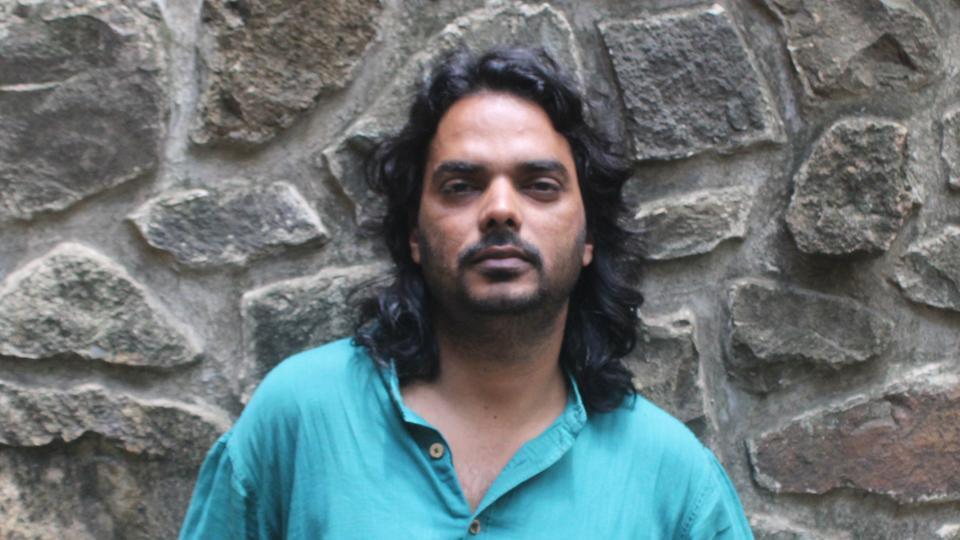
“Taking ‘Chaityabhumi’ to LSE was also my first ticket abroad,” said the filmmaker who was born and raised in a Dalit ghetto in Malewadi, a small village in Maharashtra’s Sangli district. His journey thereon to earn a graduate degree from a college in the nearest town, Islampur, to pursuing post-graduation in Pune, to a stint as a contractual employee at FTII and finally enrolling for a doctorate at TISS, Mumbai, “seems unreal”.
“So you can imagine how I felt when I was invited by LSE,” said the filmmaker. The visit to London became even more special because he also got to show ‘Chaityabhumi’ at several other London varsities. “After Nagaraj Manjule’s ‘Fandry’, ‘Chaityabhumi’ is the only Indian film officially screened at LSE. It makes me emotional when I think I am following in Babasaheb’s too-large-to-fit footprints,” he said. “Without him where would we be?”
While he is keenly interested in Maharashtra’s caste system and the politics of exclusion, for Waghmare, documenting and portraying socio-political Dalit assertion is the reason he makes documentaries. “I want my work to hold a mirror to society,” said the active participant of the Phule-Ambedkarite anti-caste campaign. He has used his work to speak out on casteism in the world of films.
It is this engagement with assertion that led him to make a namesake documentary on Chaityabhumi – the memorial in Dadar where Ambedkar was cremated in 1956.
Waghmare’s politics became evident from his first, ‘I Am Not a Witch’ which held a lens to the mistreatment of Maharashtra’s underprivileged women. Both his ‘Battle of Bhima Koregaon’ and ‘There Is No Caste Discrimination in IITs?’ have received much critical acclaim.
Waghmare brings the rawness of his own experiences with exclusion and the rage of seeing repeated attempts to thwart the Dalit struggle to fix this. “I wanted to explore what the central Mumbai memorial means for the lakhs (and growing) who throng here every December on Babasaheb’s death anniversary,” he said of ‘Chaityabhumi’, which like his other works is located in a socio-political context that questions the way the Dalit struggle is taken for granted. “The self-assigned mainstream (features/ documentaries) ignores and invisibilises Dalit lives and stories,” he observed, underlining the documentary is an attempt to change that.
While his intent is clear, he brushed off any notion of bearing the responsibility of being the community’s voice, quoting Nigerian writer Chinua Achebe: “Until the lion learns how to write, every story will glorify the hunter.”
Objecting to the manner in which Savarnas depict Dalits in their films, he said, “They want to only heap victimhood and helplessness on us,” and cited Aamir Khan’s ‘Lagaan’ where the Dalit character was called Kachara (Garbage). “I want films like ‘Chaityabhumi’ to challenge this while celebrating the Ambedkarite movement.”
He brought focus on how “Savarna elites use public money and property to further and promote their own savarna icons while often taller ones like Ambedkar and Phule from marginalised communities are negated”.
“Given their contribution, why can’t they too be celebrated as much as M K Gandhi if not more?”
Fortunately, it did not require much persuasion to get celebrated filmmaker Pa Ranjith on board as producer. “I approached his Neelam Productions and they said yes. As the first Indian filmmaker to experience box office success while presenting Dalit protagonists and speaking up on the long-standing caste inequality in the film industry, Pa Ranjith coming aboard was truly fulfilling,” he said.
When asked why Ambedkar is limited to a Dalit rights’ discourse when his emancipation affects everyone, Waghmare lobs the ball back. “You need to ask this to India’s privileged castes. Why are they so averse to Dr Ambedkar?” He reminded when reformers such as Gandhi called Dalits ‘Harijan’ and wanted to use religion to combat inequality, Dr Ambedkar didn’t rely on religion because he found it inadequate and defective. “Along with his followers he became Buddhist in 1956, since he knew Hinduism could never reform from within.”
Since ‘I Am Not a Witch’ (2016), all of Waghmare’s work has focussed on depiction of socio-political Dalit assertion. He laughed when asked about being boxed in as an anti-caste Phule-Ambedkarite filmmaker. “I see it as a badge of honour. Telling our own stories with dignity is better than misappropriation and misrepresentation by others,” he said, adding, “I hope my work demonstrates that being Dalit extends far beyond reservations and caste atrocities. It also encompasses independent music, art, and culture that continuously challenges the caste system.”
The edge in his voice only calmed as he spoke about his next on Gail Omvedt and Bharat Patankar. “I began scripting ‘Gail and Bharat’ long before ‘Chaityabhumi’. In fact, I’ve been keenly looking at both their lives and contributions for over four years,” he smiled. “We plan to start the edit soon and release it around Omvedt’s death anniversary in August next year.”


