
 E-Paper



‘Air taxis’ part of Master Plan Delhi-2047
The Master Plan Delhi-2047 identifies “air taxis” among emerging options to improve connectivity and reduce pressure on the city’s public infrastructure.

 Prefer HTon Google


Air-based transport modes such as “air pods” and “air taxis” could be explored as part of the Capital’s long-term mobility strategy, with the Master Plan Delhi-2047 (MPD-2047) identifying them among emerging options to improve connectivity and reduce pressure on the city’s roads, metro and rail networks.
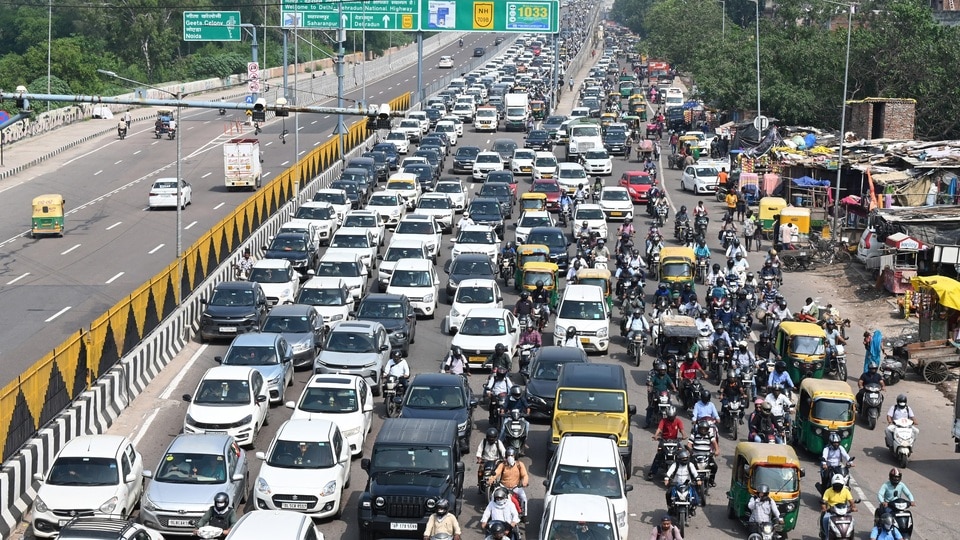
The transport chapter of the plan, approved by the Delhi Development Authority (DDA) on August 12, seeks to move beyond conventional modes such as roads, buses, Metro and rail by introducing new forms of transport, including air-based and inland waterway systems.
Among the strategies listed for improving Delhi’s transport infrastructure is the “introduction to new modes of transports”, including “inland waterways through the river Yamuna and Sahibi (Najafgarh drain), canals etc” and “air-based modes such as air pods and air taxis etc”.
To be sure, MPD-2047 does not lay out a specific implementation framework for air taxis or air pods.
Advanced air mobility to reduce private vehicle dependence
The plan’s broader transport strategy focuses on improving passenger and freight movement, reducing dependence on private vehicles and promoting smart and sustainable mobility. It also seeks better utilisation of land linked to transport infrastructure and greater integration between land use and transportation.
The proposal comes amid growing interest in advanced air mobility in Delhi-NCR. A February 2026 report by the Confederation of Indian Industry (CII) has proposed a 65-75km pilot corridor connecting Gurugram, Connaught Place and Noida International Airport at Jewar.
The proposed route could bring journeys that currently take hours by road down to less than 30 minutes, according to the CII report. The report envisages the use of electric vertical take-off and landing (eVTOL) aircraft and estimates that such a corridor could reduce journeys that currently take hours by road to less than 30 minutes.
It has also suggested exploring rooftops of hospitals, commercial buildings and technology parks as potential vertiports. The report recommends a phased approach, beginning with drone-based logistics and medical and emergency services before expanding to passenger operations.
For Delhi, however, the MPD-2047 places the proposed air-based modes within a much wider effort to improve public transport and regional connectivity. It proposes seamless integration between different modes through better land-use planning, improved last-mile connectivity, bus-route rationalisation and intelligent transport systems, including unified ticketing and command-and-control systems.
Air taxis unlikely for mass transport solutions
The plan also identifies the need to strengthen air connectivity through Indira Gandhi International Airport and integrate Noida International Airport with Delhi through road, rail and other future modes of transport. On the railway network, it proposes redevelopment of key railway stations to facilitate multimodal transfers between railway stations, inter-state bus terminals and other transport systems.
Experts, however, said air taxis were unlikely to become a mass transport solution and would instead complement conventional public transport, particularly for specialised or longer-distance journeys.
“While it is an area that can be explored, it can only cater to a limited, niche segment like for providing access to the airport. However, it cannot be a mass mode of transportation for the people for multiple reasons,” said Amit Bhatt, India managing director of the International Council on Clean Transportation (ICCT).
“Delhi has one of the highest car usage in the country, yet just about 15% of the city’s population uses it. So, public transport and informal modes are clearly highly used. Also, the average trip length in Delhi is around 5km, while air travel can be feasible only for longer distances… Then there are the issues of airspace integration, infrastructure and regulatory framework,” he said.


Stay updated with all top Cities including, Bengaluru, Delhi, Mumbai and more across India. Stay informed on the latest happenings in World News along with Delhi Election 2025 and Delhi Election Result 2025 Live, New Delhi Election Result Live, Kalkaji Election Result Live at Hindustan Times.


