E-Paper



At a cafe in Viman Nagar, acid attack survivors find work, acceptance and a new beginning
Run by survivors themselves, the outlet employs 12 women and three men who have survived acid attacks. They have come from states including Uttar Pradesh, Bihar, Haryana, Odisha, West Bengal and Maharashtra

 Prefer HTon Google


At first glance, Sheroes Hangout Cafe in Viman Nagar looks like any other vibrant cafe. Customers chat over coffee, staff greet visitors with warm smiles, and handmade products line the shelves. But, behind every smile here is a story of extraordinary resilience.
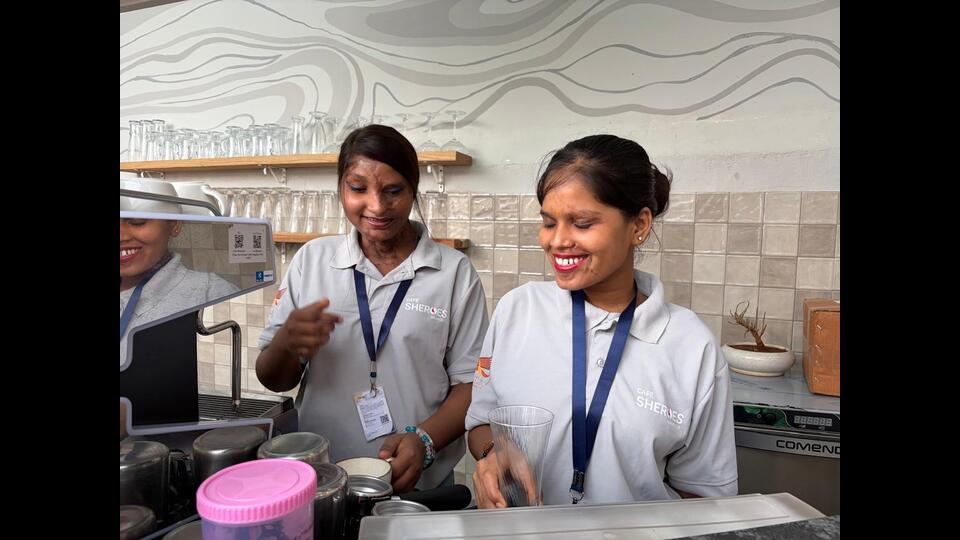
Opened in Pune on June 4, Sheroes Hangout is not just a cafe. It is a rehabilitation initiative where acid attack survivors from across India are rebuilding their lives through employment, education, skill development and, most importantly, social acceptance.
Run by survivors themselves, the outlet employs 12 women and three men who have survived acid attacks. They have come from states including Uttar Pradesh, Bihar, Haryana, Odisha, West Bengal and Maharashtra. Many were attacked after rejecting marriage proposals, following family disputes or due to personal grudges. Most spent months in hospitals, underwent multiple surgeries and then faced the difficult journey of rebuilding their lives.
The initiative traces its roots to the ‘Stop Acid Attacks’ campaign launched in 2013 by social activist Alok Dixit and his colleagues following nationwide discussions on gender-based violence after the 2012 Nirbhaya case. The campaign later led to the opening of the first such cafe in Agra.
Speaking to HT, Dixit said his interactions with acid attack survivors showed that medical treatment alone was insufficient to help them restart their lives.
The campaign, launched online on International Women’s Day in 2013, gradually evolved into a support network for survivors. Through their experiences, the organisation identified two major challenges — employment and social acceptance. This resulted in the launch of the first Sheroes Cafe in Agra in December 2014.
Today, Sheroes cafes operate in Agra, Noida, Lucknow, Delhi and Pune, while the organisation works with nearly 100 survivors through different projects.
“Pune was chosen because of its strong educational ecosystem and employment opportunities. However, awareness about rehabilitation support for survivors remains limited in Maharashtra,” Dixit said.
He emphasised that Sheroes is much more than a food business. The organisation supports survivors through medical treatment, legal assistance, counselling, education and vocational training. It has partnered with hospitality institutions, including Taj Hotels, to provide professional training and career opportunities. Accommodation and support systems are also arranged for survivors associated with the initiative.
However, Dixit believes the most important part of rehabilitation is social acceptance. Many survivors, he said, continue to cover their faces because they fear people’s reactions.
“Rehabilitation cannot happen without society’s participation. Medical treatment and counselling are important, but survivors also need acceptance, respect and opportunities to participate fully in everyday life,” he said.
The name ‘Sheroes’ reflects this philosophy — combining ‘she’ and ‘heroes’ to celebrate survivors as courageous individuals rather than victims.
The women and men working at Sheroes are not limited to serving customers. They handle food preparation, customer service, administration and financial management.
The cafe also functions as a learning centre, offering classes in English, computer skills, communication and other life skills.
Visitors can also find handmade products created by survivors, including tote bags, paintings, sketches, candles, bracelets, keychains, diaries and pottery items. Many of these skills were introduced during the Covid-19 pandemic when cafes remained closed.
These products are sold under the initiative ‘Gift a Story’, allowing survivors to earn an income while sharing their journeys with customers.
For Ritu, now a floor manager at Sheroes’ Viman Nagar outlet, the job brought a sense of purpose she once thought was impossible.
“When I first came here, everything was new to me. I did not even know there were different kinds of spoons,” she recalled.
Through professional training sessions, including those supported by Taj Hotels, she gradually learnt customer service, communication skills and cafe management.
“The skills I learnt here changed my life. This place opened up a completely new world for me, like a newborn baby seeing the world for the first time,” she said.
Ritu was only 16 when a relative attacked her with acid after she rejected his marriage proposal. Since then, she has undergone 16 surgeries, lost one eye and has limited vision in the other.
“What followed was a long and painful journey. I underwent multiple surgeries, suffered breakdowns and spent years trying to rebuild my life. My left eye is now artificial, and I have very limited vision in my right eye. Today, I am tired of surgeries. Whatever recovery I have achieved, I am grateful for it,” she said.
She said Sheroes helped her regain confidence and move forward. “The attack changes every aspect of life, but here I found people who understood my struggles and helped me rebuild my confidence,” she said.
She also praised the response from Pune residents. “The support from Punekars has been overwhelming. People here have welcomed us with warmth and respect, and that means a lot,” she said.
Another employee, Juli, was only five years old when she became an acid attack survivor. She recalled that her father, unable to accept her mother’s remarriage after their separation, attacked what he believed was his former wife’s sleeping area. Instead, the acid struck Juli and her stepfather. Her stepfather later died from his injuries.
“I was screaming and crying. Nobody around us knew it was an acid attack or what should be done immediately,” she said.
Today, Juli dreams of becoming a model and actively shares content on social media.
Yet social stigma remains painful. “Sometimes parents ask their children to look away after seeing us. It hurts. We are human beings, too,” she said.
Working at Sheroes, she added, has helped her regain confidence and connect with other survivors. “Our lives do not end with the attack. We can still dream and achieve our goals,” she said.
Manini, originally from Odisha and now working with Sheroes Hangout, said an acid attack changed her life when she was 15. “There was a boy who wanted to marry me, but my family did not agree to the proposal. Later, he married another woman, but he continued to tell me that he would marry me once I became an adult,” she said.
According to Manini, the situation escalated when another family approached hers with a marriage proposal. “When he learned about it, he became angry. One day, he came to our area, broke a street lamp, threw acid on me and ran away. A police case was registered against him,” she said.
The attack left her uncertain about her future. “For a long time, I felt my life was over. I did not know how I would move forward,” she said.
She later joined Sheroes Cafe in Agra, where she found support and a renewed sense of purpose. “Working at Sheroes gave me a new life. I have learnt many new things here, gained confidence and become independent. Earlier, I thought everything had ended for me, but now I feel there is still a future ahead,” she said.
Manini said being surrounded by fellow survivors helped her realise that recovery was possible. “Here, we encourage each other and learn together. It has given me hope and the strength to start again,” she said.
Apart from rehabilitation, the organisation conducts awareness campaigns through street plays, public dialogues, fashion shows and other outreach activities.
Its efforts have received national and international recognition, including the International Women of Courage Award presented by former US First Lady Michelle Obama in 2014 and the Nari Shakti Puraskar in 2017.
For customers, Sheroes may begin with a cup of coffee. For those who work there, it represents something much larger.
It is a place where survivors learn skills, earn livelihoods, continue their education, support one another and slowly reclaim the confidence that violence once tried to take away.
Every meal served, every handmade product sold and every conversation with a customer helps challenge the stigma surrounding acid attack survivors.
In a city known for its educational institutions and youthful spirit, Sheroes Hangout is offering something beyond food and beverages — a reminder that dignity, opportunity and acceptance can transform lives.