
 E-Paper



DSK files interlocutory petition before NCLT challenging approved resolution plan
Advocate Hrishikesh Karwande said that looking at the resolution plan which has been approved, it can be clearly seen that the plan has a lot of irregularities and flaws

 Prefer HTon Google


Jailed real estate developer D S Kulkarni, through his advocate Hrishikesh Karwande, has filed an interlocutory application challenging the resolution plan approved by the committee of creditors (CoC), citing misstatements and irregularities in the plan that tarnish the image of the real estate company and its directors.
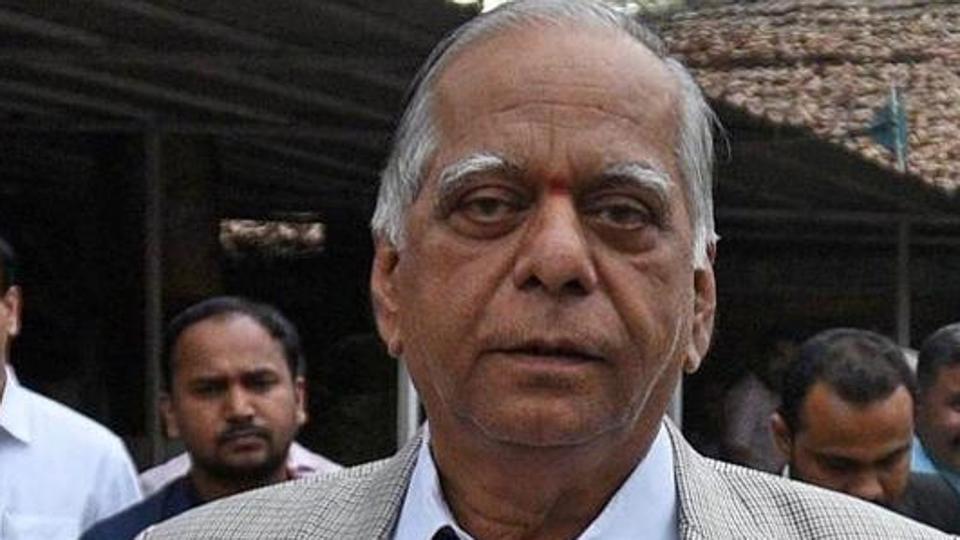
Advocate Karwande, while addressing media persons at the Pune Patrakar Sangh, said, “Some business groups had submitted a proposal before the National Company Law Tribunal (NCLT), seeking the properties of the DSK Group. This proposal had many mistakes and led to misunderstanding about the DSK Group amongst investors and banks. We have moved an interlocutory application before the NCLT on August 4 as we intend to give full benefit of doubt to all the stakeholders, including investors of the DSK Group. We have also furnished further evidence and proof of the DSK Group for consideration before the NCLT. This will bring further relief to the DSK Group and the CoC members soon.”
As per the interlocutory application filed by D S Kulkarni through advocate Karwande, “One of the primary duties of the resolution professional (RP) is to duly serve all notices, agenda/s and various other documents relating to the meeting beforehand but instead, the RP conducted almost 10 meetings of the creditors and then provided the documents relating to the meeting in bulk at one go. Hence, it can be observed that the RP has failed to perform his duties besides the fact that D S Kulkarni himself and all the other suspended management were willing to help the RP from time to time by providing various information relating to the company for its revival and to make the process easier.”
“D S Kulkarni wanted to participate in the CoC meeting to give suggestions and help in reviving the company but he was purposely not invited and shown as absent in the meetings,” according to the interlocutory application.
Advocate Karwande said that looking at the resolution plan which has been approved, it can be clearly seen that the plan has a lot of irregularities and flaws, and a lot of assumptions and erroneous calculations have been made in the plan without consulting the old management as they are the people who know the company inside-out. It has been noticed in the plan that the area belonging to DSK at Bavdhan is considered as clear land by the resolution professional whereas the area has been declared by the HEMRL, Government of India, as a red zone and no development is permitted on the said land. The resolution plan however has taken the said land into account for calculating the total land.
Advocate Karwande pointed out that the plan states that payment to creditors and depositors will take eight years which is a very long period and despite waiting for such a long time, full payment is not guaranteed. Due to lack of communication, several facts have been misstated in the plan and could not be corrected because the resolution professional failed to give all the creditors meeting documents in time and refrained from taking any support from the old management. Hence, an interlocutory application has been filed by D S Kulkarni to challenge the resolution plan approved by the creditors while highlighting the material misstatements and irregularities in the plan that are portraying the company and its directors in bad light, the lawyer pointed out.
On July 27, 40 months after his arrest, Pune’s prominent real estate developer Deepak Sakharam Kulkarni popularly known as DSK, was granted bail by the Supreme Court in connection with the Rs2,043 crore investors’ fraud case. DSK is unlikely to come out of prison soon as four other cases are pending against him in various courts.
Cheating case
D S Kulkarni and his wife were booked for cheating and criminal breach of trust at Shivajinagar police station following complaints from investors. The Kulkarnis were booked under sections 420 (cheating and dishonestly inducing delivery of property), 406 (criminal breach of trust) and 34 (common intention) of the Indian Penal Code (IPC), and sections 3 and 4 of the Maharashtra Protection of Interest of Depositors (MPID) Act.
In September 2019, the NCLT Mumbai bench ordered the commencement of the real estate group’s corporate insolvency resolution process (CIRP) under the provisions of the Insolvency and Bankruptcy Code, 2016, on an application filed by the Bank of Maharashtra. Investors had also challenged the insolvency resolution proposed by the NCLT in the DSK case and had asked for a review, stating that they were not happy with the Rs827 crore plan.


