
 E-Paper



EVM glitches, absence of VVPAT create confusion among voters in Pune civic polls
Several voters reported difficulty in understanding EVM indicators and said they were unsure whether their votes had been successfully registered

 Prefer HTon Google


Voting for the Pune Municipal Corporation (PMC) elections, held after a gap of nearly nine years, was marred by technical glitches in electronic voting machines (EVMs) and the absence of Voter-Verifiable Paper Audit Trail (VVPAT) units at several polling stations, leading to confusion among voters and raising concerns over transparency.
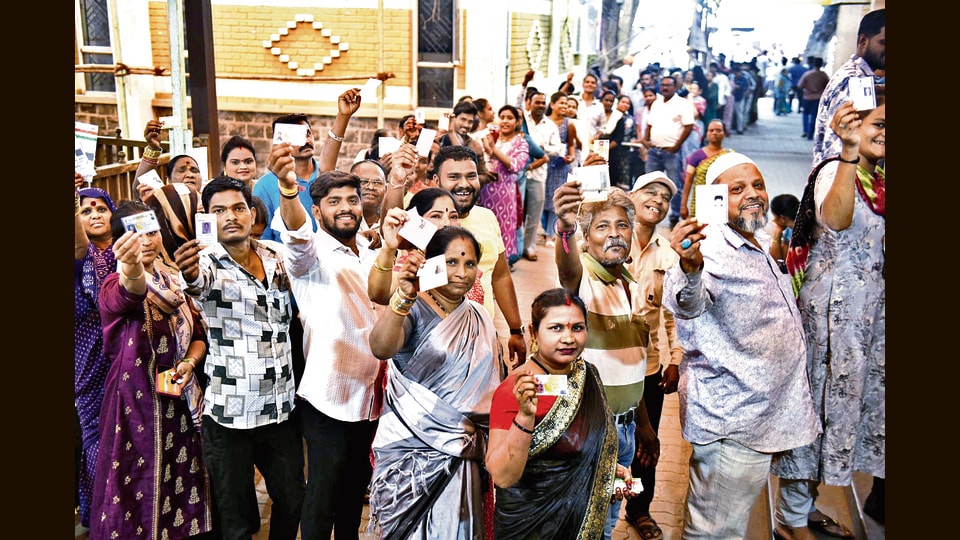
Several voters reported difficulty in understanding EVM indicators and said they were unsure whether their votes had been successfully registered. Complaints were reported from areas, including ward number 9 (Sus–Baner–Pashan), where voters said there was no clear confirmation after pressing the ballot button.
The absence of VVPAT machines, which allow voters to visually verify their vote through a paper slip, added to the confusion. Many voters questioned polling officials about the lack of verification mechanism, particularly against the backdrop of ongoing political debate over electoral transparency.
Polling officials said EVM-related issues were addressed promptly and faulty machines were replaced to ensure that voting continued smoothly. However, opposition leaders and civic activists said the glitches and absence of VVPATs could dent voter confidence, especially in closely contested wards.
Rohit Pawar, NCP (SP) leader and MLA, highlighted the issue on social media, claiming that several EVMs stopped functioning during polling and, at times, showed a time lag of up to 15 minutes. He also alleged irregular functioning in some machines, where confirmation lights either blinked incorrectly or did not illuminate after votes were cast.
Another NCP (SP) leader from Pune, Ankush Kakade, alleged that while the indicator light turned on after the first three votes were cast, it failed to light up when the fourth vote was registered, raising doubts over whether the vote had been properly recorded. He claimed that the time displayed on the EVM was 14 minutes ahead of the actual time.
Neelam Gorhe, deputy chairperson, Maharashtra Legislative Council and Shiv Sena leader, said serious administrative lapses were reported at several polling centres across Pune. She conducted an on-site inspection and submitted a detailed representation to the State Election Commissioner, demanding action against the officials responsible.
Gorhe cited repeated EVM shutdowns and errors in ward number 26, including an incident at a polling booth in St Hilda’s School, where the EVM reportedly shut down four times, resulting in long queues.
“In a particularly serious incident, the sequence of buttons on the EVM was reversed. Instead of the standard order (A, B, C, D), the machine displayed (D, C, B, A), causing widespread confusion among voters,” she said, attributing the issue to human error and inadequate training of election staff.
Election officials, including PMC additional commissioner and poll incharge Omprakash Divte, acknowledged that around 15 to 20 EVMs developed technical errors during the early hours of polling. He said replacement machines were kept ready with sectoral election officers and were deployed immediately wherever issues were reported, allowing polling to continue without major disruption.
Opposition representatives urged the State Election Commission to clarify the situation and reassure voters about the integrity of the electoral process. Election officials, however, said they had not received any complaints related to the removal of indelible ink using chemicals.
Despite the reported issues, authorities maintained that the polling process remained secure and that all votes cast through EVMs would be accurately counted as per established procedures.
The PMC elections are being held alongside civic polls in several other municipal corporations across Maharashtra, making the conduct of polling in Pune a closely watched political event. Final turnout figures and post-poll assessments are expected to indicate whether the reported technical issues had any wider impact on voter participation.


