
 E-Paper



Festival din: 251 loudspeaker calls a day to city police
Vishrambaug police station recorded the highest number of loudspeaker-related calls at 269, followed by Kothrud with 237 and Parvati with 195.

 Prefer HTon Google


PUNE: Pune City Police received an average of 251 loudspeaker-related calls every day during the 12-day Ganeshotsav period, with a total of 3,267 calls registered on the Dial-112 emergency response system between September 14 and 26, according to police control room data.
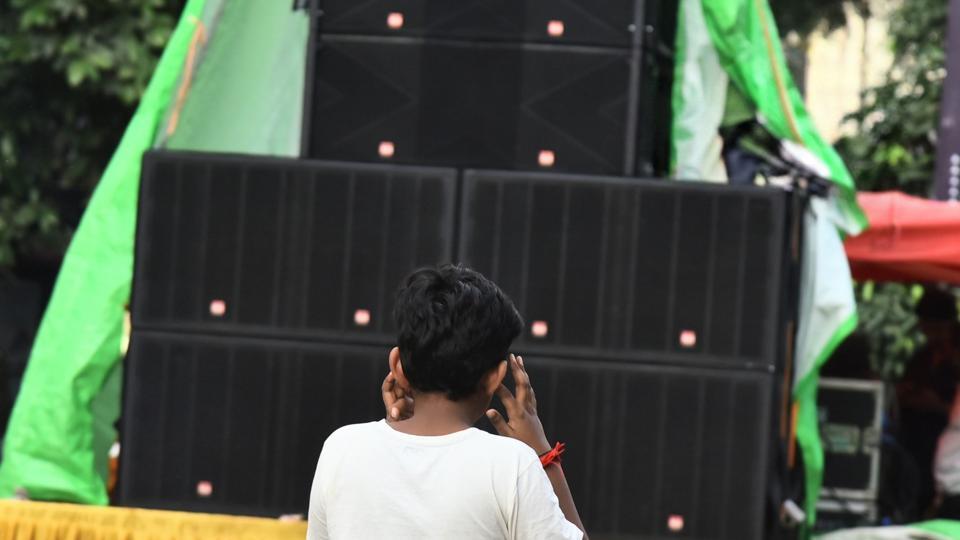
Going by the figures, the police control room received over 10 such calls every hour on average during the festival period. The calls were sharply concentrated in certain parts of the city.
Vishrambaug police station recorded the highest number of loudspeaker-related calls at 269, followed by Kothrud with 237 and Parvati with 195. Together, these three areas accounted for 701 calls, or about 21.5% of the total.
Other police stations that recorded a high number of complaints included Sinhagad Road (153), Baner (157), Hadapsar (142), Chatushringi (138), Khadak (130), Warje Malwadi (129) and Alankar (111).
The data also reflects significant variation across different parts of the city. Sahakarnagar recorded 101 complaints, while Deccan recorded 91, Wanvadi 87, Kalepadal 84, Kondhwa 83, Swargate 81 and Samarth 79.
Several police stations recorded considerably fewer calls. Chandan Nagar received 74 calls, Vimantal 72, Bibvewadi 69, Bharti Vidyapeeth 68, Kharadi 66, Vishrantwadi 59, Nanded City 58 and Fursungi 53.
At the lower end of the list, Marketyard and Wagholi recorded 40 calls each, followed by Shivajinagar (37), Ambegaon (33), Loni Kalbhor (30), Uttamnagar (29), Khadki (23), Bund Garden (12), Narhe (10) and Lashkar (9).
The lowest numbers were recorded at Lonikand (5), Manjari (4), Kondhwa Budruk-Yewalewadi (3) and Laxminagar (2).
Lohagaon police station did not record a single loudspeaker-related Dial-112 call during the period covered by the report.
Police Commissioner Amitesh Kumar said, “A total of 3,267 loudspeaker-related calls were received on 112 between September 14 and 26. All calls were diverted to the concerned police stations, handled on a priority basis, and necessary steps were taken as per the law.”
Further data analysis shows that half of Pune’s loudspeaker-related calls came from just 10 police station jurisdictions. Of the 3,267 calls the police control room received on Dial-112 between September 14 and 26, 1,661 (50.8%) came from these jurisdictions. Vishrambaug accounted for the highest number with 269 calls, followed by Kothrud (237), Parvati (195), Baner (157), Sinhagad Road (153), Hadapsar (142), Chatushringi (138), Khadak (130), Warje Malwadi (129) and Alankar (111).
The call concentration reflects the density of Ganesh mandals, residential areas, festival activity and the volume of sound systems. With 3,267 calls in 13 days, the average is around 251 calls a day, underlining the volume of public complaints the police received regarding loudspeakers.
Apart from this, city police recorded 1,224 loud-noise readings during Ganesh immersion processions and initiated proceedings in 391 complaint cases on the final day of Ganeshotsav.
The action comes amid increased scrutiny of noise pollution during Ganeshotsav, particularly the use of high-powered sound systems, DJs and multiple loudspeakers during processions.
However, activist Vidyanand Bapat, who campaigns against high-decibel DJs, loudspeakers and dhol-tasha performances during festivals, disagreed with the police data. He said, “There was no reduction in the noise level during the immersion procession. If anybody is claiming this, they should visit the Peth areas which are the most affected by noise pollution during the procession.Bapat highlighted the need for strong implementation of existing laws and regulations, similar to how the police effectively implemented the 12am-6am ban on loudspeakers.


