
 E-Paper



PMC identifies only 93 stray dog feeding spots in five years as citizen complaints mount
In May 2023, PMC conducted a census of stray dogs in Pune city, estimating that the canine population had decreased from 3,15,000 in 2018 to 1,79,940 stray dogs in 2023

 Prefer HTon Google


Five years after the Pune Municipal Corporation (PMC) began the exercise of designating feeding spots for stray dogs to reduce conflict between residents and animal feeders, the civic body has managed to identify only 93 approved locations across the city, exposing the slow pace of implementation amid mounting citizen complaints.
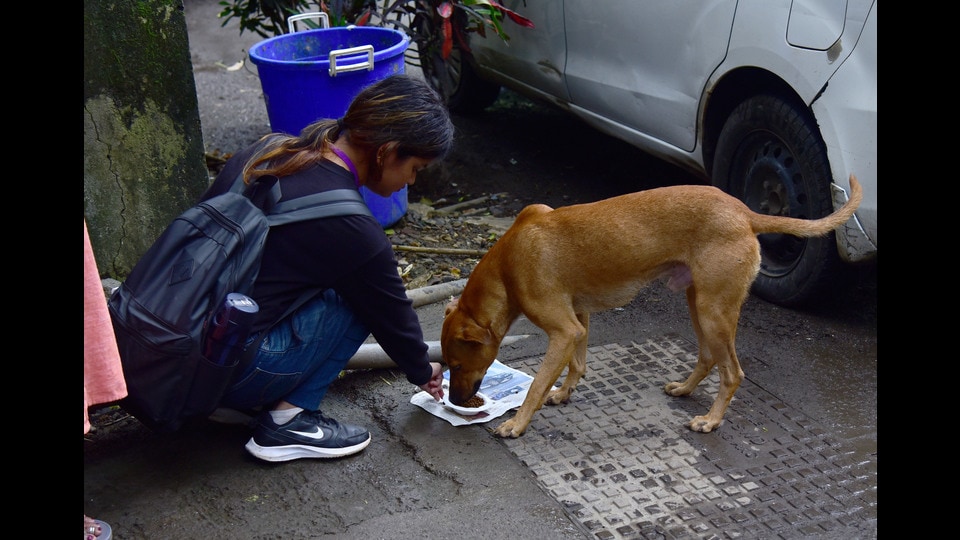
In May 2023, PMC conducted a census of stray dogs in Pune city, estimating that the canine population had decreased from 3,15,000 in 2018 to 1,79,940 stray dogs in 2023. The 34 newly merged villages in the municipal limit have around 1.50 lakh stray dog population. The PMC in its jurisdiction has over 3.30 lakhs of stray dog population.
The limited number of designated spots has left many neighbourhoods grappling with unauthorised feeding zones. There are thousands of undesignated feeding spots in the PMC jurisdiction. They are often created informally by residents or animal feeders without any civic approval. This has triggered repeated disputes over public safety, hygiene and nuisance.
The Society for Prevention of Cruelty to Animals (SPCA) and PMC’s veterinary department continue to receive a steady stream of complaints related to stray dog feeding and aggressive canine behaviour. As per officials, the SPCA receives at least five to six complaints every week, while the civic veterinary department receives more than a dozen complaints in the same period.
“In our area, dogs are fed right outside society gates and on internal roads. Children are scared to walk alone, and senior citizens avoid evening walks. Complaints are made, meetings happen, but nothing changes on the ground,” said Vivek Khamkar, a resident of Wanowrie.
As per officials, as per the existing mechanism, complaints are referred to a joint committee comprising PMC officials, police representatives, housing society members and animal lovers. The committee is expected to inspect disputed sites and arrive at a mutually agreed solution. However, residents and even some committee members allege the process has become reactive rather than solution-driven.
“The civic body acts only after conflict escalates. There has been no serious citywide effort to scientifically identify adequate feeding zones. Ninety-three feeding spots for a city this size is simply not enough,” said Pravin Tapkir, a resident and welfare association member from Pashan.
PMC officials, meanwhile, blamed poor coordination and lack of support from the SPCA for the slow progress.
A senior civic veterinary official said identifying feeding points is often complicated by opposition from local residents, conflicting demands from animal feeders, and delays in consensus-building through the joint committee structure. “There has been a delay from the SPCA, which has led to a tiny number of designated feeding spots. We are receiving several cases on a daily basis. PMC is taking all efforts and has even issued a public notice urging citizens to approach us with the request, but to no avail,” she said.
Samadhan Mulmule, secretary of a housing society in Dhanori, said, “The problem of stray dogs has increased in our area, but the Animal Birth Control (ABC) programme is hardly conducted. The canines are fed right in between the roads of our housing society. Initially, it was a couple of dogs, but now the number has increased to over a dozen. The location to feed is unscientific, and the canines can even meet with accidents. After feeding, there is filth all around, with no one taking the responsibility to clean it,” he said.
Animal lovers and activists, however, said the failure lies in weak implementation rather than a lack of intent.
“Feeding stray dogs is legally permitted, but it must be regulated and humane. The problem is that the administration has failed to create a functional system. When designated feeding spots are too few, people will inevitably feed wherever they can, and that creates conflict,” said Anjali Kumari, an animal lover.
Another activist said the issue has been allowed to drift for years without clear policy execution. “Both residents and animals are suffering because of administrative indecision. The city needs a transparent map of approved feeding zones and parallel sterilisation and vaccination efforts,” said activist Sharad Shetty.
Dr Nina Borade, health chief of PMC, said, “The PMC is working to increase the number of designated feeding spots for the stray canines. I will look into the issue of why the number remains low. We will try to increase the number of designated feeding spots to avoid conflicts between feeders and respective area residents.”


