
 E-Paper



Tadoba’s tigress roars into Sahyadri: Landmark relocation complete at Chandoli park
Tigress Chanda from Tadoba was released into the Sahyadri Reserves on Thursday after completing a scientifically supervised acclimatisation period inside an enclosure at Chandoli National Park

 Prefer HTon Google


Pune: A female tigress, Chanda (T-20-S-2) brought from Tadoba, was released into the wild in the Sahyadri Reserves on Thursday morning after completing a scientifically supervised acclimatisation period inside a controlled enclosure at Chandoli National Park under the Sahyadri Tiger Reserve.
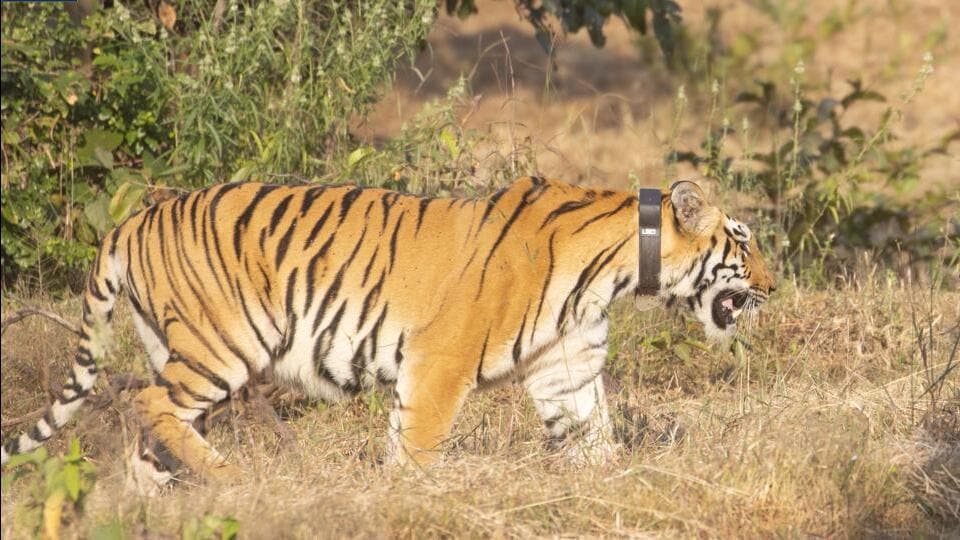
The release comes as the Maharashtra forest department intensifies its tiger revival efforts across the four districts covered by the Sahyadri Tiger Reserve — Satara, Sangli, Kolhapur and Ratnagiri. As part of the plan, a tigress named Chanda from Tadoba–Andhari Tiger Reserve was shifted to Sahyadri, marking the start of a centrally approved programme to move eight tigers from Tadoba and Pench in phases. In the first phase, two tigresses from Tadoba are being relocated, with Chanda the first to arrive. The three-year-old is from a celebrated lineage — she is the offspring of Tadoba’s well-known tiger Chhota Matka and tigress Journey. Once the tigress Chanda captures her territory and settles, the forest department will identify second tigress in Tadoba for shifting.
Chanda was soft-released into a secure pre-release facility on November 13 and underwent continuous observation by veterinarians and wildlife biologists from the Wildlife Institute of India. Her behaviour, movement, feeding patterns, territorial instincts and responses to natural stimuli were monitored daily to assess readiness for full release. The enclosure gate was opened at 4.30pm on November 18, but she chose to wait. On the morning of November 20, at around 8.15am, she walked out calmly — an entry forest officials described as “royal,” marking territory right from the release point and asserting her presence as “the Queen of Sahyadri”.
Officials said the tigress showed strong adaptive behaviour during the habituation period, displaying natural wild instincts. Her release is being seen as a critical step in stabilising the fragmented tiger population of the Western Ghats.
To ensure safe integration, she has been fitted with a radio collar and will be monitored round-the-clock through satellite telemetry and VHF tracking. Teams from Sahyadri Tiger Reserve, Chandoli National Park and WII have been deployed at key locations, including patrolling routes and water bodies, to track her movements, verify field signs and respond quickly if needed.
Sahyadri Tiger Reserve field director Tushar Chavan, IFS, said the tigress showed excellent natural responses inside the enclosure and was fully prepared for life in the wilderness. He said the release marks an important milestone in the recovery programme being carried out with “the highest conservation ethics and scientific precision.”
Maharashtra’s Chief Wildlife Warden, MS Reddy, IFS, said the successful release reflects the state’s scientific and long-term approach to wildlife conservation. “The tigress had acclimatised well to Chandoli’s habitat and displayed strong wild behavioural traits essential for survival in the forested landscape.”
The Government of Maharashtra, Sahyadri Tiger Reserve, Chandoli National Park and the Wildlife Institute of India have reiterated their commitment to ethically guided, science-based conservation to rebuild a stable tiger population in the Sahyadri mountains and secure biodiversity for future generations.


