
 E-Paper



Traders upset over Centre’s 40% export duty on onion, farmers stop auction at wholesale market
At India’s largest onion trading mandi in Lasalgaon, Nashik district, farmers and traders staged a protest on Sunday while at Rahuri agriculture market in Ahmednagar, farmers affiliated to Swabhimani Shetkari Sanghatana stopped auctioning on the commodity

 Prefer HTon Google


PUNE A day after the Centre imposed a 40 per cent duty on the export of onions till December 31, 2023, to check price rise and improve supplies in the domestic market, leaders from opposition, farmers and traders criticised the decision.
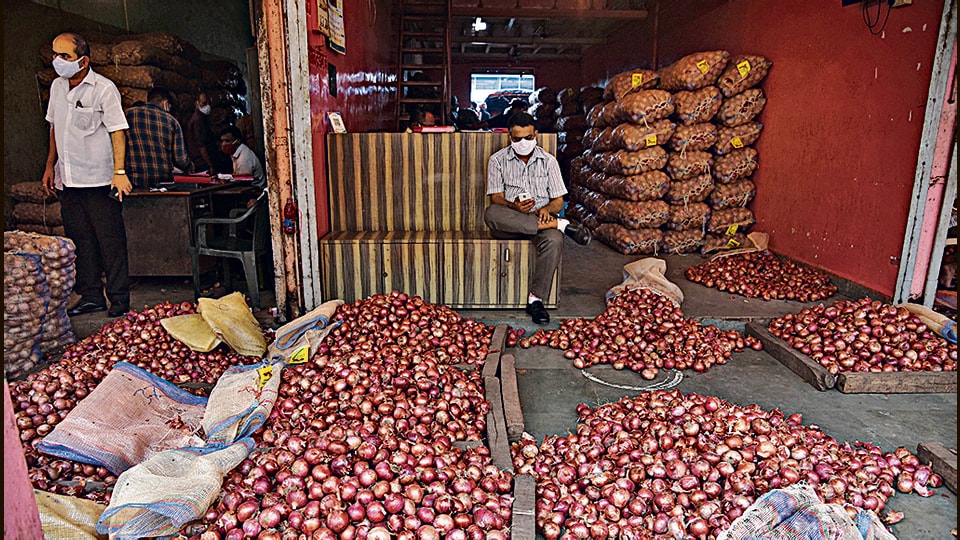
At India’s largest onion trading mandi in Lasalgaon, Nashik district, farmers and traders staged a protest on Sunday while at Rahuri agriculture market in Ahmednagar, farmers affiliated to Swabhimani Shetkari Sanghatana stopped auctioning on the commodity.
Onion traders from Nashik have decided not to hold auctioning at Lasalgaon and other markets in the district on Monday. A decision in this regard was taken after meeting between traders and onion growers.
The farmers and traders feel the Centre’s decision to impose additional duty will lead to a fall in the prices of onions in the retail market. Currently, onion is being sold between ₹30 to ₹40 per kilogram at the retail level, which has come down by around ₹10.
Vikas Singh, onion exporter from Nashik, said, “There was no need for imposing export duty since the prices had come down in the past couple of days with prices in the wholesale market falling between ₹19 to ₹22 per kg. The decision is disturbing for India’s image as a reliable export nation.”
Dada Bhuse, Nashik district guardian minister said, the state government will urge the Centre to remove the export duty on onion.
“After incurring losses for a long time, onion growers have now started making some money. The latest decision will adversely impact farmers,” said Bhuse.
Criticising the Centre’s decision, Sharad Pawar, president, Nationalist Congress Party (NCP), while speaking in Pune said, the Centre’s decision will disturb the economics of onion growers.
“Export allows farmers to earn some extra money. The latest decision to impose export duty will result in a fall in prices of onion in the domestic market,” said Pawar who served as Union agriculture minister in the UPA government between 2004 to 2014.
Bharati Pawar, minister of state for health and family welfare, said the move was to avoid a price rise similar to that of tomatoes in the country.
“There is no ban on export per se. The government has imposed some duties to prevent price-rise similar to that of tomatoes. At the same time, if there’s demand for onion within the country, prices won’t fall in the domestic market,” she said, adding that she will write to India’s commerce minister Piyush Goyal to convey farmers’ sentiments.
For the past few months, tomato prices in the country have skyrocketed, reaching up to ₹160 per kg in some markets. This prompted the National Agricultural Cooperative Marketing Federation of India (NAFED) to sell tomatoes at a retail price of ₹40/- per kg.
As per the finance ministry notification, the move is aimed at controlling onion from being sold outside India and curbing hoarding by traders when prices are rising. The export duty comes amid reports that onion prices are likely to rise in September. Earlier on August 11, the central government started releasing the staple vegetable from its buffer stock.
Chhagan Bhujbal, NCP leader (Ajit Pawar faction) and minister in Eknath Shinde-led government, said, “The central government had earlier decided it will maintain 3 lakh tonne of onions in the 2023-24 season as buffer stock. In 2022-23, the government maintained 2.51 lakh tonne onion as buffer stock. Buffer stock is maintained to meet any exigencies and for price stabilisation, if rates go up significantly during the lean supply season.”


