
 E-Paper



Private labs say lower test price may reduce testing capacity, lead to losses
The Delhi Disaster Management Authority (DDMA) on Thursday approved capping of the rates for all Covid-19 tests, including by private firms at Rs 2,400.


The capping of coronavirus disease (Covid-19) testing price at Rs 2,400 may lead to fewer samples being tested at private labs because it does not cover the costs, owners of private labs said on Thursday, requesting anonymity.
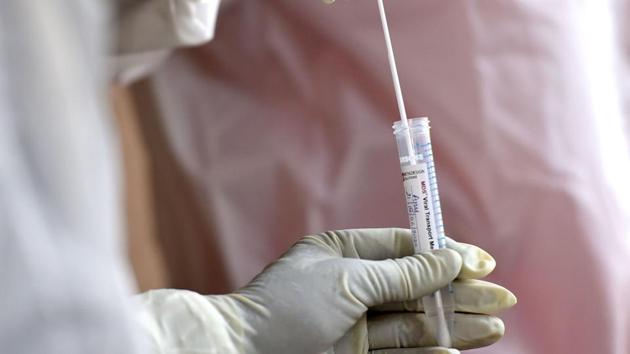
The Delhi Disaster Management Authority (DDMA) on Thursday approved capping of the rates for all Covid-19 tests, including by private firms at Rs 2,400. An expert panel constituted by Union home minister Amit Shah on June 14 did not recommend revising the prices for tests conducted by private labs in Delhi. It only recommended reducing the rates of for the samples collected by the government for private labs.
Until now, the cost of a Covid-19 test was Rs 4,500 if the private labs collected the sample and used their own kits, Rs 3,500 if the government collected the samples and the private labs used their kits to test it; and Rs 2,200 if the government collected the sample and provided the test kit as well.
“Two important things happened today. Covid-19 testing rates in Delhi have been reduced to Rs 2,400 and rapid-antigen testing has started. I hope people won’t face any problem in getting themselves tested now,” Chief Minister Arvind Kejriwal said in a tweet.
Owners of the private laboratories said that the price fixed by the government would not cover their money spent on collection of samples from door-to-door, transportation and the protective gear, etc.
“It is not just the cost of the process of testing, lifting samples from door-to-door incurs ancillary costs that inflates the overall testing price. We could have managed the tests for government collected samples in Rs 2,400, since we won’t have to spend on a personal protection equipment, viral transport medium, swab sticks and transportation. But going home-to-home for collecting samples, spending on manpower and transport and providing protective gear cannot be managed for the same price,” said one of the private lab representatives, requesting anonymity.
“These are costs that the government does not seem to have considered while fixing the price. It will be difficult for a lot of us to sustain this price structure, which would obviously affect the number of samples lifted per day for testing in the long run, especially those from home,” the person added.
Another laboratory representative agreed that home collection of samples cannot be done for such a low price. He said the will have to consider differential pricing, like the one currently in place in Delhi.
“The cost for testing a sample collected by Delhi government is low but for the ones that we collect from the homes we charge Rs 4,500. Going below that will hurt our pocket. Plus, if the government wants us to expand our testing capacity, we need to be able to recover money for the additional machines and manpower,” said the second lab representative.
Private hospitals testing Covid samples shared similar concerns.
“We are not talking about making profit but we cannot suffer losses. The way prices stand as of now, we are staring at losses. How are we supposed to enhance the testing capacity that everyone seems to be looking at; where is the ability to invest in expensive machinery if there are mounting losses. A gene expert machine testing kit, which is a quicker alternative to RT-PCR testing, costs about Rs 2,350 on discount, then how do you expect the test to be conducted at Rs 2,400. There is a turnaround deadline of 48 hours so at the end we will be forced to drop the number of samples being tested per day,” said a representative for a prominent hospital, requesting anonymity.
The Delhi government said the decision was taken to help people who had to pay “exorbitant sums of money for tests and treatment”. “The Delhi government reduced the prices because the people have to pay exorbitant sums to get Covid tests done. Also, when other states have capped it, nothing stops Delhi from doing the same. It is what the Centre and the ICMR also have recommended,” said a Delhi government spokesperson.
The Indian Council of Medical Research (ICMR) on Monday recommended use of antigen based testing kits for diagnosis that is likely to bring down the cost of testing. However, hospitals say the kit is not readily available in market yet. “Where are the kits, and what is the price for testing using antigen based kits. There is no clarity even on serology (antibody) test that ICMR also recently recommended. Are we allowed to do those tests? There is utter confusion over it,” said another representative of a prominent hospital in the Capital.
“Nobody is going to make losses, so a lot more thought needs to be put into this. You cannot just randomly quote a price. At least allow flexibility in prices for home collection samples so that those who can pay should be allowed to pay. On one hand you want to enhance testing capacity but the prices that are being fixed by the government could actually lead to reduction in capacity,” said representative of a third laboratory.


Stay updated with all top Cities including, Bengaluru, Delhi, Mumbai and more across India. Stay informed on the latest happenings in World News along with Delhi Election 2025 and Delhi Election Result 2025 Live, New Delhi Election Result Live, Kalkaji Election Result Live at Hindustan Times.


