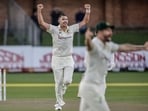
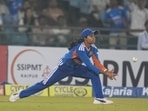
Few batters carried themselves with quite the same effortless elegance as Carl Hooper. A tall, classical stroke maker with an off-spin bowling skill to match, the Guyanese all-rounder was often described as one of the most naturally gifted cricketers of his generation, even if his output on the field did not always match the promise of his technique. Hooper made his ODI debut against New Zealand in March 1987 and his Test debut against India later that year, scoring an unbeaten century in just his second Test, in Calcutta.
Carl rose through the West Indies system at a time when the side still boasted the likes of Gordon Greenidge, Desmond Haynes, Malcolm Marshall and Courtney Walsh, and built a reputation for producing moments of real brilliance, including a memorable counterattacking innings against Shane Warne in Bridgetown in 1995, during which he took the young leg spinner apart. For much of his career, though, Hooper's numbers lagged behind his obvious talent, and he drifted in and out of the side more than once.
It was only when he took over the West Indies captaincy, after a period away from the team, that his batting truly caught up with his ability, and for a couple of years under the extra responsibility he became a far more consistent run scorer. A disappointing showing at the 2003 World Cup, however, brought his second stint in charge to an end, with Brian Lara taking back the captaincy, and Hooper soon returned to a quieter existence in the game. He also had a notable county career in England, representing Kent for several years through the 1990s and later Lancashire.
By the time he retired, Hooper had become the first cricketer in the game's history to score 5,000 runs, take 100 wickets, hold 100 catches and win 100 caps in both Tests and ODIs, a feat only matched since by Jacques Kallis. After stepping away from playing, he moved into coaching, taking up a batting coach role with West Indies development structures in the early 2010s and later working as an assistant coach in Australian domestic T20 cricket, passing on the technique that had made him, at his best, one of the most watchable batters of his era.


 Live Score
 Teams
Teams Players
 WEST INDIES