E-Paper



Drone-based crocodile counting begins in Terai area of Uttarakhand
Forest officials claim Uttarakhand is the first state in the country to have dedicated drone force for wildlife surveillance.

 Prefer HTon Google


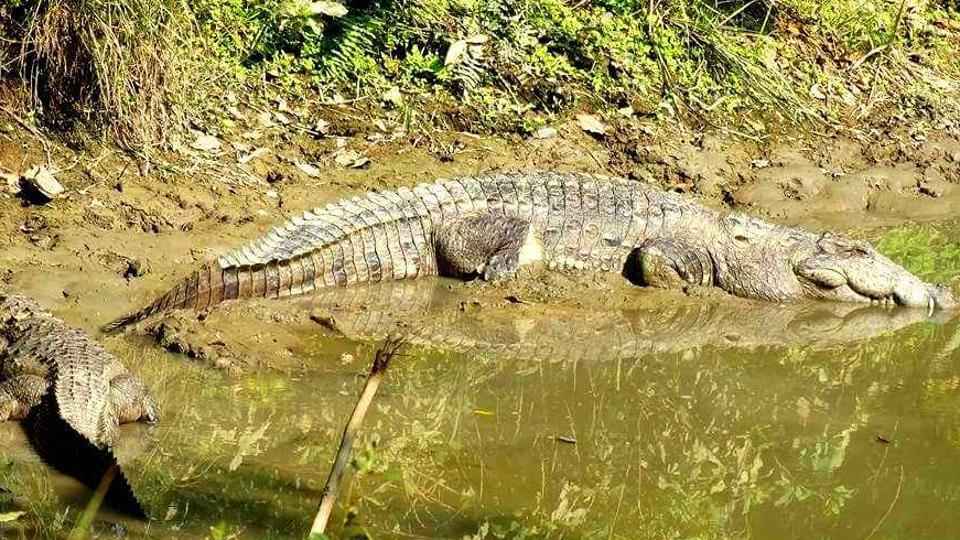
The Uttarakhand forest department has initiated drone-based crocodile counting in the Terai area of the state, officials said.
“For the first time, we are formalising a protocol for drone-based crocodilian census, which is an efficient and non-invasive way of counting the crocodiles,” said Parag Madhukar Dhakate, coordinator of the drone force and chief conservator of forests (CCF), western circle, Kumaon.
“The drone-based crocodile counting is being carried out in the rivers, nallahs and water bodies in Terai region, such as Lalkua, Nanak Sagar backwaters, Sharda river and its subsidiaries in US Nagar and Nainital districts. Unlike manual counting when the crocodiles come out for basking in the morning, the drone-based counting is non-invasive and covers large areas in less time,” he said. Forest officials claim it to be the first such initiative in the country.
Once drones are airborne, they get a live feed and geo-location of the crocodiles, Dhakate said. “Based on the feeds, the counting of crocodiles is done. It is also confirmed later with ground reports.”
Dhakate said Uttarakhand has become the first state in the country to have a dedicated drone force -- a fleet of 12 drones -- for surveillance and monitoring of state’s wildlife, especially in the context of threats to wildlife and environment.
“We are in the process of training forest guards to operate the drones; more drones will be acquired for all forest divisions of the state. These will be used for aerial patrolling in the protected areas, such as Corbett, Rajaji Tiger Reserve, and Nanda Devi National Park,” he said.
The last crocodile census in Uttarakhand was carried out in 2008 by the forest department in Corbett landscape where 123 crocodiles were found, said officials.
Ritesh Joshi, a scientist with the conservation and survey division at the ministry of environment and forests, said crocodiles are found in the state in Corbett landscape, Terai area, Bhanganga wetland in Haridwar, and Rajaji National park.
“In Uttarakhand, scientific census of crocodiles across the state is yet to be carried out. The need of the hour is to know their numbers and distribution, which will give some idea about what is happening to them.”
Joshi said crocodiles are facing threats and need to be protected. “The threats include habitat loss due to agricultural expansion, dam construction, industrial development, decline in prey abundance due to overfishing, water pollution, collection of eggs, poaching for body parts, use of gill nets, irreversible loss of riverine habitat by construction of barrages, irrigation canals, siltation, changes in river course, artificial embankments, and sand-mining,” said Joshi who has studied crocodiles in Uttarakhand.