
 E-Paper



Delhi riots: Govt grants sanction to prosecute Umar Khalid, others
On March 6, 2020 — a week after the riots — police filed a case to probe the alleged conspiracy behind the riots. Delhi police have claimed that the rioting was not spontaneous but was carefully planned.

 Prefer HTon Google


The Delhi police special cell probing the alleged conspiracy behind the Delhi riots is likely to file a charge sheet against former JNU student leader Umar Khalid and other arrested persons within the next ten days, according to officials in the know.
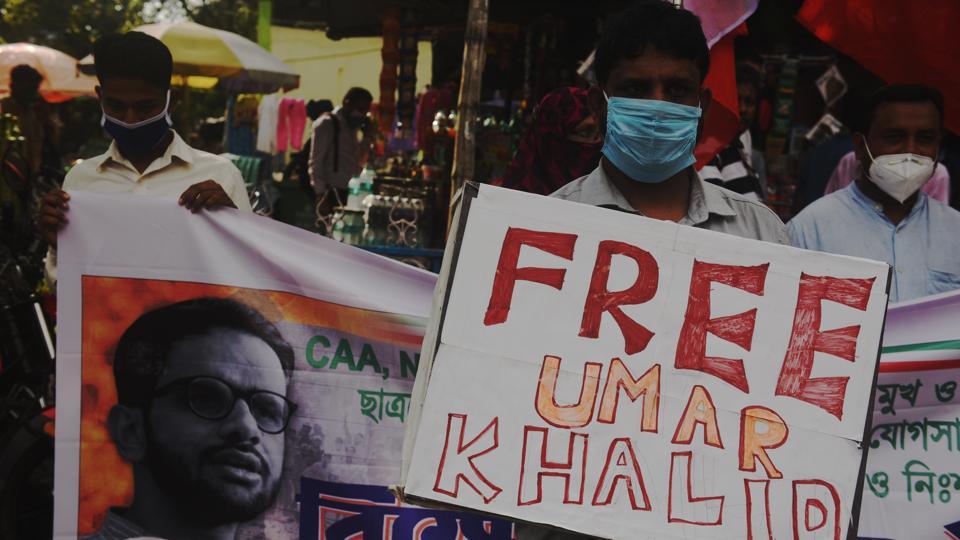
Delhi police officers, privy to the probe-related developments, confirmed they received the prosecution sanction from the state government last week, which grants permission to charge Khalid, JNU student Sharjeel Imam and an accused person named Faizan Khan under stringent sections of the Unlawful Activities Prevention Act (UAPA).
It is on the basis of this prosecution sanction that the court takes cognizance of the police’s charges, frames charges, and then starts trial. In some cases, such as those related to sedition and under sections of the UAPA, it is mandatory for police to get this sanction.
On March 6, 2020 — a week after the riots — police filed a case to probe the alleged conspiracy behind the riots. Delhi police have claimed that the rioting was not spontaneous but was carefully planned. The case was filed under sections 13, 16, 17 and 18 of the UAPA. The ministry of home affairs gives sanction for the police to prosecute an accused under section 13, while for the other three sections, the sanction is given by the state government.
“We had already got sanction from the Centre and were awaiting a similar sanction for the other three sections from the Delhi government. On October 28, we got the sanction. We will now file a supplementary charge sheet against the other accused persons,” said a senior police officer, who did not wish to be named.
At least 53 persons died while 400 others were injured in the 2020 Delhi riots. The violence started when groups of people — one supporting the Citizenship Amendment Act and another opposing it — clashed near the Jafrabad metro station on the evening of February 23. It snowballed into large-scale Hindu-Muslim clashes in parts of north-east Delhi between February 23 and 27.
Police had in September filed the first charge sheet in the case, in which they charged 15 persons under the aforementioned sections. Khalid had not been charged then because he was arrested on September 13, about a week before the charge sheet was filed.
The supplementary charge sheet is significant because though police have arrested 21 persons for conspiracy, they have alleged that Khalid was the main person who orchestrated the riots and brought the different groups together.
Khalid has in his court appearances, since his arrest, denied the charges and said that he was against the Citizenship Amendment Act and that he was not ashamed of that.
HT contacted spokespersons of the Delhi police and the Delhi government but despite repeated calls and text messages, they did not respond till the time of going to press.
Police have said that the riots were planned at the site of the anti-Citizenship Amendment Act protest, where different student groups, local leaders, activists and other persons came together. The arrested persons have denied the police’s allegations and termed their arrest a witch-hunt against anti-government voices.
In their earlier charge sheet, police had charged former councillors Ishrat Jahan and Tahir Hussain, activist Khalid Saifi, Safoora Zargar and Gufisha Fatima, students of Jamia Millia Islamia, Natasha Narwal and Devangana Kalita, both JNU students and members of the women’s collective Pinjra Tod. Except Zargar, who was released because police did not oppose her bail on humanitarian grounds (Zargar was pregnant at the time of her arrest), all the other arrested persons are in jail.
The Delhi government said: ”This is a purely procedural matter. The law department has given its legal opinion after due diligence to the home department of Delhi government. The elected government has no role to play in this. Delhi government has not stopped prosecution in any case in the last five years, including those pertaining to AAP MLAs and party leaders.”


