
 E-Paper



The lessons from Jharkhand assembly poll results | HT Editorial
Indian democracy is robust. The balance is good for the polity


The Jharkhand election, in which a coalition of the Jharkhand Mukti Morcha (JMM)-Congress-Rashtriya Janata Dal (RJD) has succeeded in dislodging the Bharatiya Janata Party (BJP) government, is a reflection of a broader pattern in national politics. For one, it shows, yet again, that the BJP is vulnerable at the state level — and Narendra Modi’s popularity at the national level is often not enough to help the party when issues are more local. This is a reflection of the weaknesses of the BJP’s chief ministers. It was visible in Madhya Pradesh, Chhattisgarh and Rajasthan in 2018; and in Haryana (where the party formed the government but did not have a majority on its own) and Maharashtra in 2019. Two, it shows that the BJP’s efforts to turn every election into a national battle on issues of nationalism, and introduce an element of polarisation, does not quite work. And three, it indicates that the rift between the BJP and its allies — first the Shiv Sena in Maharashtra post-polls, and now, the All Jharkhand Students Union in Jharkhand — is hurting the party. The BJP’s very dominance has created apprehensions among its smaller allies, and keeping the junior partners on board will be important to sustain its success.
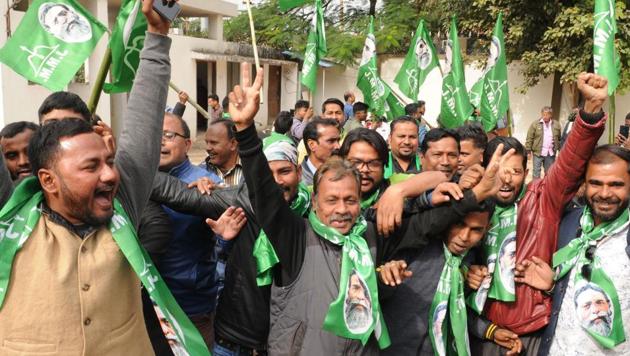
The outcome also has lessons for the Opposition. It shows that if the non-BJP parties build a campaign on local issues, focus on local leaders, avoid getting entangled in divisive national debates, and strike smart alliances, they have more than a chance in taking on the otherwise politically dominant BJP. This is the formula Sharad Pawar’s Nationalist Congress Party used in Maharashtra; it is what the Congress did in the three states it won in 2018 and Bhupinder Singh Hooda attempted in Haryana; and this is what the JMM-led alliance sought to replicate in Jharkhand. It will be instructive to see how the local versus national debate plays out in Delhi early next year, where the Aam Aadmi Party plans to focus on its governance.
And finally, the outcome shows that Indian democracy is robust. The BJP’s dominance had given rise to fears of a polity where only one force would exercise all power. But as state elections have shown, there is a system of checks and balances inherent in India’s constitutional arrangement, particularly through elections. The BJP leads nationally by some distance, but it has to contend with states ruled by others, take their concerns on board, and arrive at a degree of accommodation to make the country work. This balance within the polity is good for the system, and is a reflection of both the resilience of electoral democracy and the diversity of India.


