E-Paper



Do SIR's logical discrepancies target Muslims by design | Number Theory
The controversy regained traction in West Bengal when Muslim-majority districts received a disproportionately large share of notices

 Prefer HTon Google


When SIR was launched in Bihar, many expressed apprehensions about a politically motivated targeting of Muslim voters. Data – both at the district-level and a machine learning model-based analysis of elector rolls – did not support such apprehensions. The controversy regained traction in West Bengal when Muslim-majority districts received a disproportionately large share of notices – it is not clear whether all of them were issued under logical discrepancies – after the publication of draft rolls before the assembly elections and many residents ended up being disenfranchised until the completion of the adjudication process. Is SIR or its logical discrepancy component disproportionately targeted against Muslims? At least one machine learning model-based analysis published in The Hindu on October 14 made this case and said that “the reasons could have been designed in a manner that predominantly overlapped with the fact that the fertility rate is higher among Muslims”. Such a conclusion makes the proverbial mistake of missing the woods for the trees, according to a reading of The Hindu’s own data analysis and HT’s larger analysis. Here is how.

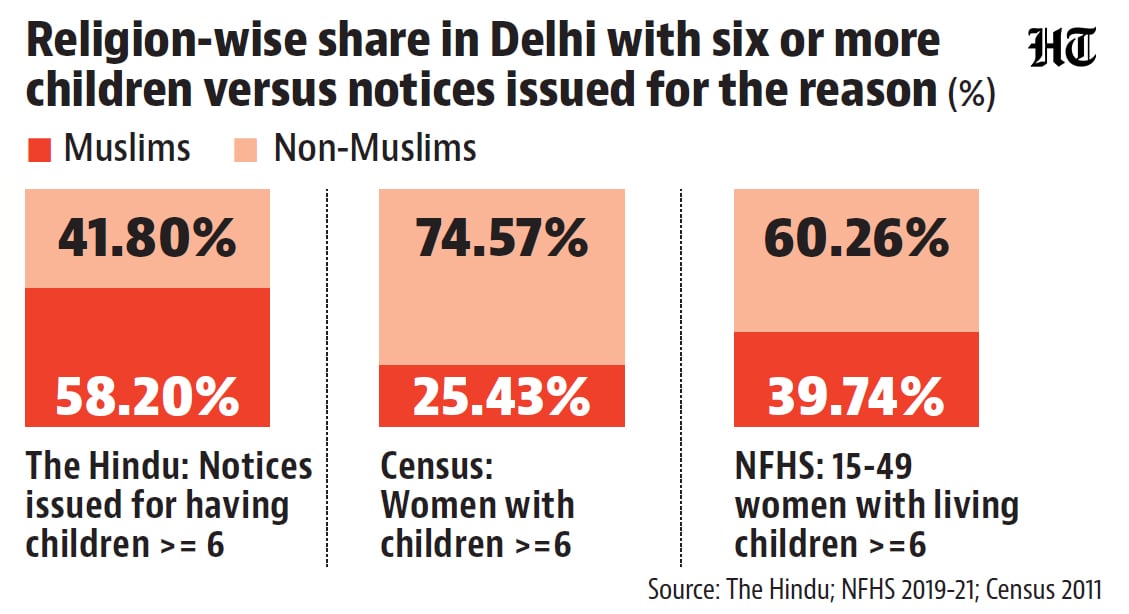
 Census and NFHS data for Delhi suggest Hindus should outnumber other religions in getting notices for having six or more kidsThe Hindu’s analysis shows that Muslims received a disproportionately large share of notices for having six or more children than Hindus (58% versus 42%). 2011 census or 2019-21 National Family and Health Survey (NFHS) data shows that Hindus outnumber Muslims in having six or more children. If notices were issued uniformly to everybody having six or more children, Hindus would get more such notices. Clearly, it is not the criterion but its application which has led to the gross asymmetry in issuing notices under this category.
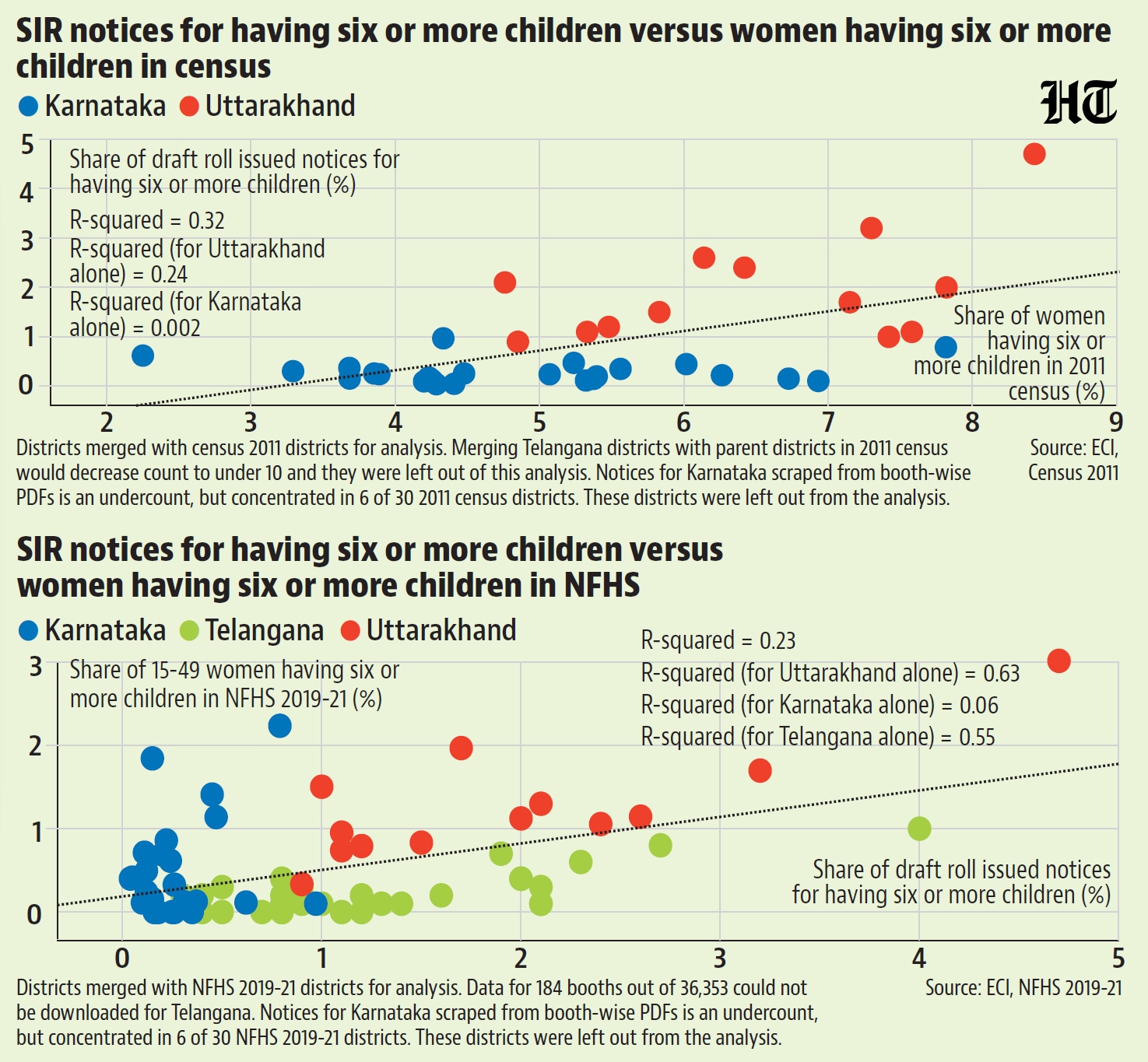
- An analysis of notices for six or more children in other three states also raise similar questionsA comparison of logical discrepancy notices issued for having six or more children in the four states does not necessarily follow the share of women having six or more children in either the 2011 census or the 2019-21 National Family Health Survey (NFHS) data, once again raising questions on how this criterion has been applied. This can be seen from a weak correlation between the district-wise share of women with six or more children and the share of notices issued for this reason in the states of Karnataka, Telangana and Uttarakhand taken together. This once again raises questions whether the criterion has been uniformly applied under SIR.
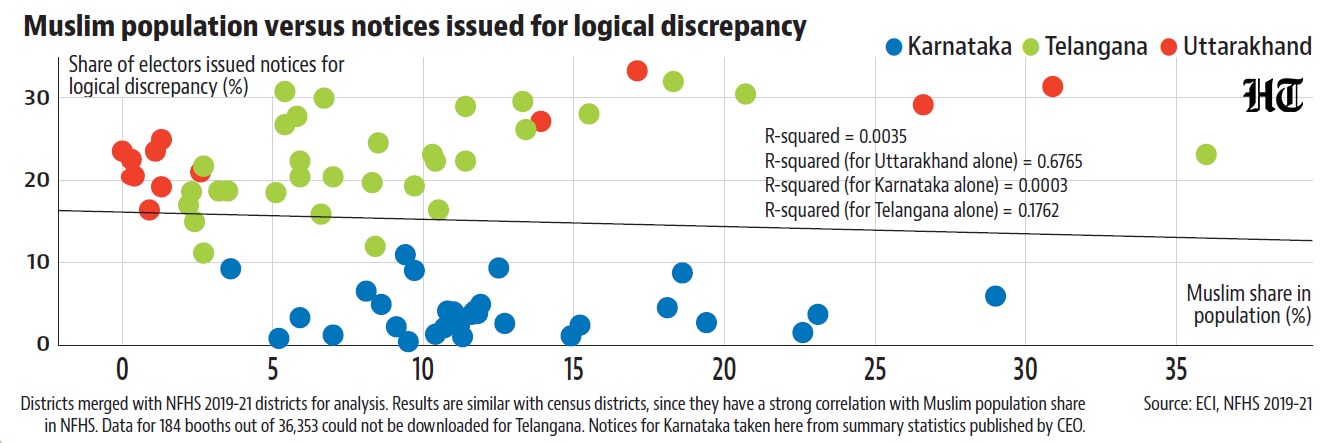
- Overall logical discrepancy notices issued do not seem to be correlated with Muslim population at the district-levelClick Here