
 E-Paper



Education ministry's first mental health survey: Key findings, recommendations
The survey, conducted in line with the National Education Policy 2020, attempted to present the perception of students about aspects of the personal self, social self, and academic perception.


New Delhi: In a first, the government has conducted a mental health and well-being survey covering 379,842 school students from across the country to understand their perceptions on aspects related to their mental health and well-being.
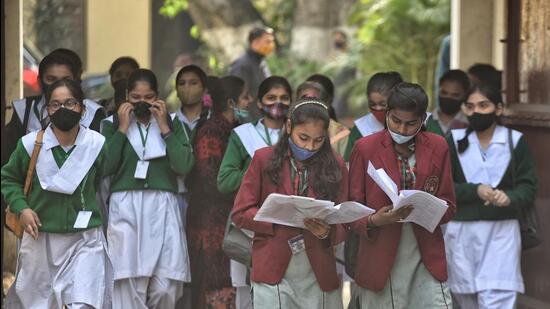
The survey was conducted in line with the National Education Policy (NEP) 2020 which acknowledged the importance of mental health and well-being, especially among schoolgoing children to promote their holistic development.
The Union ministry of education and National Council of Educational Research and Training (NCERT)’s Manodarpan Cell — which aimed to provide psychosocial support to students, teachers, and families — conducted the survey online, among students of classes 6 to 12 between January and March 2022.
Union education minister Dharmendra Pradhan said that the findings will be useful for teachers, educational administrators, policymakers, and educationists while preparing and planning pragmatic policies and programmes focusing on enhancing the mental well-being of students. This will then foster their overall growth, well-being and happiness.
The survey has been divided into two cohorts — the middle stage (class 6 to 8) and the secondary stage (classes 9 to 12). It attempted to present the perception of students about aspects of the personal self, social self, and academic perception. It also explored the feelings and emotions experienced and their preferred coping strategies.
HT looks at the key findings under different categories, and recommendations made by the researchers.
Understanding one’s self
According to the report, only 55% of students always feel confident about their physical appearance, and the dissatisfaction was more among students from the secondary stage. “An individual’s perception of their physical appearance is an important aspect of self-worth. Dissatisfaction with body image/appearance can have harmful emotional, psychological and physiological effects,” the report stated.
It further highlighted that only 43% of the total respondents admitted to being able to quickly adapt to changes, and the response of students at the middle stage (46%) was higher than students at the secondary stage (41%).
In terms of confidence, at least 28.4% of the respondents were hesitant to ask questions when having difficulties in understanding. Besides, 23% of students expressed frequent difficulty in initiating conversations. The report highlighted that a “lack of confidence” may also “adversely affect” the learning of students, leading to feelings of insecurity, fearfulness, and anxiety.
Understanding one’s self in Social Context
Under this section, the different dimensions of the social self such as social interactions, perception of qualities, behaviours in social situations, and peer pressure were explored.
The report finds that a large proportion (85%) of students surveyed give in to peer pressure most of the time. The study termed negative peer pressure as a “serious social and health risk” and suggested preparing adolescents to face negative peer pressure more effectively.
“33% of the total respondents agreed that they try to please friends most of the time by adhering to what their friends want. The response trend was similar at both stages, with a little decrease as they moved to the secondary stage,” the findings stated.
Only 25% of students believe their teachers consider them capable of leading others on all occasions. The responses of students in the middle stage (28%) were higher than students at the secondary stage (22%), reflecting a decrease in one’s perceptions of being a leader in the advancing stage of schooling, the report stated.
Academic perceptions
The report defined academics as one significant aspect of a student's life, which impact their overall well-being, while highlighting that only 39% of the respondents stated that they are always satisfied with their academic performance. It calls for identifying the reasons for students' low satisfaction with academic performance, especially among secondary-stage students.
The report further highlighted that 81% of the respondents cited “studies, examination and results” as a major cause of anxiety. “The most frequently cited reason for anxiety was studies (50%) followed by examinations and results (31%),” the survey findings stated, adding that students in the secondary stage recorded higher levels of anxiety in these parameters.
Dr Nimesh Desai, a psychiatrist and former director of the Institute of Human Behaviour and Allied Sciences (IHBAS), said that this anxiety should not be seen through a psychiatric prism. “Some amount of anxiety and stress is a part of all human lives, including adolescents. For adolescents, one of the major causes has to be exams and performance. This can be handled through teachers and school counselling programmes. However, there should also be some screening mechanism to identify those students who need clinical help,” he said.
Dr Desai added that "physical appearance" has always been found to be a common worrying factor among adolescents due to various societal influences. Therefore, more students from the secondary stage were found to be conscious about their physical appearance.
It also highlighted that 36% of total students agreed to do well in studies for social value and approval-seeking.
Emotions and issues amid Covid-19
The report highlighted that 45% of the total responses mentioned feeling tired and low on energy, 34% felt tearful, and 27% felt lonely 2-3 times a week. Students at the secondary stage reflected markedly higher worry about the future than those of the middle stage.
The report revealed that during the Covid-19 pandemic, a higher percentage of responses from the secondary stage (48%) indicate they experienced mood swings as compared to their younger peers (37%). At least 13% of students from the middle stage and 15% from the secondary stage, indicated experiencing extreme emotions such as “emotional breakdown”.
Dr Desai said that children got more affected amid the pandemic. “Now after over two years of the pandemic, there is widespread psychological unrest among many population groups, especially the young adolescents. This is because of the long-term effects of the lockdown, the absence of academic and extracurricular activities except for online classes, and the resultant reduction in social activities. Besides, there have been uncertainties of academic schedules and apprehensions about the possible impact on jobs and careers,” he said.
Gender-wise analysis
When looked at it from a gender perspective, the overall data reveals more boys said that their commonly experienced emotion was “happiness” than girls. While boys reported experiencing happiness more than girls, the opposite trend was observed for anxiousness. Girls also reported experiencing more mood swings, and feeling tired, tearful and lonely. This is further reiterated by a higher percentage of girl students reporting feeling anxious about their studies, examination and results.
In the case of third-gender students, “anxiousness” was reported as the most commonly felt emotion followed by loneliness and sadness. The frequency of such emotional experiences was reported as occurring almost every day. Mood swings were the most intensely experienced emotion among these students. They also reported that the majority of the time, they lose hope in stressful situations.
Recommendations
The researchers recommended that schools should prepare for addressing and nurturing the mental and emotional well-being of students by creating enabling conditions of care, trust and inclusive practices. They should orient and sensitise stakeholders about the developmental characteristics of students across all stages.
They also recommended integrating mental and emotional well-being at all stages of education in the school curriculum, as well as in the “teacher education curriculum”. They suggested making an assessment of mental well-being (personal, social and emotional) as visualised in NEP, 2020, a part of the Holistic Progress Card (HPC) of students.
Dr Desai said that all these recommendations should be implemented in schools, and in the future, the survey should also try to capture the “degree of the problem”. “The survey should also include the perceived need for help. It will add more value to such a study,” he said.
Educationist Meeta Sengupta said surveys are crucial because they keep policymakers informed about ground realities in classrooms and the lives of learners. “But it must be designed carefully to provide meaningful inputs that are useful to specific decisions and direction,” she said.
Sengupta said that such surveys will inform and influence teacher training. “Teachers need to know how to position their teaching, to be careful in creating safe spaces for learning and better engagement. However, one survey is never enough. This has to be a part of an approach. Even this or any other survey will need updating and validation through more surveys and other means,” she said.
 ABOUT THE AUTHORFareeha Iftikhar
Fareeha Iftikhar is a Special Correspondent with the national political bureau of the Hindustan Times. She tracks the education ministry, and covers the beat at the national level for the newspaper. She also writes on issues related to gender, human rights and different policy matters.Read More


