
 E-Paper



The crisis we can’t ignore: Why empowering teachers is non-negotiable
Teachers’ Day: On Teachers' Day, we recognise the vital role educators play in transforming lives and society.

 Prefer HTon Google


For me, Teachers’ Day is more than a ceremonial tribute. It is about remembering the countless faces of students whose lives were changed by a teacher who believed in them. It is about recognising that every good doctor, engineer, lawyer, artist, professor, and entrepreneur exists because of a teacher. As a teacher myself for decades, I have witnessed how a single encouraging word, a well-crafted question, or even a moment of silence in a classroom can alter the course of a student’s life.
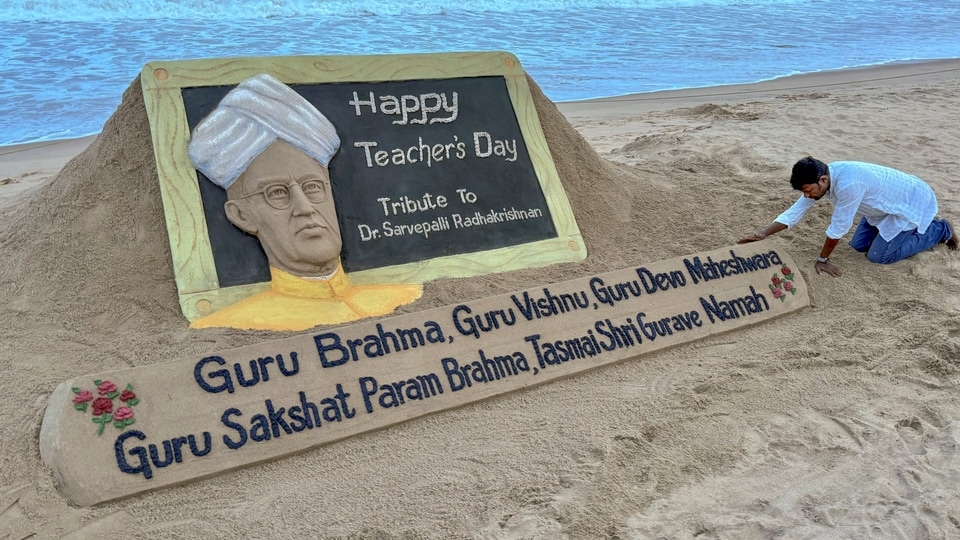
I have seen both privilege and constraint in education — on one end of the spectrum, global universities with access to resources, technology, and networks; —on the other, Indian classrooms where teachers perform miracles with little more than a blackboard and their own determination. This dual perspective has convinced me that teachers are the true bridge — between rural and urban India, between traditional wisdom and modern innovation, between aspiration and opportunity.
Teachers' Day 2025: History, significance and motivational quotes by Dr Sarvepalli Radhakrishnan
The Hidden Struggles of Teachers
Behind the flowers and greetings lies a stark reality: teaching today is one of the most demanding professions. Caught between rising expectations and limited resources, teachers must keep pace with technology, meet diverse learning needs, and prepare students for jobs that don’t yet exist. Added to this are, large classroom sizes, the mounting pressure: administrative loads, research expectations, and the demand to constantly reinvent teaching. In rural India, challenges multiply — with inadequate infrastructure, lack of digital access, and a growing rural–urban divide.
Burnout: The Unspoken Crisis
One of the most unacknowledged crises in education today is teacher burnout. Extraordinary teachers, brilliant in their craft, quietly admit they are exhausted. Long hours of teaching, coupled with grading, paperwork, and pressure to publish or innovate, leave many drained. Emotional labour — mentoring students through personal, social, and economic challenges — often goes unrecognised but without it, no student would feel truly guided. Addressing burnout requires systemic change: smaller class sizes, supportive policies, and a cultural shift that values teachers’ contributions beyond mere academic delivery. Investing in teacher well-being is not indulgence but a necessity for sustaining quality education.
Teachers' Day 2025: Why India celebrates it on Sept 5 and others on October 5
Teachers as Architects of Change
Despite these challenges, teachers across India are reshaping the education system from within. Many are experimenting with interdisciplinary approaches: blending technology with social sciences, or design thinking with business education. Others are reaching beyond the classroom, mentoring students on values, resilience, and empathy. In rural classrooms, teachers are using the simplest tools — stories, local knowledge, and sheer creativity — to keep the flame of curiosity alive or using technology not just to modernise, but to make learning inclusive for first-generation student. Their resilience and creativity are quietly rewriting the script of Indian education.
The collective strength of our teachers lies in the diverse roles they play: the Adhyapaka who transmits knowledge, the Upadhyaya who facilitates understanding, the Acharya who hones practical skills, the Pandit who offers deep insights, the visionary Drashta, and the true Guru who awakens wisdom. This holistic vision is not new; it is deeply rooted in our heritage. What excites me is its contemporary validation — through the National Education Policy and the recent UGC guidelines encouraging a return to the spirit of the Gurukul system. This layered model, which nurtures both intellect and wisdom, is the model of education we must commit to building.
The new Canada? Why Indian students are now looking to Australia for higher education
Why Skilled and Committed Teachers Matter
India’s demographic dividend will remain only a promise unless we invest in skilled and committed teachers. Training programs must go beyond pedagogy to include mentoring, research, and leadership. More importantly, society must restore respect for teaching as a profession of choice — one that shapes every other profession. A teacher who is empowered and inspired can transform hundreds of lives; multiply that across India, and the impact is nation-building.
Equally, we must bring more women into teaching and academic leadership. Women remain underrepresented in higher education leadership, yet wherever they are empowered, they bring empathy, inclusivity, and courage to challenge entrenched hierarchies. Our education system cannot afford to leave half its potential untapped.
A Teachers’ Day Reflection
This Teachers’ Day, let us go beyond gratitude. Gratitude is important, but action is urgent. We must provide teachers with autonomy, professional development, and recognition. We must make teaching a career of first choice, not last resort. Most importantly, we must remind ourselves that teachers are not simply part of the education system — they are the system. Let us create an ecosystem where they can continue to dream, innovate, and inspire without burning out.
Teaching is not about delivering knowledge; it is about shaping lives.
When teachers thrive, students flourish.
When students flourish, societies progress.
And when societies progress, nations transform.
(Author Dr. Anubha Singh is Deputy Vice Chancellor, Sai University. Views are personal.)


