
 E-Paper



Survey highlights gaps in safe commutation of school children in India
“National Study on Safe Commute to School” survey has been conducted by NGO SaveLIFE Foundation and Mercedes-Benz Research and Development India (MBRDI).


At least 47% of of about 12,000 children and parents surveyed across 14 cities, including Delhi, Mumbai, Bengaluru and Kolkata, have admitted that school buses and vans do not have seatbelts, while around 30% of the children said they have witnessed a crash at least once on their commute to or from school. These are the findings of a latest study - “National Study on Safe Commute to School” - conducted by NGO SaveLIFE Foundation and Mercedes-Benz Research and Development India (MBRDI) which highlights gaps in road safety for children in the country.
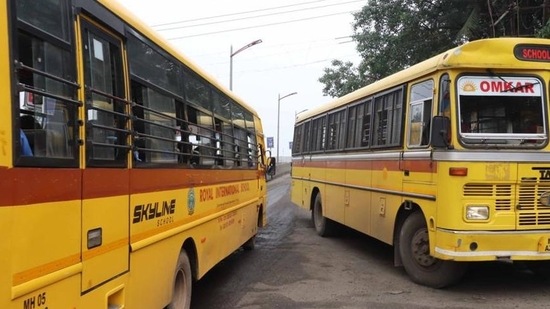
In Delhi, where schools are likely to reopen after the festive season, at least 40% respondents pointed at the lack of seatbelts in school buses, cabs and vans. About 22% of the respondents in Delhi were unaware whether the vehicle was fitted with speed governors, while nationally this stood at 54%. In 2019, 11,168 children below the age of 18 died due to road crashes, out of which 63 deaths took place in Delhi alone.
“As of date, over 25 states and union territories have announced the reopening of schools. While there is a vaccine for Covid-19, the vaccine for child deaths on our roads is really our collective action. Our findings through this report have once again emphasised that the right to a safe commute to school is as important as the right to education itself. A comprehensive national and state school transport safety policy can ensure that, which currently is lacking in out country,” said Piyush Tewari, founder & CEO of SaveLIFE Foundation, a non-governmental organisation that works on improving road safety and emergency medical care across India.
The study, which also focused on the safety of children at the school zone revealed that nationally, close to half of the respondents reported that there was no cycling track present at the school zone, and 30% of the respondents reported the absence of footpaths at the school zone. In Delhi, a whopping 63% of respondents claimed that there were no cycling paths across the school zone, and 29% reported the absence of footpaths. Further, 98% of the respondents that commuted to school by walking reported that they never used retro reflective stickers. Delhi schools briefly reopened in January 2021. However, due to the second wave of Covid-19, the schools were shut again. At present, classes 9-12 are allowed to go to school in the national capital.
Manu Saale, Managing Director and CEO, MBRDI, said it is now very important to upgrade infrastructure around schools. “Redoing signage around schools to notify speed limits, building speed breakers where necessary, drawing up zebra crossing, and giving reflective jackets to children who walk around their schools are some of the urgent things that need to be looked into,” he said.
“Also, enforcement measures near school zones should be stricter to minimise exposure of children to moving traffic. Schools should deploy traffic marshals to assist children in crossing roads safely in the school zones,” Saale said.
The study found that 24% of the child respondents using school affiliated transport mentioned that they mostly or sometimes complain about rash driving/overtaking/jumping red light at the traffic signals. Further, 22% of the children claimed that they never wait for the vehicle to completely halt before boarding or de- boarding.
A large proportion of respondents in Vijayawada (87%), Kolkata (70%), Patna (65%) and Jamshedpur (61%) claimed that their vehicles were not equipped with seatbelts. Over half of the respondents from Mumbai claimed that the authorised speed limit for the vehicle was not displayed on the vehicle. Further, 56% of the respondents from Kolkata were unaware if their vehicles were fitted with speed governors. Additionally, 19% of the respondents from Mumbai and 15% of the respondents from Bhopal claimed that their vehicles had unreliable locks.


