
 E-Paper



Blow up
A sneak peek at pictures from master photographer Steve McCurry’s book in the making. Paramita Ghosh reports.


Alot of people come to India. Some, never leave. “India is in most of my books”, says famous American photographer Steve McCurry who first came here when he was 27 and has, since, been partial to his favourite cities — Varanasi, Haridwar — and kind even to old troublesome memories made elsewhere.

“It was bad timing. I had come to cover a story of rats attacking bamboo flowers in Mizoram and there was supposed to be a lakh of them. When I arrived, I found one or two”, says Steve with a laugh during a phone-call from New York. India, on the whole, has not given him trouble. On each visit, however, he has seen its story change. “This used to be a sleepy place. Now, it’s on an economic rampage.”
This shift perhaps also explains a new India’s relationship with photography. With exposure. With speed. “The clothes, hairdos have all changed. Photography is now more casual. You no longer wait for the big occasions to click a picture,” says the . The quality of welcome, he adds, is unchanged. Up close and personal in India depends, he says, on how close one wants to be. “People have been accommodating”, he says unlike in Afghanistan where “there are restrictions.”
Speaking of Afghanistan, certain questions come to mind. McCurry’s famous picture of Sharbat Gula, the ‘Afghan Girl’ has been considered the ‘face’ of the Afghan people’s misery after the Soviet invasion.
The picture made the cover of the June 1985 issue of the National Geographic. The Sharbat Gula Justice Center runs in her name. Which picture of McCurry, one wonders, could be the face of the aftereffects of America’s war in the same region? “I just show what’s happening”, says the photographer. “People just want to live their lives. It does not matter to them if the war is run by the NATO, Taliban, Russians or Americans.”
 |
a.jpg) |
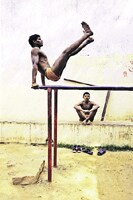
| This scene from a body-building club in Varanasi is part of the new collection. "Varanasi is among the world’s top 10 culturally rich cities", says McCurry | One of Steve McCurry’s iconic pictures: A mother and child begging for alms seen through a taxi window during the monsoon in Bombay, 1983. |
a.jpg) |
a.jpg) |
| Kumbh Mela, 2010, is a shot from the new book. "Any thinking, breathing person would be fascinated by India, its weddings, places like Haridwar, Kerala, Rajasthan... India speaks to me, and I’ve visited it 80 to 90 times," says the photographer | 60-year-old American photographer Steve McCurry (right) is best known for his photograph, the ‘Afghan Girl’ |


