
 E-Paper



‘Dog Day Afternoon’ Review: A Robbery Revisited on Broadway
Pulitzer winner Stephen Adly Guirgis adapts the classic Sidney Lumet film about a Brooklyn bank heist in a production starring Jon Bernthal


 Prefer HTon Google


New York
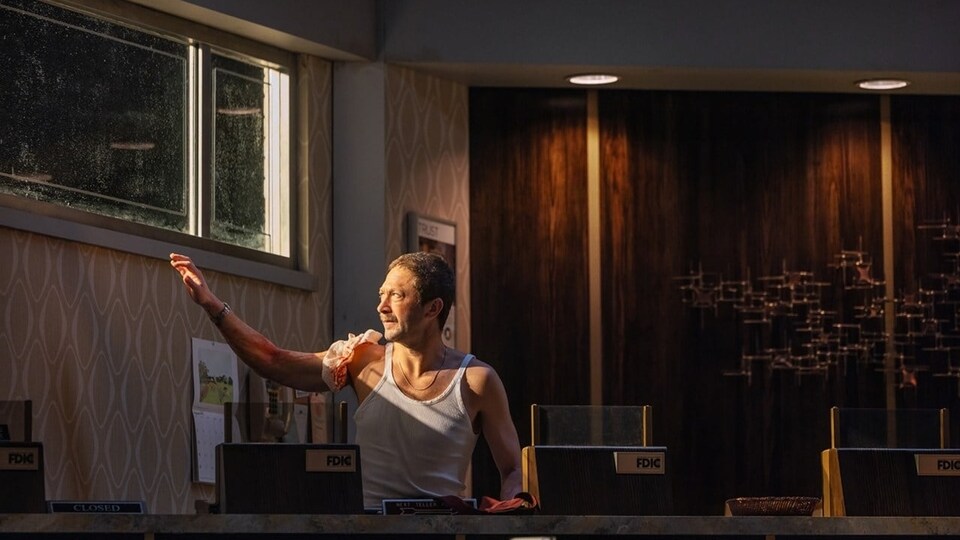
“Is it a musical?” That’s the question I fielded most often about the new Broadway adaptation of the 1975 movie “Dog Day Afternoon.” It isn’t—and it’s tempting to add: Praise be! Generally when popular movies become stage works they start singing, and the sound is rarely euphonious.
While I was relieved that Sidney Lumet’s classic crime drama had not had its grit turned to gloss by the addition of an uplifting score, the stage version, written by Stephen Adly Guirgis and directed by Rupert Goold, never entirely rises above the pedestrian. It’s lively and funny, but it doesn’t reimagine the film or fully recreate its propulsive energy. It’s a faithful facsimile—with a singular ingredient absent: the soulful performance of Al Pacino in the central role of the hapless bank robber Sonny. (If it isn’t Mr. Pacino’s greatest performance, it’s mighty close.)
A moderately shticky opening finds Sonny’s accomplices, Sal (Ebon Moss-Bachrach) and Ray-Ray (Christopher Sears), approaching a soon-to-close bank branch in Brooklyn. When a guard tells them they just beat the clock, the nervous Ray-Ray sputters, “Oh we’re not together—right, Sal?. . . Um, I meant sir, not Sal—right, Sal?”
When Sonny (Jon Bernthal) arrives a few minutes later, the heist quickly spirals toward disaster. After the panicky Ray-Ray passes his guitar case to Sonny, out tumbles . . . a guitar, not the shotgun Sonny expected. (Also shticky.) In the chaos that follows, a gun accidentally goes off, the hysterical Ray-Ray flees after soiling his pants, and the guard, Mr. Eddy (Danny Johnson), falls to the ground unconscious.
These details are mostly new, but the broad contours of the plot stick firmly to the narrative of the movie, based on an actual incident that took place in 1972. Sonny finds himself tripping over his ineptitude and tangled up in conflicting sympathies—he’s almost as anxious as his hostages, whom he treats with an apologetic kindliness, almost like a party crasher who’s broken a vase. Sal stews morosely amid bursts of threatening belligerence that Sonny tries to tamp down. When the cops soon come calling, Detective Fucco (a crusty John Ortiz) plays the good cop, trying to reason with Sonny, until the bad cop arrives in the form of a grim-faced FBI agent (Spencer Garrett), and matters turn more serious.

Mr. Bernthal, an Emmy winner for “The Bear,” imbues Sonny with a pinballing energy as he gabbles orders at the hostages and begins flailing negotiations with the cops massing outside. He evinces the warmhearted humanity that Sonny tries feebly to hide when he believes he has to show menacing swagger. And in the crucial scene when Sonny is put on the phone with Leon, whom he calls his wife—Sonny’s motive is to pay for Leon’s sex-reassignment surgery—he strikes moving notes of pathos. Still, with his chest-hugging T-shirt and rugged handsomeness, Mr. Bernthal recalls John Travolta in his early prime rather than the sweaty, disheveled but endearing desperado memorably created by Mr. Pacino.
In the smaller role of Sal, although it has been somewhat amplified here, Mr. Moss-Bachrach, also an Emmy winner for “The Bear,” maintains an effective, brooding presence. Sal quietly seethes with irritation at Sonny’s misbegotten machinations, his chilly demeanor suggesting a tense and potentially dangerous volatility.
And the production has a significant asset in the stage veteran Jessica Hecht, who portrays the chief teller, Colleen, a role Mr. Guirgis has wisely expanded. As her initial sarcastic antagonism toward Sonny melts, Ms. Hecht imbues her performance with a maternal protectiveness toward him that’s funny and touching; it’s entirely believable when she refuses to be released during Sonny’s negotiations with the police, advising him to offer up another teller: “No one likes her.” The entire supporting cast is excellent, with Esteban Andres Cruz a natural standout as the petulant Leon, complaining: “I’ve never been so scared in my life, Sonny! One minute I’m in Bellevue—relaxing—and next thing I know all these cops burst in.”

Mr. Guirgis is in many ways an ideal interpreter of the material. A Pulitzer Prize winner for “Between Riverside and Crazy,” he writes punchy dialogue and specializes in characters scraping by on the margins of New York life. His adaptation maintains a knockabout, almost farcical pace. I am not sure endowing Sonny with a social conscience, presumably intended to point up the material’s contemporary relevance, is an improvement. It is, however, in keeping with the antiestablishment tenor of the movie, which is dutifully recreated here by Mr. Goold when Sonny steps outside the bank and exhorts the supportive onlookers (the audience) to cheer him on with cries of “Attica! Attica!”
But at times the strain of keeping up the brisk timing of the movie to fill two hours of stage time on essentially a single set results in comic vamping. A passage in which an argument erupts over which nearby shop sells the best donuts, for instance, descends into absurdity when Mr. Eddy suddenly rises from his state of near-unconsciousness to offer his opinion. (Again with the shtick!) “Dog Day Afternoon” makes for a largely diverting evening, but like many if not most stage versions of beloved films it never entirely succeeds at laying to rest the ghosts of its cinematic past.
Dog Day Afternoon
August Wilson Theatre, 245 W. 52nd St., New York
888-959-1878, closes July 12
Mr. Isherwood is the Journal’s theater critic.


