
Sign in

Gurgaon: Non-functional tag readers at Kherki toll hassle commuters

Commuters said that despite separate lines for smart tag users, there is no segregation of vehicles at the toll

Updated on: Oct 25, 2017, 22:47:02 IST
Hindustan Times | By , Gurgaon
Share
Share via
  • facebook
  • twitter
  • linkedin
  • whatsapp
Copy link
  • copy link

Residents of up and coming sectors near Kherki Daula toll plaza said they are facing problems crossing the toll at peak commuting hours, as the tag readers are not functional.
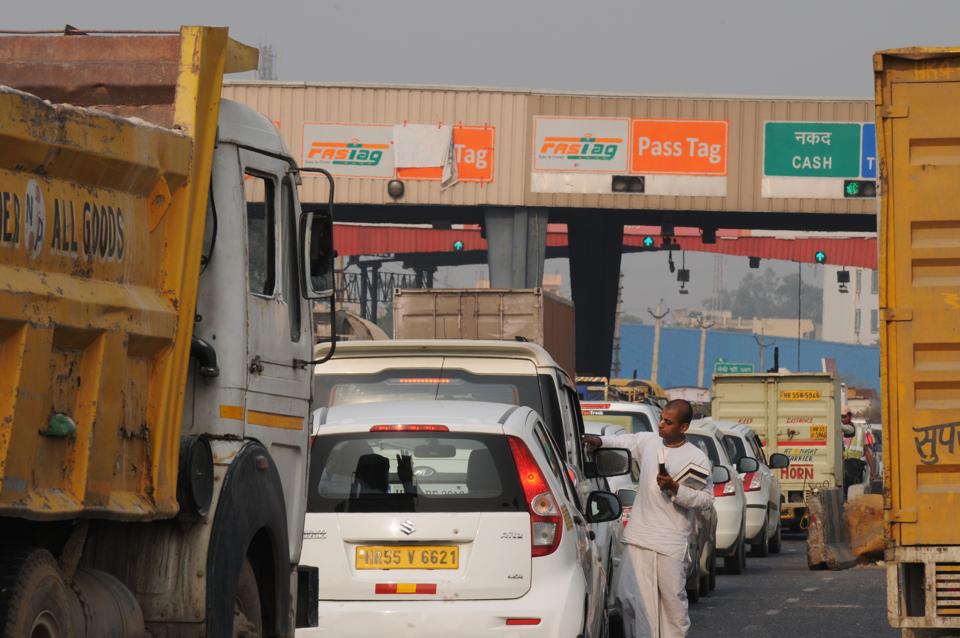
Commuters said they are unable to avail of Radio Frequency Identification tags at the Kherki toll. (Parveen Kumar/HT PHOTO)

A resident on the way for the medical examination of his wife who is in the last trimester of her pregnancy, had to wait for half-an-hour on Wednesday morning.

Although all the lanes are equipped with smart tag readers, commuters are stuck in long queues every day as the staff enter their details manually. Commuters passing through the Kherki Daula toll plaza are entitled to using Radio Frequency Identification (RFID) tags, but allege that they are unable to avail of it. Instead, they said they have to spend more than half-an-hour in queue before crossing the toll.

Ambrish Awasthi, a resident of Orris Carnation, Sector 85, was stuck on Wednesday morning with his pregnant wife. “I am worried now as I need to take my wife for a check-up and there are just days to go for her delivery. This is our first child and I am super excited, but at same time concerned as the traffic situation is getting worse by the day.”

“I can’t even take my wife to a relative’s place because of the traffic situation. When I complained to a traffic officer, he abused me and dared me to approach the government. I wasted another 10 minutes arguing fruitlessly with him. Today, I felt helpless and reached office with a heavy heart,” Awasthi said.

Despite dedicated lines for smart tag users, commuters complain that there is no segregation of vehicles by traffic marshals on the toll.

However, the Millennium City Expressway Limited (MCEPL), which operates the toll plaza, said they started a survey since Tuesday enabling monitoring of registration numbers of vehicles manually.

“We have asked our toll operators to enter the registration number manually in order to get the exact data of the numbers of vehicles passing through the toll every day. The survey will help us arrive at an estimate on how many vehicles use the toll and how many times the same vehicles pass through,” said T Raju, senior manager, MCEPL.

Read I Gurgaon: Kherki toll shifting hits fresh hurdle

“Since Monday, operations at the toll plaza have slowed down. Despite long queues, the staff at the booths do not hustle, and instead, take a lot of time to enter the details of a vehicle. It seems they have hired trainees,” said Deepak Bansal, a resident of Monsoon Breeze, Sector 78.

The residents alleged that the vehicles with no smart tags and the ones with tags often get mixed up and end up in the same lane. This leads to severe congestion and long snarls.

“Crossing the toll in the evening is a major problem these days, as it takes more than half-an-hour. When we complain to the staff about it, they get aggressive,” said Shalini Baweja, an industrialist who travels from Sector 5 IMT Manesar in Sector 15 everyday.

  • Leena Dhankhar
    ABOUT THE AUTHOR
    Leena Dhankhar

    Leena Dhankhar is Senior Editor and Bureau Chief, Gurugram, at Hindustan Times, where she has spent over 17 years chronicling the transformation of one of India's fastest-growing urban regions. From starting her career as a crime reporter to leading the Gurugram bureau, her journalism has been defined by investigative reporting, in-depth storytelling and an unwavering focus on public interest. Over nearly two decades, she has reported extensively across crime, politics, civic governance, elections, real estate, environment, courts, sports, education and entertainment, covering Gurugram, Faridabad, Nuh and Palwal. Her reporting has exposed several major scams and systemic failures, including insurance frauds, waste management irregularities, illegal arms manufacturing units in Nuh, illegal mining in the Aravallis, organised crime networks and governance lapses affecting millions of residents. Known for her investigative work and exclusive stories, Leena has reported on high-impact national issues, including the Nicaragua charter flight carrying Indian migrants that was turned back amid allegations of human trafficking, exposing the growing network of illegal immigration rackets. Her work has also focused on gang wars, prison administration, juvenile crime, women and child protection systems, the functioning of the Juvenile Justice Board and Child Welfare Committee, and environmental challenges such as pollution, waterlogging and deteriorating civic infrastructure. Beyond hard news, Leena has extensively documented Haryana's rich heritage, forests and wildlife, bringing attention to the state's historical landmarks, biodiversity, conservation efforts and ecological challenges through immersive reportage and feature writing. Her journalism has consistently gone beyond breaking news. She has documented Gurugram's rapid urbanisation through long-form narratives and enterprise reporting on issues ranging from pothole-ridden roads, flooding and waste management to the changing social fabric of India's Millennium City. She also writes widely read feature columns, including The Outsider, Changemaker, and Concern for Gurugram, profiling people, places and ideas shaping the city's identity. Leena is the author of Gurugram School Murder, published by Juggernaut Books, a deeply reported account of one of India's most high-profile school murder investigations. She is currently working on her second book, an investigative work exploring some of India's most significant scams and fraud investigations. Beyond print journalism, she has expanded her storytelling through public speaking and digital media. She is a TEDx speaker and has produced podcasts exploring Gurugram's transformation, civic challenges and untold stories. Her work reflects a commitment to narrative journalism that combines rigorous reporting with compelling storytelling. A law graduate with an MBA in Human Resources, Leena brings a multidisciplinary perspective to her reporting, particularly on governance, public policy and legal affairs. She has travelled extensively across India to pursue investigative assignments, often reporting from remote locations and conflict-prone areas in search of stories that matter.Read More