
 E-Paper



Poor sleep affecting your child’s health? Keep the phone away from bed

 Prefer HTon Google


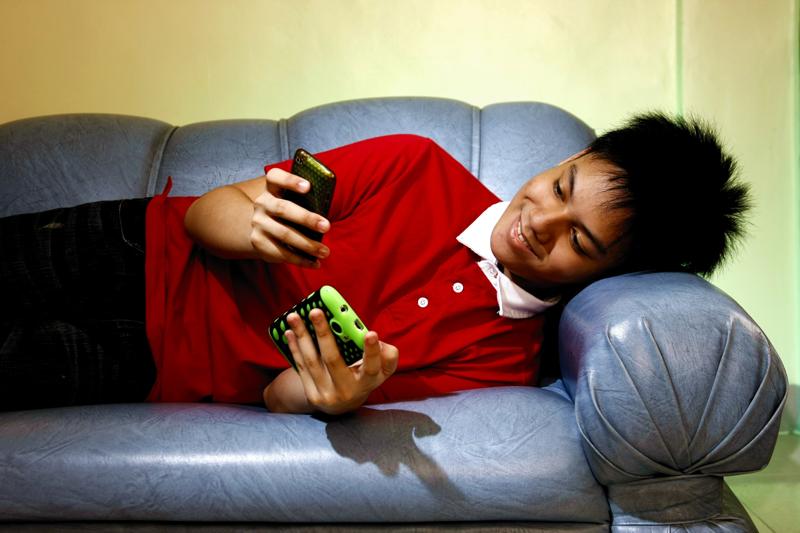
Does your child indulge in playing games or watching videos on a smartphone or tablet even during bedtime? Beware, he/she may be over double the risk of having inadequate sleep, which may lead to various health issues, says a new study.
Does your child indulge in playing games or watching videos on a smartphone or tablet even during bedtime? Beware, he/she may be over double the risk of having inadequate sleep, which may lead to various health issues, a study has found.
Sleep is an often undervalued but important part of children’s development, with a regular lack of sleep causing adverse physical and mental health consequences, including poor diet, sedative behaviour, obesity, reduced immunity, stunted growth and mental health issues, said the researchers from Cardiff University in Britain.
Currently 72% of children and 89% of adolescents have at least one device in their sleeping environment and most are used near bedtime. “With the ever-growing popularity of portable media devices, such as smartphones and tablets, the problem of poor sleep amongst children is set to get worse,” said Ben Carter from Cardiff University.
Such devices are thought to adversely impact sleep through a variety of ways including displacing, delaying or interrupting sleep time, psychologically stimulating the brain, and affecting circadian timing, sleep physiology and alertness, the researchers noted.
“Our findings suggest that an integrated approach involving parents, teachers, and healthcare professionals is necessary to improve sleep habits near bedtime,” Carter added.
For the study, reported in the journal JAMA Pediatrics, the team conducted a systematic review of 20 existing observational studies, involving 125,198 children.


