
 E-Paper



Salmonella poisoning linked to climate change: Lancet
The current study analysed the genomes of more than 480,000 Salmonella samples from 139 countries collected between 1940 and 2023.

 Prefer HTon Google


A new study published in The Lancet Planetary Health journal on Tuesday linked climate change to rising antibiotic resistance in Salmonella — a common cause of food poisoning worldwide.
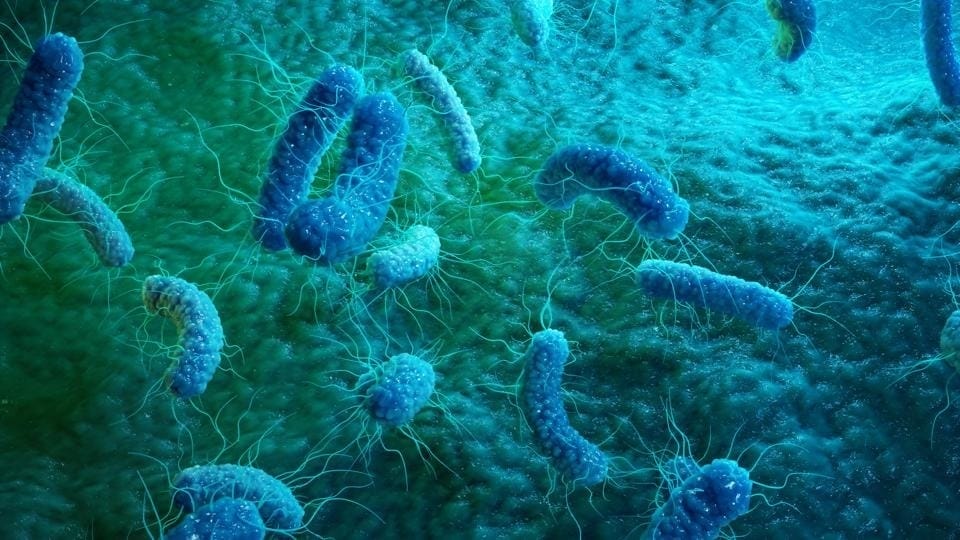
The first-of-its-kind study, titled “Association of climate change with the spread of antimicrobial resistance genes in Salmonella: a longitudinal ecological and modelling study” said that climate change was “associated with a 10% global increase in Salmonella antibiotic resistance genes between 1940 and 2023.”
Salmonella bacteria infect the stomach, causing symptoms such as diarrhoea, fever and pain.
The study said that while antimicrobial resistance (AMR) is mainly driven by the overuse and misuse of antibiotics, which allows resistant bacteria to survive and spread, rising temperatures and changing rainfall patterns can influence how bacteria survive, mutate, and spread, potentially increasing the exchange of antibiotic resistance gene.
“This study provides global evidence linking climate change to antimicrobial resistance genes (ARG) dynamics in Salmonella. Warming and shifting precipitation patterns are associated with rising ARG abundance and are projected to further exacerbate AMR risks under high-emission scenarios,” added the study.
While previous studies have linked higher temperatures to greater levels of resistant bacteria, global quantitative studies on this relationship have been limited, it said.
The study found that 82% of countries studied saw increases in antibiotic resistance genes in Salmonella, with the strongest climate-associated increases occurring in the Middle East and North Africa, followed by South Asia, and Sub-Saharan Africa. The authors do note, however, that the study shows a link between climate change and antibiotic resistance genes in Salmonella, but it does not prove that climate change directly causes the increase.
The study also used a model to predict the change in antibiotic resistance genes in Salmonella by 2100 under different climate emissions scenarios. The model suggests that if countries meet low-emission climate targets and strengthen efforts to use antibiotics responsibly, levels of resistance genes could be 24% lower than under the highest-emission scenario. However, they caution that these projections, as with all models, involve uncertainty.
AMR occurs when bacteria, viruses, fungi, and parasites no longer respond to in-use antimicrobial medicines. As a result of drug resistance, antibiotics and other antimicrobial medicines become ineffective and infections become difficult or impossible to treat, increasing the risk of disease spread, severe illness, disability and death.
Antimicrobial resistance and climate change have both been identified as the greatest health threats of the 21st century. According to an earlier Lancet paper, an estimated 7.7 million deaths globally are caused by bacterial infections – 1 in 8 of all global deaths, each year, making bacterial infections the second largest cause of death globally. Out of these bacterial infection deaths, almost 5 million are associated with bacteria which have developed resistance to antibiotics.
The current study analysed the genomes of more than 480,000 Salmonella samples from 139 countries collected between 1940 and 2023, comparing levels of antibiotic resistance genes with changes in average temperature and rainfall over time. The study used a model to study the relationship, finding that AMR doesn’t just increase steadily as temperatures rise, but that the number of resistance genes changes over time in a more complicated way depending on both temperature and rainfall, suggesting that environmental changes can speed up how bacteria adapt to antibiotics.
The authors say the findings highlight the need to consider climate change when monitoring and addressing AMR. They add that stronger climate action, alongside responsible antibiotic use and improved disease surveillance across humans, animals, and the environment, will be important in limiting the future spread of AMR.


Catch your daily dose of Fashion, Health, Festivals, Travel, Relationship, Recipe and all the other Latest Lifestyle News on Hindustan Times Website and APPs.


