
 E-Paper



Pleas against CEC’s lifelong immunity: The law, and how it compares with protections for President, judges, MPs
2023 law bars cases over the official acts of serving and former CECs and ECs. Even the President’s criminal immunity ends with the term, petitions argue.

 Prefer HTon Google


A 2023 law bars courts from hearing any civil or criminal case against a serving or former chief election commissioner (CEC) or election commissioner (EC) over their official acts, a lifelong protection that four petitions in the Supreme Court say goes further than anything the Constitution gives even the President of India.
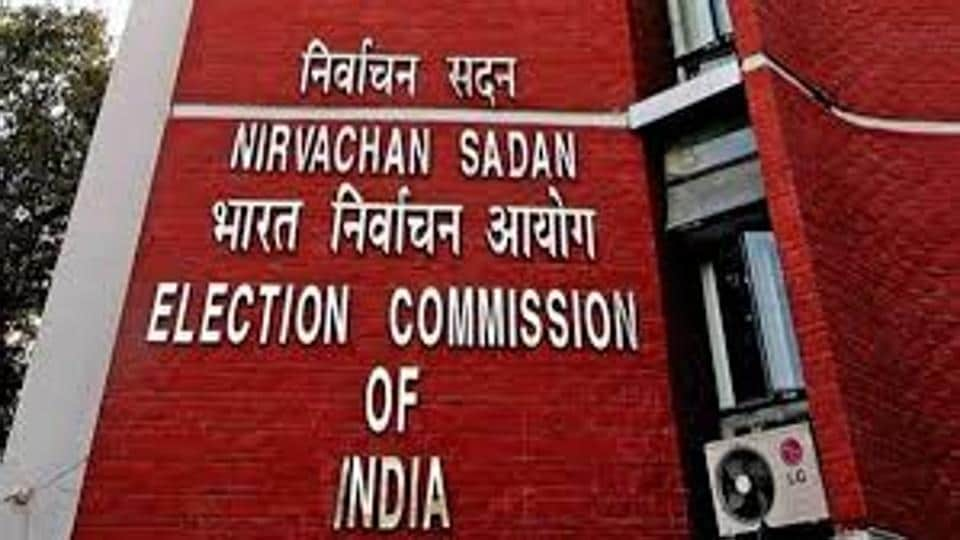
The court has sought responses from the Centre and the Election Commission of India (ECI), and will hear the petitions together on December 18. The challenge comes as the commission faces scrutiny in court over its special intensive revision (SIR) of electoral rolls and a separate case in Kerala.
What Section 16 says
The provision is Section 16 of the Chief Election Commissioner and Other Election Commissioners (Appointment, Conditions of Service and Term of Office) Act, 2023. It reads: "Notwithstanding anything contained in any other law for the time being in force, no Court shall entertain or continue any civil or criminal proceedings against any person who is or was a Chief Election Commissioner or an Election Commissioner for any act, thing or word, committed, done or spoken by him when, or in the course of acting or purporting to act in the discharge of his official duty or function.”
Three parameters give the provision its reach. “Is or was” extends it to former commissioners for the rest of their lives. "Entertain or continue" stops courts from taking up a new case and from carrying on with one already under way. "Purporting to act" covers acts done in the name of official duty.
The Association for Democratic Reforms (ADR), one of the petitioners, argues that the words protect even acts that are “ultra vires, mala fide or corrupt”, provided they are presented as official. The section attaches no condition of good faith, and it provides no procedure, such as prior sanction, under which a case could go ahead.
Also read: Parliament for CEC, the CEC for ECs: How members of Election Commission can be removed
How it compares
Article 361 of the Constitution protects the President and state governors. For official acts, the President's protection is worded like Section 16: Article 361(1) says the President “shall not be answerable to any court” for the powers and duties of the office “or for any act done or purporting to be done” in exercising them.
Article 361(2) bars criminal proceedings against the President or a governor only "during his term of office". Civil suits over personal acts can be filed after two months’ notice to the office of the President or governor.
The petitions argue that a President can be prosecuted for a crime after stepping down, while a former CEC never can.
Lok Prahari, the non-profit that filed one of the challenges, made a wider point in its petition: “The Constitution does not grant such an immunity even to the President, Prime Minister or judges.”
Judges of the Supreme Court and high courts are protected by Section 3 of the Judges (Protection) Act, 1985. Section 3(2) of the law preserves the power of the competent authority to take civil or criminal action against a serving or former judge.
ADR’s petition notes that Section 16 borrows the wording of the 1985 law’s protection clause and leaves out that saving clause. Rashtriya Janata Dal (RJD) MP Manoj Kumar Jha, another petitioner, put it this way: “A sitting judge of this court can be prosecuted with sanction yet a retired election commissioner cannot be prosecuted with or without it.”
Members of Parliament and state legislatures are protected under Articles 105 and 194 of the Constitution, only for what they say or how they vote in the House or its committees. A seven-judge Constitution bench held in Sita Soren v Union of India (2024) that even this protection must pass a “necessity test”, and that a legislator who takes a bribe can be prosecuted.
Jha draws the contrast in his petition: “A member of Parliament who takes a bribe to vote can be tried but an Election Commissioner who takes a bribe while ‘purporting’ to act in office arguably cannot.”
Before 2023, CECs had no statutory immunity. The law Section 16 replaced, the Election Commission (Conditions of Service of Election Commissioners and Transaction of Business) Act, 1991, had no equivalent provision. The CEC's protection came from Article 324(5) of the Constitution, under which a CEC can be removed only in the manner and on the grounds that apply to a Supreme Court judge: proved misbehaviour or incapacity.
The 2023 Act retains that protection and the six-year term, which ends earlier if the CEC turns 65. “The framers gave the CEC security of tenure i.e. removal only in the manner of a Supreme Court judge as per Article 324(5), however they never intended or gave immunity from prosecution,” Jha’s petition says.
Also read: Keralam sanctions probe against Gyanesh Kumar after bribery complaint linked to his state tenure
How it became law, and the challenge
Section 16 was not in the original bill. The government introduced the bill in the Rajya Sabha on August 10, 2023, and its statement of objects and reasons did not mention immunity. Arjun Ram Meghwal, then the Union law minister, circulated the clause as an official amendment on December 11, and the Rajya Sabha passed the bill by voice vote the next day.
Moving the amendment, Meghwal told the House in Hindi, according to the official translation: “If a Chief Election Commissioner and Election Commissioner carry out any proceedings while performing their duty, then action cannot be taken against them in any court in such cases.” ADR's petition says this was the only reason recorded for the provision.
The Lok Sabha passed the bill on December 21, 2023, the day suspensions of Opposition MPs in that House reached 100. The petitions argue that the provision escaped scrutiny and debate in Parliament as a result.
The law followed the Supreme Court's 2023 judgment in the Anoop Baranwal case, which had set up a panel of the Prime Minister, the Leader of Opposition in the Lok Sabha and the Chief Justice of India to select the CEC and ECs. The Act replaced the CJI with a Union minister nominated by the PM, a change under separate challenge in the court.
Lok Prahari filed its petition in 2025, and the court issued notice on January 12 this year. It refused to stay the provision then, saying: “You have not shown how this law will impact you. This is a public interest litigation. We will examine whether this kind of immunity can be granted based on our constitutional scheme.” The Centre and the ECI have not filed a response since. ADR, an electoral reform group, filed its challenge in October.
On November 4, a bench of Chief Justice of India Surya Kant and justices Joymalya Bagchi and V Mohana issued notice on the petitions of Jha, a Rajya Sabha member, and Arun Kumar Agrawal, an activist and lawyer, and tagged them with the earlier two. It sought the Centre's response within four weeks.
Also read: More checks added on EC staff in eye of storm amid row over internal dissent allegations
Why it matters now, and what next
The commission's decisions on SIR, changes to Form 6, the application new voters use to enrol, and the centralisation of the electoral roll database and software are all under examination in the courts.
The Indian Express reported on September 23 that election commissioners Sukhbir Singh Sandhu and Vivek Joshi, the two other members of the three-member commission, had formally objected at least 14 times in 10 months to decisions and orders linked to the SIR, voter registration and the roll database. ECI later said that all decisions, including those on the SIR, were unanimous.
The petitions against Section 16 also point to allegations from Kumar's years in Keralam, where he served as secretary of the state’s public works department. On November 4, the Congress-led Keralam government sanctioned a Vigilance and Anti-Corruption Bureau (VACB) inquiry against CEC Gyanesh Kumar related to his tenure as the state’s Public Works Department (PWD) secretary in 2006. The allegations are unproven, and Section 16 would not apply to them, since it covers only acts done as CEC or EC.
The petitions come up for hearing next on December 18.


