E-Paper



EU offers Canada 'associate membership': Why now & what a status that doesn't yet exist could mean
With US ties strained, EU has floated a new kind of partnership for Ottawa — one with no fixed rights, rules or precedent yet.

 Prefer HTon Google


European Commission President Ursula von der Leyen has proposed that Canada become the European Union's first “associate member”, a status never defined or used by the bloc before.
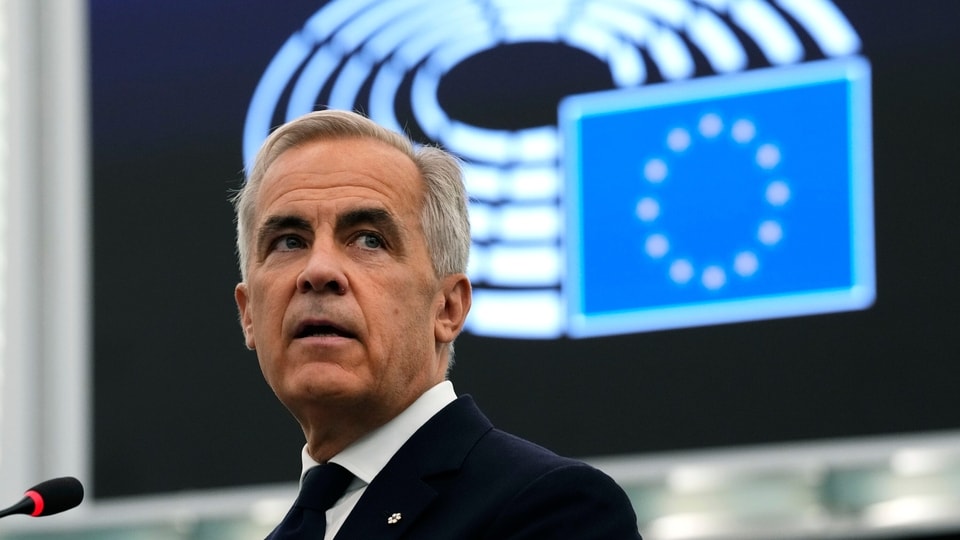
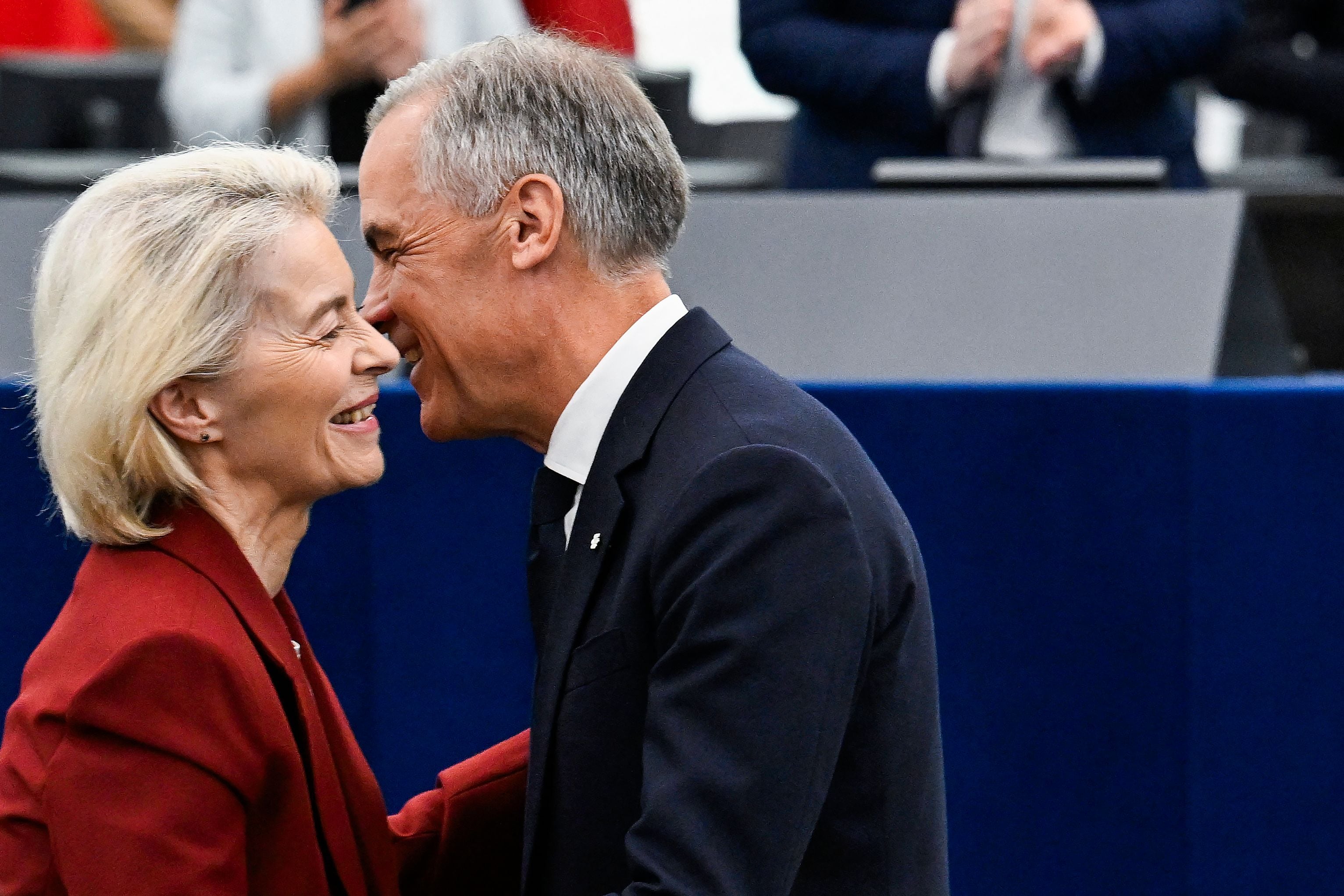
Von der Leyen made the offer on September 16, in her annual State of the Union address to the European Parliament in Strasbourg, with Canadian Prime Minister Mark Carney present. “I would like to work with you on opening the door for Canada being the first associate member of the EU,” she told him, adding that the EU wanted to take the relationship “to the highest level possible”.
Carney, who has described the relationship Canada wants with the EU as a “unique alliance”, welcomed the proposal. In his speech to the European Parliament on Thursday, he said, “Europe and Canada are each strong. Europe and Canada are even stronger together.” He added, “We welcome this ambition.”
The bonhomie comes at a time when Canada is trying to reduce its economic and strategic dependence on the US under President Donald Trump. European governments, meanwhile, are reassessing their own reliance on Washington amid disputes over trade, defence spending and the future of US commitments to European security.
Why now
Canada-US relations have deteriorated sharply since Trump returned to office. Trump has imposed tariffs on Canadian goods, repeatedly spoken of Canada becoming the “51st state” (the US has 50) and clashed with Ottawa over trade and sovereignty.
The breakdown of Canada-US trade talks last month also pushed Carney's government to look for stronger economic relationships elsewhere, describing its goal as diversifying Canada's economic and strategic ties. Canada remains heavily dependent on the US: 72.5% of its merchandise exports went to the US in 2025, according to Global Affairs Canada. The share going to Europe and Central Asia was 12.4%.
For the EU, the concern extends beyond Canada's trade dispute with Washington. Von der Leyen told Parliament that Europe's partnerships were a strategic choice but also a response to what she called a “fracture in the international rules based system”.
Europe, she said, needed to “urgently reimagine our partnerships and build global coalitions for our resilience and democracies”.
EU's stand
European countries have been debating how far they can depend on the US for their security. Trump has repeatedly criticised its NATO (North Atlantic Treaty Organization) allies over defence spending and argued that European members should take more responsibility for their own defence. In March 2025, he said the US would not defend allies he believed were not paying enough.
At the 2025 NATO summit in The Hague, members agreed to raise defence spending to 5% of GDP by 2035. Reuters reported at the time that European leaders remained worried about a possible US military drawdown in Europe and about Washington's longer-term commitment.
Those worries have persisted. In August 2026, a US review of its troop deployments in Europe raised questions among NATO allies about the continent's security. The review came as Trump pressed European countries to take on more of their own defence.
The uncertainty also comes as the war in Ukraine enters its fifth year since Russia's full-scale invasion. The US under Trump has pursued a different approach to the conflict, while European countries have sought to assume greater responsibility for Ukraine's security and their own defence, Reuters reported.
Von der Leyen's proposal is part of a broader European effort to build up the bloc's own strategic capabilities and its relationships with countries outside the EU. Canada, for its part, remains a NATO member and has traditionally depended heavily on the US for trade and continental security, and a closer relationship with the EU would not take it out of NATO or end its relationship with Washington.
Canada's economic dependence on the US remains substantial. The US accounted for 72.5% of Canada's merchandise exports in 2025, although that was down from 76.3% in 2024, according to Global Affairs Canada. The share going to Europe and Central Asia increased from 9.5% to 12.4% over the same period.
Also read: ‘Asked too much, offered too little’: Canada PM Carney on why trade deal with US fell through
What would 'associate membership' mean?
The EU has no established membership category by that name. The idea, according to Reuters, has been discussed before, including in connection with Ukraine, but it has never become a defined category.
The two sides would likely have to negotiate the substance, which may not include the rights typically enjoyed by the bloc's members. But these could include deeper economic integration, participation in selected European programmes and closer cooperation in strategic industries. The exact terms nonetheless remain unclear.
The EU already has close ties of several kinds with countries outside the bloc. Norway, Iceland and Liechtenstein belong to the European Economic Area and have access to much of the EU Single Market, but they remain outside the bloc's political institutions. Switzerland has a separate network of agreements with the EU.
The contours of any such relationship would first have to be negotiated and agreed upon by the EU and Canada. Reuters reported that implementing the arrangement would be unprecedented and legally complex, with EU member states ultimately having to decide whether to proceed.
Possible cooperation
Von der Leyen set out a wide agenda in her speech. “We will work on intelligent manufacturing. We will create a tech alliance. We will integrate defence industrial bases. We will make the Arctic a flagship joint project,” she said. She also named energy, critical minerals, batteries, artificial intelligence, quantum computing, cybersecurity and economic security.
Carney, in his European Parliament speech on Thursday, called for deeper cooperation with Europe on critical minerals, defence industrial capacity, artificial intelligence and computing, energy security, space and payments. He also called for more seamless digital trade in non-agricultural goods and a wide range of services.
According to the Canadian government statement from Wednesday, Carney and von der Leyen at a meeting also discussed several areas of cooperation. Critical minerals, defence industrial capacity, AI and computing, energy security, space, and financial services and payments were among them.
The existing trade deal
The two sides already have a major economic relationship through the Comprehensive Economic and Trade Agreement (CETA), which has been provisionally applied since 2017, and their cooperation has since spread well beyond trade.
In June 2025, they signed a Security and Defence Partnership covering support for Ukraine, cybersecurity, countering hybrid threats and wider security and defence cooperation. In February 2026, they signed an agreement allowing Canada to take part in Security Action for Europe (SAFE), the EU's defence procurement framework. The EU Council said that agreement was meant to deepen defence ties.
Carney's government wants to build on these arrangements. After meeting von der Leyen on Wednesday, Carney welcomed the proposal to move beyond CETA towards a “far stronger, more ambitious alliance”. In his European Parliament speech on Thursday, he said, “Yesterday, President von der Leyen spoke of moving beyond CETA to an Alliance for the Future - opening the door to Canada becoming the European Union's first associate member. We welcome this ambition.”
Also read: ‘Cannot accept what was offered’: Canadian PM Mark Carney on why US trade deal didn't work
Trump calls it ‘laughable’
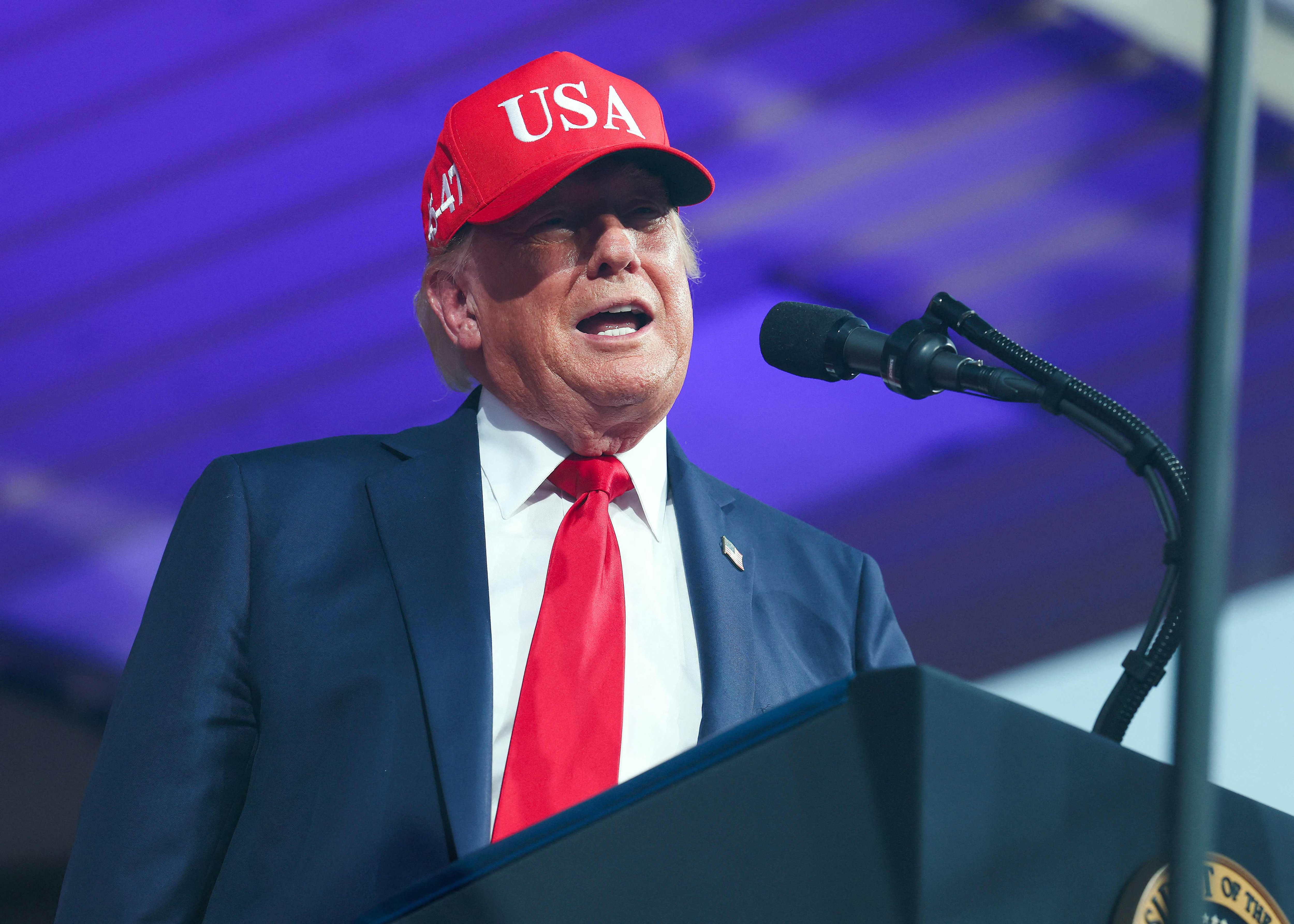
Reacting after von der Leyen's speech, Trump on Wednesday called the idea of Canada becoming an EU associate member “laughable” and threatened to impose “very serious tariffs”, or to stop trading with Europe if he thought the arrangement was hostile to the US.
His response adds to the strain in relations among Washington, Ottawa and Brussels.
Carney responded on Thursday by saying Canada would decide for itself which international partnerships to pursue. “No one is going to tell us what language we speak. No one is going to dictate our culture or with whom we can strike agreements internationally,” he said, according to the Associated Press. AP reported that Carney's speech repeatedly emphasised that closer ties with Europe were intended to strengthen Canada's resilience and sovereignty.
Neither the EU nor Canada has formally abandoned the US as a partner, and European countries continue to regard NATO as central to their security. Both, however, are seeking more room for manoeuvre in a more uncertain international environment.
Von der Leyen said during her State of the Union address to the European Parliament on September 16 that the proposal was not aimed at any other country. “This is not a partnership against anyone else. But for our common strength,” she said.