
 E-Paper



Anwar Ibrahim gets a lifeline after Malaysian elections
This article is authored by Mehdi Hussain, doctoral candidate, Centre for South Asian Studies, Jawaharlal Nehru University.

 Prefer HTon Google


The recent state elections in Malaysia ended in status quo, but the opposition parties were seen getting an edge. Despite continuing challenges to political stability and the fragility of the coalition government, the results give hope for Prime Minister (PM) Anwar Ibrahim to carry forward its promises of strengthening the economy and bringing transparency in governance. The ruling coalition at the capital, Pakatan Harapan (PH)-Barisan Nasional (BN) retained three states of Penang, Selangor, and Negeri Sembilan, while Perikatan Nasional (PN)-led opposition coalition retained Kedah, Kelantan and Terengganu. The opposition coalition is claiming that their expansion into the PH-ruled states can become a significant factor for the electoral future of the nation, which will see the next general election in 2027. Given the results, the Islamist-leaning parties, PN and PAS have an edge as the PN won 146 out of 245 seats—up from 86 in all the six states in the last state elections, while Anwar’s government managed only 99—down from 145. PN was able to capture as many as 22 seats in the PH stronghold in Selangor and 11 seats in Penang.
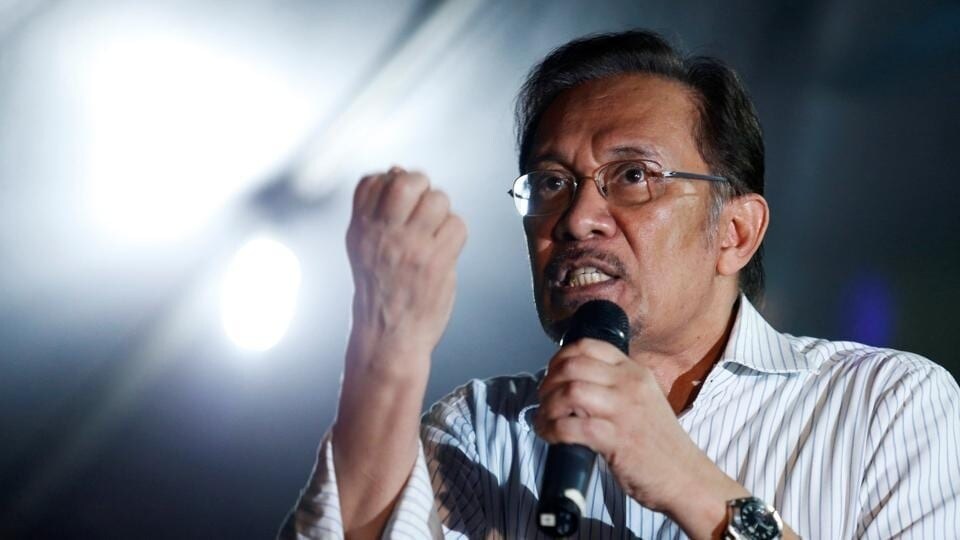
While the influence of the election results in 6 out of 13 states does matter to the political scenario in Malaysia, Anwar Ibrahim is in power and he is likely to strengthen his politicking within his coalition and expand his support base. His strategy of secular politics with a tinge of religious appeal can accommodate different interest groups in Malaysia. Political commentators argued that the outcome was a ‘setback’ for PM Anwar’s government. However, we also need to look into the attractiveness for voters towards his governance promises. It is also in the interest of the greater good of the nation that he is given a chance to run a full term to fulfil his promises to introduce institutional reforms and bring efficiency to governance.
The nation under the leadership of Ibrahim can strive for political stability and strengthen the country’s economy. Anwar’s acceptance level in the national survey conducted last year just after the general election indicated the direction that his leadership should strive for growth, better governance, institutional reforms, and social justice. At the national level, the PM received 68% approval from the citizens and 54% satisfaction with his performance so far.
His promises are reflected in the national budget 2023, which has three major pillars focusing on inclusive and sustainable growth, restoring confidence in institutions and governance, and combating inequality through social justice. His re-winning in the three states will bolster his commitment to the efforts to push for economic measures and institutional reforms. A major problem in the past governments was the lack of transparency in governance. Budget 2023 envisages transparency in government procurement. We saw in the previous regime under the former PM Najib Razak several international infrastructure projects were questioned for lack of transparency which could worsen the country’s debt situation—which stood at $250 billion in 2018. Later, former PM Mahathir Mohamad cancelled two big infrastructure projects under the Belt and Road Initiative with China. Najib Razak was also charged with corruption. Thus, fiscal mismanagement and corruption have been the strategic concerns for the county which almost coincided with the political instability since 2018.
Budget 2023 projects an ambitious Gross Domestic Product (GDP) of 4.5% growth for 2023 to be built on strengthening the domestic economy against the International Monetary Fund (IMF)’s projection of 2.9%. It sets a target for reducing fiscal deficit to 3.2% by 2025 from the present 5%. Following an expansionary fiscal policy, it is going to invest more in the development of public infrastructure and eradicate poverty. It will be complemented by the Fiscal Responsibility Act which is likely to be presented to the parliament in 2023 to establish greater transparency and accountable management of the economy. Thus, people can expect positive outcomes in the coming years from this government.
The government is attempting to put a strong commitment to social justice, inspired by Sunnah, which highlights the imbalance in resource distribution in which the top 20% owns 47% of total household income. It focuses on this aspect by prioritising the low- and middle-income groups. Fighting against corruption, Ibrahim even invoked Rabindranath Tagore’s famous phrase in the hope of dawning a better future after the night. Thus, his political strategy is to balance the aspirations of different ethnic groups and ideologies in a multicultural country.
The country cannot afford to see another political instability that can further affect its investment climate. It is critical given its export-import structure, exports account for more than 65% of GDP. Further, Malaysia already slipped its ranking to 61 in 2022 in the Corruption Perception Index (CPI) against 29 in 1998, the main reason behind this fall being political corruption. According IMF, “political stability” is the topmost priority for investors in any country, even “macroeconomic stability” comes second. Thus, most investors would pull out their investments if there was a political risk in the host countries.
Malaysia’s auditor general’s report for 2020 and 2021 discovered a loss of about RM3 billion in the forms of loss of public money, wastage, and irregular payments. Another form of misappropriation last year was for about RM10 billion in the diesel subsidy implementation. Youth unemployment stood at 3.6% as against 3.3% in 2019 before the pandemic. Youths of and below 25 years of age are facing an unemployment rate of 10% with an average income of about RM17,700 for the year 2021. These measures are going to boost investor confidence in a politically volatile nation. In this context, it is noteworthy to revisit Allianz Trade’s assessment in May 2023 that placed Malaysia as an above-average business environment. It has a medium risk for political conditions.
The Unity Government acknowledges the problem of declining investor confidence in the economy and public service delivery. It slipped through the 32nd rank in the World Competitiveness Ranking by the International Institute for Management Development (IMD), which was caused by the Covid-19 pandemic and political instability before he took over the reign. Ibrahim has laid down a concrete plan for taking Malaysia’s economy to pre-pandemic level. He is focusing on strengthening the local MSMEs by making them competitive and business attractive, through several support schemes. For instance, MSMEs will enjoy a reduced tax rate at 15%—down from 17% starting from the assessment year 2023 for their first RM150,000. This will potentially create more jobs for the youth.
The Malay religious politics is going to remain a challenge to his government. In his New Year’s Eve address to the nation, he already stated that the Unity Government would work closely with the “religious communities in bringing religious understanding among Muslims and non-Muslims”. Social stability is crucial for his plans to strengthen the economy. The Unity Government represents a balance of both the aspirations of the majority Malays and global investment requirements.
Then, a year ago Malaysia was slightly more free scoring 68.1 than 67.3 in 2023 in the Heritage Foundation’s Index of Economic Freedom. Its ranks, however, are better than the global (42nd) and regional (8th out of 39 countries in the Asia-Pacific region) averages. It ranks 8th out of 39 countries in the Asia-Pacific region. The Index further indicates that the Malaysian economy is showing resilience and attracting investments from the private sector, all possible through the implementation of supporting relevant policy areas. If the Unity Government can implement and solidify its economic and institutional reforms it should help create a positive political and investment climate in the country. Looking into the threat to a stable government is assessed in terms of the rising popularity of PN winning more seats in the PH-ruled states. Whether this would pose a challenge to reforms proposed by the Unity Government remains to be seen.
This article is authored by Mehdi Hussain, doctoral candidate, Centre for South Asian Studies, Jawaharlal Nehru University.


