
 E-Paper



Building resilience in an era of climate disasters
This article is authored by Suraj Mani, senior columnist.

 Prefer HTon Google


Across the world, communities are confronting an increasingly complex environmental reality. Floods, landslides, cloudbursts, droughts, wildfires and other climate-related hazards are placing greater pressure on ecosystems, infrastructure and livelihoods. As the frequency and intensity of extreme weather events increase, the question is no longer simply how to respond when disaster strikes, but how societies can prepare for risks before they become emergencies.
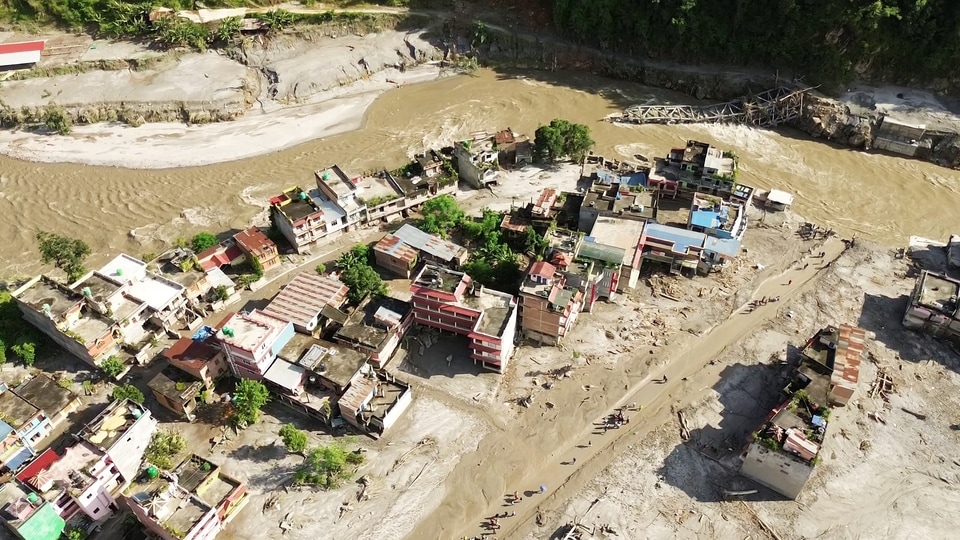
Disaster management has traditionally focused heavily on response and recovery. While emergency relief remains essential, an effective approach must also anticipate risks and reduce vulnerabilities in advance. This requires investment in scientific monitoring, reliable early-warning systems, resilient infrastructure and community preparedness. The ability to receive timely and accurate information can make a significant difference, particularly in remote and ecologically fragile regions where evacuation and emergency assistance may take longer.
Scientific research has an important role to play in this transition. Understanding how rainfall patterns, changing temperatures, melting glaciers, river systems, soil conditions and land-use changes interact can help identify areas that are particularly vulnerable. Detailed hazard maps and regularly updated environmental data can enable authorities to plan infrastructure, settlements and emergency responses more effectively. Scientific knowledge can also help distinguish between immediate triggers and deeper structural vulnerabilities, allowing disaster management to move beyond short-term interventions.
One such effort is being advanced through the Himalay Unnati Mission (HUM), led by The Art of Living in close collaboration with the International Association for Human Values (IAHV), under the vision of Gurudev Sri Sri Ravi Shankar. HUM is undertaking a scientific study of cloudbursts, landslides, floods and glacier-related hazards across India, Nepal and Bhutan, bringing together scientific and field data with community inputs to strengthen early-warning and disaster preparedness.
However, technology and scientific expertise alone cannot provide complete solutions. People living in disaster-prone regions often possess detailed knowledge of their local environment, including changes in water sources, soil behaviour, weather patterns and ecological conditions. This knowledge can complement formal scientific data and make preparedness strategies more practical. Communities that understand local risks and are involved in developing emergency plans are also better positioned to respond quickly when warnings are issued.
Community participation, therefore, needs to become an integral part of environmental governance. Local volunteers, schools, village institutions and civil society organisations can contribute to awareness campaigns, evacuation planning, first-aid training and restoration initiatives. Such participation can transform disaster preparedness from a government responsibility into a shared social effort.
Ecological conservation is equally important. Healthy forests, wetlands, watersheds and mountain ecosystems provide natural protection against several environmental risks. Forests can help regulate water flows, stabilise soil and reduce erosion, while healthy wetlands can absorb excess water during periods of heavy rainfall. Protecting these ecosystems is, therefore, not merely a conservation objective; it is also a component of disaster-risk reduction.
Afforestation and landscape restoration, when planned according to local ecological conditions, can strengthen this natural resilience. Similarly, decentralised renewable-energy systems can improve the ability of remote communities to maintain essential services during emergencies. Solar-powered schools, health facilities and communication infrastructure, for instance, can provide valuable continuity when conventional power systems are disrupted.
These principles are reflected in five years of work undertaken through HUM and its partners since 2021. Under Mission Green Himalayas, more than 22 lakh trees have been planted across more than 20 landscapes in Himachal Pradesh, Uttarakhand, North Bengal, Sikkim and Arunachal Pradesh. The Mission has also taken clean energy to 356 border schools through 613 solar microgrids and solar-powered digital classrooms, reaching more than 1.95 lakh people. During floods and landslides, more than 1,000 volunteers supported 7,248 affected families and over 45,000 people through the Samvedana disaster-relief initiative.
Yet many environmental risks extend beyond administrative boundaries. Rivers flow across states and countries, weather systems affect entire regions, and ecological changes in one area can have consequences elsewhere. This makes coordination particularly important. Governments, research institutions, disaster-management agencies, environmental organisations and local communities need mechanisms through which information and expertise can be shared.
In this context, HUM has also called for the creation of a Himalayan Authority at the Centre, as a dedicated institutional mechanism to bring together ministries, Himalayan states, scientific institutions and communities whose work affects the region. The initiative brings together 134 organisations and institutions under HUM, creating a platform for long-term Himalayan resilience through greater coordination and collective action.
Institutional coordination can also prevent fragmented responses. Environmental protection, infrastructure development, water management, energy policy and disaster preparedness are often handled by different departments. Without effective communication between them, policies designed to address one problem can unintentionally increase another. A coordinated framework can help decision-makers consider environmental and social risks together rather than treating them as isolated concerns.
Cross-border cooperation is particularly relevant in regions with interconnected ecosystems. Countries sharing mountain ranges, rivers and watersheds can benefit from exchanging meteorological information, disaster alerts, scientific research and best practises. Such cooperation does not eliminate the challenges created by differences in governance systems, but it can provide a stronger foundation for managing risks that no single jurisdiction can address independently.
Ultimately, resilience is not created by one early-warning device, one government programme or one scientific study. It emerges from a combination of knowledge, preparation, ecological protection, infrastructure and collective action. The goal should be to build systems capable of anticipating hazards while also strengthening the social and environmental foundations that help communities withstand them.
As climate-related risks continue to evolve, preparedness must become a continuous process rather than an activity undertaken only after a disaster. Investing in science, listening to communities, restoring ecosystems and improving institutional cooperation can help societies shift from reacting to crises towards reducing their impact. The most resilient communities will not necessarily be those that experience fewer environmental threats, but those that are better equipped to understand, anticipate and respond to them.
(The views expressed are personal)
This article is authored by Suraj Mani, senior columnist.


