
 E-Paper



Tibet and Nepal: Ecological victims of runaway infrastructure development
This article is authored by Tsewang Dorji Jeshong, research fellow, Tibet Policy Institute.

 Prefer HTon Google


The flash flood along the Tibet-Nepal border illustrates the ecological costs associated with China's large-scale infrastructure development in Tibet's fragile Himalayan environment.
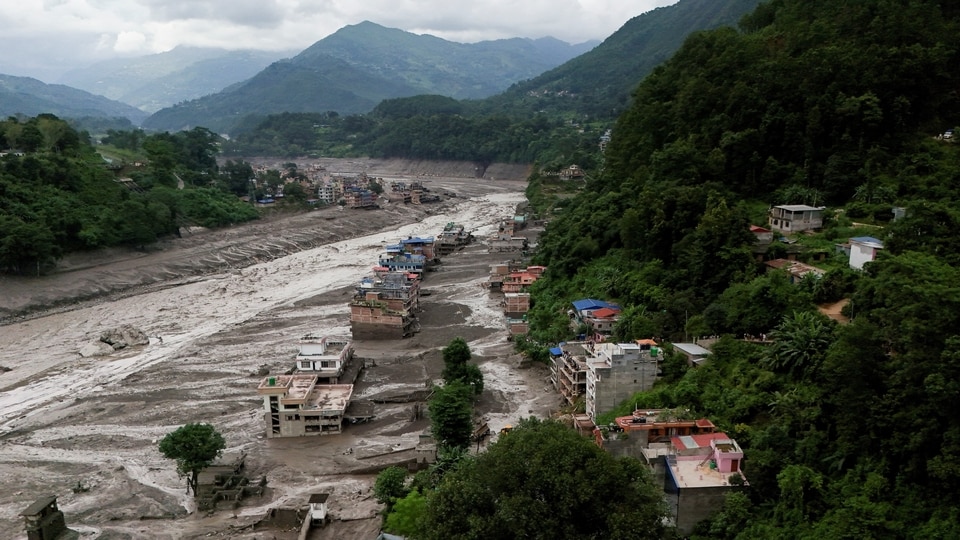
Governments and non-governmental organisations worldwide increasingly prioritise infrastructure development to advance national interests and stimulate economic growth, often without fully considering the resulting environmental instability and ecological degradation. A recent high-altitude cascade of melting glaciers, rock, and ice triggered an unprecedented disaster along the Tibet–Nepal border, drawing international attention. Despite the widespread destruction in both Tibet and Nepal, the Chinese government tightly controlled information and suppressed reporting on the disaster's impact in Tibet.
A devastating flash flood struck the Tibet-Nepal border region on August 26, 2026, severely affecting local communities and infrastructure. Soon afterwards, Chinese State media outlets began promoting a consistent narrative that the flood originated on the Nepal side of the border and primarily affected Nepal. This appeared to downplay the impact of the disaster within Tibet, creating the impression that the flood had bypassed Tibet and caused destruction only in Nepal.
According to verified reports published by Tibet Radio, an independent Tibetan digital media platform based in Dharamshala, the flash flood claimed the lives of at least 29 Tibetans, with more than 1,000 others reported missing in Tibet.
As of now, 34 Tibetan students from three major Tibetan schools in Kathmandu have lost their parents in the flash flood and have become orphans. The Tibetan community in Nepal is taking care of them. These figures suggest that the disaster caused significant human and property losses on the Tibetan side of the border, despite narratives that have largely focused on its impact in Nepal.
On September 4, 2026, China’s ministry of national defence announced that 726 PLA and PAP personnel, 24 engineering vehicles, and 60 sets of specialised equipment had been deployed to flood-affected areas in Tibet. Official reports also claimed that more than 2,500 Chinese rescue personnel had been mobilised, yet no rescues were reported. Instead, China appeared to prioritise restoring National Highway 216 (G216)—a strategic route linking Beijing, Lhasa, and Kathmandu—to advance infrastructure development in the region.
Before China's extensive infrastructure interventions in the Kyirong region of Tibet, the valley was renowned for its ecological balance, natural beauty, and tranquility. Travellers who passed through the region were often captivated by its serene environment and expressed a desire to settle there. In his celebrated travel memoir Seven Years in Tibet, Heinrich Harrer vividly conveyed his admiration for the valley, writing: "If I can choose where to pass the evening of my life, it will be in Kyirong. There I would build myself a house of red cedar wood and have one of the rushing mountain streams running through my garden, in which every kind of fruit would grow..." This observation reflects the valley's reputation as an idyllic landscape that inspired a deep sense of peace and belonging among those who experienced it.
Over the past decade, Kyirong Valley has experienced recurring mudslides, flash floods, wildfires, and glacial outburst floods, many originating in the Lendue district, where the recent flash flood began. Major incidents include severe floods in 1984, 2025, and 2026, as well as a large fire in Lendue on January 1, 2025. Despite this long history of disasters, the latest catastrophe exposed an unprecedented breakdown in climate-risk communication, contributing to extensive destruction in Tibet and Nepal.
The Chinese government has long planned to develop the Kyirong region as a commercial and strategic gateway for advancing China's Belt and Road Initiative into South Asia. During the Sixth Tibet Work Forum in 2016, the Chinese authorities declared that the Kyirong region would serve as a key trans-Himalayan trade zone through which China sought to expand its economic and strategic influence in South Asia.
To achieve these ambitions, the Chinese authorities have accelerated the expansion of road and railway networks in Tibet's border regions. Engineers have cut through mountains, drilled tunnels through rock formations, and excavated large tracts of land to facilitate these infrastructure projects. Such extensive development has significantly disrupted the region's fragile ecological balance, increasing the risk of environmental degradation and natural disasters. As a result, local communities and Tibet's sensitive high-altitude ecosystem have become the principal victims of these large-scale infrastructural interventions.
(The views expressed are personal)
This article is authored by Tsewang Dorji Jeshong, research fellow, Tibet Policy Institute.


