
 E-Paper



How can Sonipat become the Davos of India?
This article is authored by Prof. C Raj Kumar, founding vice chancellor, O P Jindal Global University and president, World University Leaders Forum.

 Prefer HTon Google


On November 1, 2026, Haryana will be celebrating the 60th anniversary of its formation in 1966. Six decades of statehood indeed mark a significant milestone in the life of a state. It is an occasion and an opportunity to honour the people whose work and contributions shaped its achievements and to articulate a vision and ambition that do justice to its future possibilities.
Haryana has good reasons to celebrate its contributions to India's agriculture, industry, entrepreneurship, sports, and education. However, the greatest importance of this anniversary rests in the opportunity to imagine what comes next for Haryana. At 60, Haryana must be ambitious and aspirational about the scale of its future. It ought to be futuristic in its thinking and purposeful in building the institutional architecture that will enable its next transformation.
For Haryana, this is also a moment to ask a more fundamental question that connects the past achievements of the state with an extraordinary possibility for the future: Can Sonipat become the Davos of India?
The journey of Haryana since 1966 has manifested the power of determined initiatives to transform a state's identity and impact. The farmers of Haryana helped strengthen India's food security. The workers and industrial organisations of Haryana contributed to the expansion of national productive capacities, and the entrepreneurs of Haryana created vibrant opportunities for investment, employment, and innovation.
All these achievements grew from the labour, imagination, resilience, ambition, and aspirations of the people of Haryana. They also laid a foundation upon which Haryana can now build a more ambitious and expansive vision of development: A vision that places knowledge, creativity, innovation, institutional standing, organisational excellence, and international engagement at the heart of its future.
Gurugram, in its early transformation, offered a powerful expression of Haryana's capacity for innovation. Its growth and development brought with them real estate, infrastructure, corporate enterprises, international organisations, technology, and entrepreneurship, creating an urban economy connected to international networks and global professional markets.
Gurugram's transformation has shown how a place can develop a unique identity through sustained investment, ambitious opportunities, and sound public policy. It also offers important lessons for Haryana's future: Cities can indeed become impactful and consequential when they fulfil a unique identity and purpose and provide legitimate reasons for people, institutions, policymakers, and ideas to come together.
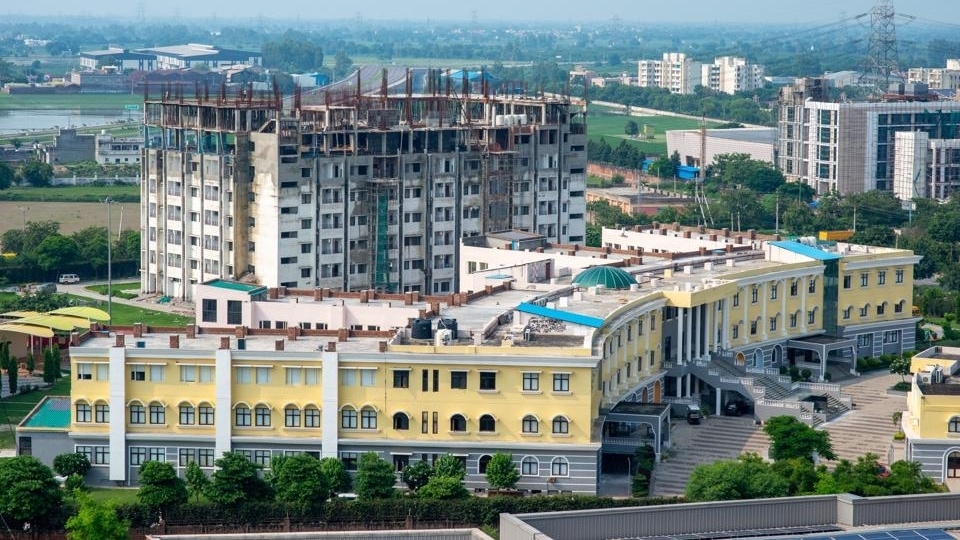
As we mark the 60th anniversary of Haryana, I would like to propose that Sonipat presents an opportunity to give this transformative aspiration an intellectual and cerebral direction. The development of universities and educational institutions across Sonipat has created an ecosystem for a city whose international standing can develop through learning, research, engagement, and dialogue. Students bring a deep sense of curiosity and the confidence to challenge inherited assumptions. Faculty members and researchers make an impact through their scholarship, intellectual engagement, publications, and evidence developed through sustained inquiry.
International academic partnerships developed by universities connect local institutions with discourses across borders. These capacities, in totality, can make Sonipat a place where the world comes to think, exchange ideas, and develop perspectives that truly matter. This seemingly difficult dream can become a reality and occupy a central place in Haryana's history at 60. A knowledge-based society develops when education strengthens its institutions, research contributes towards policymaking, enterprises and organisations draw upon new discoveries and innovations, and the youth have the freedom and capacity to create and build new futures.
Haryana needs to develop an ecosystem in which universities can directly impact the quality of its development while contributing to addressing the challenges of India and the world. Haryana's agricultural experience, industrial achievements, entrepreneurial capabilities, and broader societal and civic aspirations can themselves generate critical questions of scholarship and opportunities for international collaboration.
Sonipat's unique and symbiotic relationship with Delhi gives this vision an important dimension. The national capital provides international connectivity, diplomatic organisations, government machinery, business communities, cultural organisations, and a significant community of policymakers and public intellectuals. Universities in Sonipat could engage with this ecosystem while creating a unique setting for focused engagement, meaningful conversations, and collaborations across disciplines. Delhi can indeed serve as the gateway to a destination whose identity rests upon the quality of its academic institutions and the significance of the ideas discussed there.
The dream of making Sonipat the Davos of India must therefore become a serious organisational, institutional, and civic responsibility. It requires world-class infrastructure, welcoming and safe public spaces, national and international accessibility, and robust partnerships with local communities. It also requires a deep commitment to academic freedom, intellectual autonomy, scholarly independence, credible governance systems, and sustained engagement with ideas that can shape the future of humanity. International reputation will develop when participants find that their time in Sonipat helps create valuable understanding, enduring partnerships, and collaborative opportunities.
The World Ideas Forum, to be hosted by O P Jindal Global University from 23 to 25 January 2027, offers a unique beginning. Its ambitious promise lies in enabling the development of a community of ideas and creating opportunities for inquiry and collaboration that extend beyond the event itself. Every such gathering should help strengthen these community bonds, develop research partnerships, and formulate ideas that travel beyond the campus into broader public, national, and international debates and institutional practices.
The 60th anniversary of Haryana is a special moment to embrace this ambition with a deep sense of conviction and responsibility. As India moves closer to the centenary of its independence in 2047, the state of Haryana ought to help shape the country's intellectual contribution to humanity. Haryana's next transformation can integrate economic development with educational excellence and global convening power. The immense potential of institutions to narrow the distance between a location's geographical presence and its position in the world's imagination cannot be underestimated. Sonipat can become a compelling expression of that possibility.
Institutions have the immense potential to bridge the gap between a place’s geographical location on the map and its position in the world’s imagination. Davos essentially established this possibility for the world, as a Swiss mountain town became a global gathering of thought leaders and decision-makers. It emerged as a venue for global deliberations because it provided compelling reasons for important and influential people to gather there. Can Sonipat establish a similar identity for India? This audacious aspiration must receive due consideration. India’s growing international influence has indeed provided us with opportunities to convene the world in relation to questions and issues that will shape our future. The emergence of Sonipat in the State of Haryana as an educational hub, its proximity to Delhi and its international airport, and the university ecosystem that has developed here provide foundations for such an initiative. However, it requires courage of conviction, careful planning, and resources to transform these unique advantages into international standing. It also requires a conscious appreciation of what made Davos a truly consequential venue for international deliberations.
I believe the following five aspects of this idea deserve due consideration:
- Reimagine geography with Delhi as the gateway and Sonipat as the destination.
Zurich and Davos provide a very interesting geographical parallel and a unique relationship that made Davos possible. The city of Zurich provides international connectivity and access to a global financial centre. Davos, on the other hand, provided a unique setting—somewhat removed from the hustle and bustle of a metropolitan city. The World Economic Forum at Davos placed the journey from the airport in Zurich at around two hours. This geographical separation did not compromise international accessibility.
So Delhi and Sonipat can develop a relationship that is unique and, in the same way as that between Zurich and Davos, scalable. The National Capital Region of Delhi, with its international airport, diplomatic missions, presence of international organisations, government institutions, business houses, media and policy networks, parliamentarians, ministers, and the overall intellectual ecosystem, provides many of the advantages that matter for creating a forum of that significance.
Sonipat provides an equally significant opportunity with its own setting of universities in which participants can move out of their comfort zones and their usual schedules and contribute to meaningful deliberations. The institutional venue and the context of hosting it in a university matter significantly. A summit or a forum within a capital city is constantly competing with the participants’ and speakers’ other commitments. A university located somewhat outside the capital region, with a residential gathering on its campus, can provide opportunities for shared exchanges, meaningful conversations, and possibly even unexpected encounters.
The value of both Davos and what promises to happen in Sonipat depends partly on bringing people together. There is a case for Sonipat to become a destination in its own right.
Reliable transport from the airport to Sonipat, well-organised and coordinated transport facilities, comfortable places of stay and accommodation for visitors, and efficient local movement are critical. Urban planning and urban development have a direct bearing on the ecosystem that Sonipat can create for building a global destination.
- Building on Sonipat’s educational identity to establish an intellectual presence.
The intellectual history of Davos predates the World Economic Forum. The Nobel laureate Albert Einstein had inaugurated the Davos University courses as early as 1928. The encounter between Ernst Cassirer and Martin Heidegger happened the following year, when a landmark philosophical debate transpired. Davos’s symbiotic relationship with international intellectual exchange began to take shape decades before its contemporary prominence through the WEF.
This unique history of Davos also creates an opportunity for Sonipat. Sonipat’s own educational development has assumed significance for this audacious aspiration.
A unique concentration of higher education institutions can provide the intellectual environment: Regular scholarship, international collaborations and partnerships, and intellectual engagement that is critical to sustaining a global forum.
The fact of the matter is that students bring questioning minds and thoughtful engagement to these forums. Researchers help gather evidence and promote scholarship. Visiting scholars help in linking national and local conversations with international debates and discourse.
Universities need to take a larger responsibility for the sum and substance of this aspiration. They need to identify the emerging questions, contribute to research, convene competing and challenging perspectives, and rigorously examine the claims and perspectives of the participants and speakers. To establish intellectual authority in Sonipat, we need to protect academic freedom, ensure conscious preparation, and allow room for disagreement. The setting of a university will garner international reputation and credibility when the speakers and participants are aware that their arguments and perspectives will be taken seriously and tested rigorously. Sonipat’s educational identity can become the foundation of its convening authority.
- The world needs a compelling reason to gather in Sonipat.
We must recognise that international connectivity and good infrastructure alone cannot create a Davos. A destination has the potential to become impactful when the discussions held there achieve a larger significance—shaping not only national but global discourses too.
The World Ideas Forum, which O P Jindal Global University will be hosting from the 23rd to the 25th of January 2027, provides an important institutional starting point for India and Haryana. The most critical aspect of the World Ideas Forum is the opportunity to evaluate global challenges from India while bringing our perspectives into a meaningful conversation and dialogue with the world. There are many important questions to which the world is seeking answers.
- How can countries and societies create employment while technological transformation takes place?
- How should nations balance developmental aspirations with environmental responsibilities?
- What could be the impact and implications of artificial intelligence on education, human agency, government institutions, and the private sector?
- How can democracies rebuild trust and instil faith in their citizenry?
India’s extraordinary diversity, vast population, and democratic character make these questions particularly urgent and consequential.
Sonipat has the potential to become a meeting ground, an inspiring venue, a neutral platform, and a safe space for scholars, policymakers, government representatives, scientists, entrepreneurs, artists, and people from every walk of life—including the youth from the world over—to examine these issues in concert, with a view to devising solutions for the whole of humanity.
The leadership that Sonipat can establish must be manifested through the robustness of the questions, the integrity of the evidence, and the consequential nature of the ideas. Each edition of the World Ideas Forum should produce work that all stakeholders, local, national, and international, find useful and transformative.
The partnerships established through research proposals that are relevant for policymaking, and publications built through collaborations, will make a huge difference to the future of the World Ideas Forum. We will realise Sonipat’s potential to become the Davos of India only when the discussions and debates we host here begin to shape conversations around the world.
- Transforming an annual gathering into a permanent institution.
Prof. Klaus Schwab’s inaugural European Management Symposium in 1971 hosted 450 participants from 41 countries. Little did he know that what had begun as a modest academic initiative would eventually come to be famed across the globe as the World Economic Forum. Its development over the years has demonstrated the collective power of institutional continuity and the enduring strength of an idea. The standing of Davos grew through repeated engagement and an expanded international community of stakeholders.
Sonipat will need the same audacity and perseverance.
While an outstanding inaugural edition of the World Ideas Forum can solicit national and international attention, what is needed is a dependable, reputable, credible, sustainable, and independent university environment that earns commitment. The secretariat—with its permanence—a credible governance mechanism, a sustainable funding and resource framework, and Indian and international advisory networks should be able to support the future of the World Ideas Forum.
Various research groups, a visiting scholars programme, fellowships, and other thematic colloquia can sustain the engagement throughout the year, leading to the annual World Ideas Forum.
The overall environment in the city of Sonipat will also play an important role in supporting this aspiration. It is also important that philanthropy and business offer resources, expertise, and even experiences to make the World Ideas Forum not just a successful event but a transformative institution.
- Recognising Sonipat's transformation as a shared civic initiative.
While there is many a lesson Sonipat can learn from Davos, one pertains to the relationship Davos has been able to establish between an institution and the community. The ambition of Sonipat to become the Davos of India will be fragile and uncertain until the residents and local enterprises of Sonipat are able to reap the benefits and participate in its outcomes.
Various industries and businesses, including hospitality, transport, cultural programmes, social engagement, health services, professional organisations, and initiatives promoting youth empowerment and entrepreneurship, can create opportunities. The lectures and seminars involving colleges, universities, schools, and the wider intellectual ecosystem of Sonipat can provide meaningful opportunities to widen access to the ideas that are being discussed at the World Ideas Forum.
Along with this ecosystem, the government must pay the strongest possible attention to the following practical requirements:
- Clean public spaces
- Proper lighting facilities across roads
- Good infrastructure in the form of roads
- Accessible facilities
- Dependable and reliable services
- Emergency preparedness
- Better air quality
These dimensions of Sonipat’s potential to become the Davos of India have a direct impact on the lives of the residents of Sonipat and the willingness and eagerness of visitors to return to Sonipat.
It is also important to recognise that Haryana’s own leadership in agriculture, industry, rural development, entrepreneurship, sports, art, and cultural heritage ought to inform the intellectual agenda of the World Ideas Forum and its international discussions.
Its intellectual rigor, scholarly substance, and contextual specificity can vastly improve through local knowledge and perspectives. The unique identity of Sonipat as a city ought to become a source of ideas as well as a geographical location for this international forum.
I believe that Sonipat has the potential to become the Davos of India.
If a global university in Sonipat is able to host faculty members from more than 55 countries and admit students from more than 150 countries in the world, there is no reason why it cannot become the hub of global dialogue.
Our first task is to host the inaugural edition of the World Ideas Forum in such a manner that its intellectual impact draws people from across India and around the world and encourages them to return for the promise that it holds.
Through sustained institutional commitment, Sonipat can realistically aspire to become the Davos of India. The first task is to establish a gathering worth returning to. The larger task is to build a place whose intellectual contribution continues between gatherings.
By 2037, Sonipat should aim to sustain a recognised international community of inquiry and collaboration. By 2047, that community should contribute meaningfully to India’s development and global outreach. Delhi can provide the gateway, universities the intellectual foundations, and Haryana the civic partnership. Sonipat’s achievement will depend on bringing these strengths together with purpose and persistence. Its claim to a place in the world’s imagination must ultimately rest on the ideas the world takes away from it.
(The views expressed are personal)
This article is authored by Prof. C Raj Kumar, founding vice chancellor, O P Jindal Global University and president, World University Leaders Forum.


