
 E-Paper



The world finally has a date to confront child marriage
This article is authored by Bhuwan Ribhu, child rights activist and founder, Just Rights for Children, New Delhi.

 Prefer HTon Google


There are years, sometimes decades, when life moves in a rhythm so slow and so familiar that we barely notice it. There are ordinary days, ordinary disappointments and ordinary joys. And then, every once in a while, something out of the ordinary happens. A day arrives when something you have imagined, hoped for and worked towards for decades suddenly becomes a reality within days.
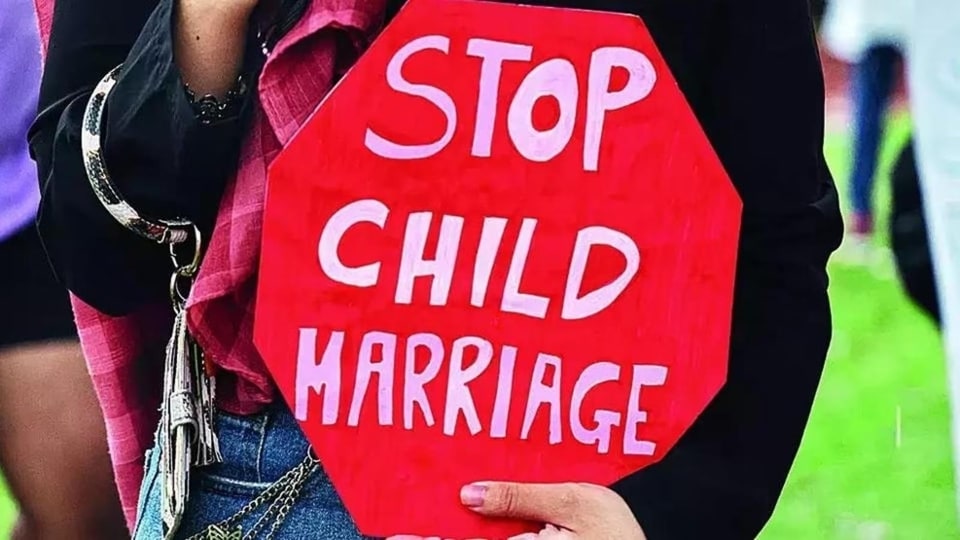
I have been feeling that these past few days. Something that was once only a call, an idea spoken aloud in a room in New Delhi, has now become a reality. It feels surreal. The United Nations has established the International Day for the Elimination of Child, Early and Forced Marriage, to be observed every year on November 27.
In March this year, at the 70th Commission on the Status of Women in New York, I stood before an international gathering discussing how legal systems must act with clarity and certainty to end child marriage. It was there that I made a call for the United Nations to dedicate a day to the elimination of child marriage.
Sierra Leone’s First Lady Fatima Maada Bio took the call for a UN day forward with courage and conviction, backed by the countries that supported the resolution, and Just Rights for Children (JRC) stood alongside her in this endeavour.
For Just Rights for Children, this is deeply personal. The journey began with Child Marriage Free India, which brought together governments, law enforcement and civil society around the prevention of child marriage. Since April 2023, the JRC network of more than 250 NGOs working across 782 districts has helped stop or prevent more than 500,000 child marriages. The launch of the Government of India’s Bal Vivah Mukt Bharat campaign on November 27, 2024 gave further impetus to this collective effort.
The national movement went global with the launch of the Child Marriage Free World campaign at the 80th United Nations General Assembly in September 2025. Nearly 100 countries have since joined the call to end this crime against children, bringing us to this monumental day.
For generations, societies have normalised child marriage in the name of tradition, culture, poverty and the belief that marriage protects a girl. But behind all those excuses is a child whose life has been changed forever.
An estimated 650 million women and girls alive today were married before the age of 18, and another 12 million girls are married every year. And the problem is not confined to countries where child marriage is seen as a social practice. Even today, it remains legal in much of the United States. It is banned in only 16 States, six of which have enacted bans in the past two years, while 34 States still allow child marriage.
Across the world, the gap between the rights children are entitled to and the protection they receive is stark. In 2024, Iraq passed a law allowing girls to be married after reaching puberty, which can be as young as nine or 10. The same year in Ghana, a 63-year-old priest married a 12-year-old as his fifth wife. I argued that the case should not be treated merely as an offence under the child marriage law, which treats it as a misdemeanour, but as a case of child sexual abuse. Eventually, the priest relented and annulled the marriage.
A year later, in Afghanistan, a six-year-old girl was married off to a 45-year-old man who already had two wives. The Taliban said she was “too young” and that she could be handed over to her husband once she turned nine.
A date on the international calendar cannot stop a child from being married. What it does is give the world a date to return to this commitment, measure progress and hold governments and societies accountable. Every anniversary would compel us to reflect on what has been done to end this crime and what more must be done.
India offers an important example. The JRC network has shown that when governments, law enforcement and civil society work together, prevention happens at scale. NFHS-6 shows that 20.1% of women aged 20-24 in India were married before the age of 18, down from 23.3% in NFHS-5. India has set a target of reducing the prevalence of child marriage by 10% by 2026 and achieving a child marriage free India by 2030.
This progress also shows that when the rule of law is applied with a whole-of-government and a whole-of-society approach, it can change the course of a child’s life. When a child is married, the world loses a student, a worker, a leader and a nation builder. When a girl remains in school, she becomes a force for prosperity and development.
Protecting that future requires keeping girls in school, providing education and skilling opportunities, linking vulnerable families to government benefits and social protection schemes and creating pathways to livelihoods and independence. Prevention must identify and address the risks that push children towards marriage, protection must reach those at risk and prosecution must follow when child marriage occurs. The rule of law must be enforced in both letter and spirit. Without enforcement there can be no deterrence, and without deterrence the law cannot protect children. When the world speaks against child marriage in one voice and backs that commitment with enforcement, resources and accountability, ending it is possible. In fact, it is happening, here and now.
(The views expressed are personal)
This article is authored by Bhuwan Ribhu, child rights activist and founder, Just Rights for Children, New Delhi.


