
 E-Paper



2026 West Asia: Global wake-up call
This article is authored by Gunwant Singh, scholar, international relations and security studies, Jawaharlal Nehru University, New Delhi.

 Prefer HTon Google


The spring of 2026 has been marked by a catastrophic descent into a regional conflagration that has fundamentally altered the moral and physical landscape of West Asia. What began as a strategic gambit in late February has evolved into a multi-theatre conflict involving the US, Israel, and Iran, along with a web of regional states caught in the crossfire. As a fragile two-week ceasefire hangs in a precarious balance this April, the world must look past the geopolitical manoeuvering to confront a staggering human toll. This is not merely a war of missiles and blockades; it is a profound failure of international safeguards that has left a trail of blood across borders, leaving thousands dead and millions more psychologically and economically shattered.
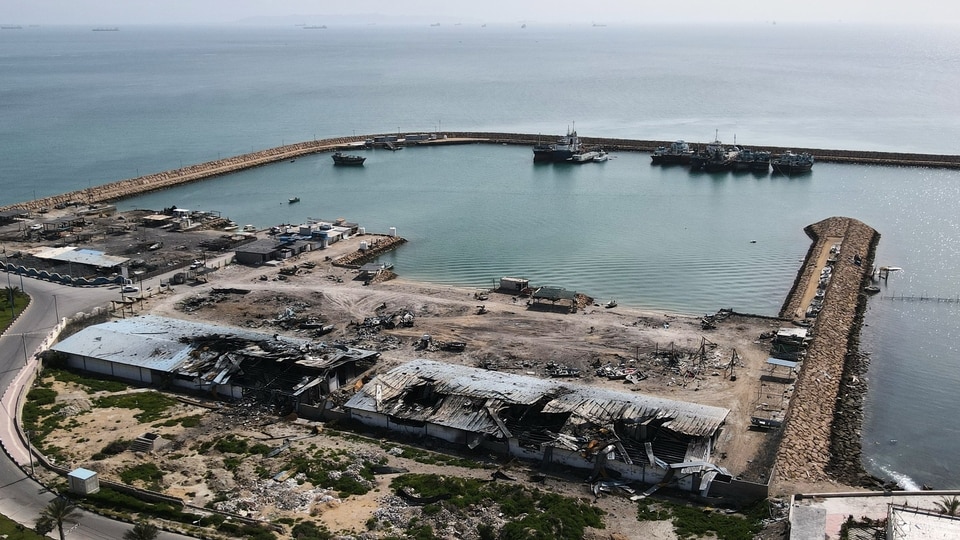
The accounting of lives lost in this conflict provides a grim testament to its scale. In Iran, independent human rights organisations estimate fatalities have exceeded 7,600, including more than 1,700 civilians. Among the most haunting losses was the strike on a girls' school in Minab in early March, which claimed the lives of approximately 170 children in a single day. Lebanon has seen at least 2,387 deaths as the conflict spilled into its territory, displacing one-sixth of its population. In Israel, dozens of civilians have been killed by retaliatory drone and missile strikes, with over a thousand apartments in Tel Aviv rendered uninhabitable. The carnage has not spared the Gulf Arab States, with fatalities recorded in the United Arab Emirates, Kuwait, and Bahrain, while even distant nations like the Philippines and France have lost citizens to the violence.
The economic cost of this war is as vast as it is regressive, disproportionately burdening the vulnerable. For the direct combatants, the numbers are astronomical. Iran faces direct economic damage estimated in the hundreds of billions, while Israel has incurred billions in infrastructure losses and defence spending. However, the global implications are even more severe. The disruption of the Strait of Hormuz, through which 20% of the world's oil and 27% of its liquefied natural gas flows, has triggered a global energy crisis. Oil prices peaking near $ 120 per barrel have sent shockwaves through the Global South, driving up the cost of basic food and fuel. In India and across South Asia, the rising cost of urea and natural gas for fertiliser plants threatens the next harvest cycle, potentially plunging millions into food insecurity in the coming year.
Socially, the war has torn the fabric of regional stability and community life. Over 32 million people have been displaced across the region, their homes destroyed, and their sense of safety annihilated. The psychological trauma of witnessing the assassination of national leadership and the destruction of urban centres will linger for generations, fuelling a cycle of resentment and radicalisation. In countries like Lebanon and Iran, the collapse of essential services, water, electricity, and sanitation, has created a humanitarian crisis where diseases and malnutrition are beginning to claim lives that the missiles spared. The war has turned neighbours into adversaries and forced millions into a state of permanent displacement, eroding the cultural and social bridges that took decades to build
Morally, the 2026 conflict represents a looking-glass world where international law is cited only to justify its violation. The disregard for the principles of distinction and proportionality has been flagrant. Attacks on civilian infrastructure, schools, and residential areas have been met with a paralysed UN Security Council where vetoes and bloc politics have prioritised strategic interests over human lives. The normalisation of State-sponsored assassinations and the use of wide-area explosive weapons in densely populated cities has stripped away the thin veneer of civilised warfare. This moral erosion is perhaps the most lasting damage, as it signals to the world that the core principles of the UN Charter are now secondary to the pursuit of military dominance.
The need of the hour is a transition from this fragile ceasefire to a robust, inclusive peace process that addresses the root causes of the escalation. First and foremost, an independent international commission must be established to document and investigate war crimes committed by all parties from the opening strikes to the retaliatory drone campaigns. Justice must not be a victor's privilege; it must be an impartial accounting of the lives lost and the laws broken. Furthermore, a new maritime security framework for the Strait of Hormuz is essential to ensure that the world's energy and food supplies are never again held hostage to regional rivalries.
To ensure justice is truly served, the international community must move beyond symbolic resolutions. There must be a concerted effort to provide reparations for the civilian victims and to fund the reconstruction of schools and hospitals through an international trust. The Global South, led by nations like India, must demand a seat at the negotiating table to ensure that the collateral damage of the developing world's economy is accounted for. Ultimately, justice will only be served when the architects of this war are held accountable, and the principles of humanity are restored to the centre of global diplomacy. The silence of the ceasefire must not be a prelude to further violence, but a space for the difficult, necessary work of rebuilding a world that has lost its moral compass.
(This views expressed are personal.)
This article is authored by Gunwant Singh, scholar, international relations and security studies, Jawaharlal Nehru University, New Delhi.


