
 E-Paper



Terms of Trade: Pride and Prejudice
In India’s case, the exchange rate itself has become a false moniker of national pride, which actually creates a prejudice against pursuing national interest.

 Prefer HTon Google


Regular readers of this column need not be scandalised. I have neither the intent nor the ability to venture into Jane Austen territory. The reference to her cult classic is intended to describe what I think is a muddled public and policy discourse on India’s economic policy. Let us start with the most recent example.
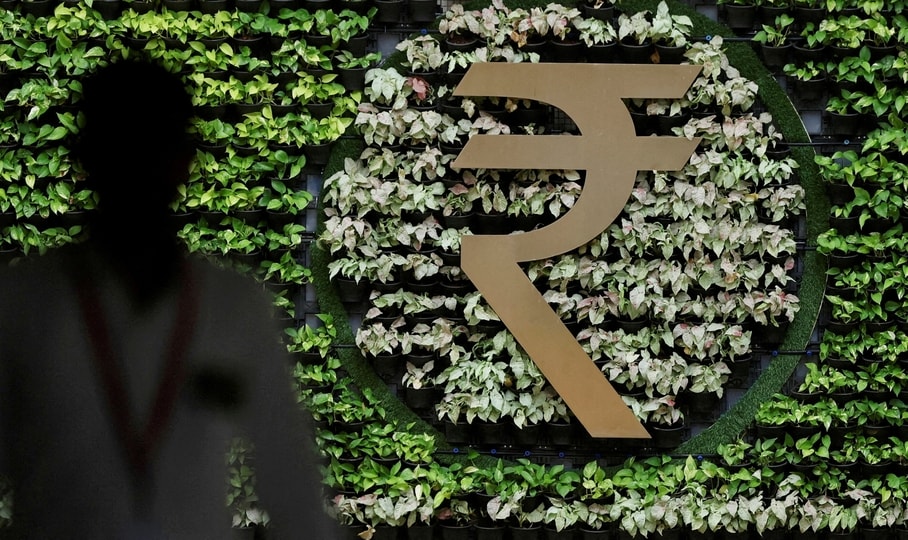
A couple of months ago, India raised a large amount of dollars via a special scheme. It primarily tapped non-resident Indians sending dollars to India. The money, lest there be any illusions, was not an act of benign patriotism. It came because a lucrative deal in terms of return on investment was on offer. Perhaps the best risk-free opportunity available to such people. The cost, of course, will be borne by the exchequer. Data until last week shows that almost half of those dollar deposits have already been spent on what can only be an attempt to prevent the rupee from sharply depreciating.
Is this strategy desirable?
The rupee-dollar exchange rate has often carried additional metaphysical characteristics in India apart from the usual cost-benefit analysis that a country running a merchandise deficit must undertake. If the rupee were to cross the threshold of 100 against a dollar, the political outrage over perceived national embarrassment would perhaps be unimaginable.
Is this strategy sustainable?
India is officially committed to a flexible market-driven exchange rate. The RBI itself says that it does not target a particular value of the rupee and only seeks to manage extreme volatility. Even short periods of exchange rate management entail burning the central bank's forex reserves. That is what has happened in the past few weeks. It cannot happen infinitely.
Is this strategy worth it?
If the central bank has to spend half of its expensively raised foreign exchange kitty in this process, then no. The foreign exchange deposits were raised not to manage the rupee dollar exchange rate but to compensate for a shortfall in capital inflows. They are needed to balance India’s current account deficit. This year, thanks to factors such as the ongoing AI boom and the high-for-long interest rate environment in developed countries, capital flows have been tepid. If the reserves are spent managing the rupee, more emergency measures might be required to boost foreign flows and reserves. That means more fiscal costs are to be paid.
The crux of the story, as is obvious, is that policy has been acting with prejudice against larger economic interest to protect what is considered a matter of (false) pride, read exchange rate.
Why and how did we get here?
India has had its moments of self-reckoning in matters of external economic balance earlier as well. Indira Gandhi had to agree to a rupee devaluation to get IMF and US aid amidst a food and foreign exchange crisis in 1965. RBI had to ship its gold to London during a balance of payments crisis in 1991. The latest Foreign Currency Non-Resident (FCNR) scheme was not the first time such a measure had been deployed to raise foreign exchange reserves.
What are the lessons we have learnt from such moments of crisis? It is tempting to say the 1965 crisis gave us the green revolution and 1991 gave us our watershed economic reforms moment. Along with these, came food security, and high growth and opulence, even if skewed.
But has India learnt to solve its fundamental external balance constraint on a longer-term basis? Not really. The merchandise trade deficit has only increased in the post-reform period. While the surplus from services exports, etc., has cushioned the impact on the overall current account deficit, capital flows have been key to filling the residual balance of payments gap. This leaves us vulnerable to cyclical turbulence on global capital markets, which is what is hurting right now. The tech boom and higher rates in the West will continue to generate headwinds for foreign capital inflow into India in the foreseeable future. Higher oil prices on account of the West Asia war will create additional pressure on the merchandise account. Ironically, the falling exchange rate seems to be helping exports, thereby easing some of the pain.
So, what next?
One-time measures such as diluting long-term capital gains tax etc. can help. But they will only tweak rather than change the long-term return on investment calculations. The only sustainable solution is to lower the merchandise trade deficit. This will lower India’s capital flow requirements from an external balance perspective. This requires a stronger manufacturing base in the country. Here, the reforms have sent the Indian economy on a wild goose chase which seems to be going nowhere even after 35 years. Manufacturing’s share in the Indian economy has been pretty much constant. Its relative standing vis-à-vis things such as merchandise imports has actually come down.
What explains this inability to strengthen manufacturing despite remarkable political stability in the post-reform period? The country has had just three prime ministers in the 28 years since 1998, perhaps the most stable among major functioning democracies. Let me not bore you with sector-wise economic explanations. Here is a broader theory.
Traditional economic wisdom attributes economic problems in the first half of independent India’s life to a state-controlled economy which kept the energy of the markets shackled. Was the fault really in a centralised planning approach or was it how our political economy went about implementing it? If it were just the former, China should have been a bigger economic disaster than India. Today, China continues to follow five-year plans while having a trade surplus that is unprecedented in the history of capitalism.
Chinese political economy is a story of the state not pursuing a dogmatic national economic rejuvenation dream that is drunk on the Kool-Aid of free markets and liberal societies. It is about exploiting the country’s size to set progressively more ambitious and difficult targets to achieve economic strength. The overarching concern, throughout this journey, was always the urge to avoid foreign subjugation which pre-revolutionary China had to endure. Chinese political leadership is always careful to frame the country’s onward economic march as a continuous process from the 1949 revolution rather than attempt to purge or vilify parts of that history since then. The sufferings of the past, in this narrative, have paid for the present and the future achievements.
India, on the other hand, has been closer to the Soviet Union’s trajectory of De-Stalinization. In its urge to exorcise the failures of the planned economy model, our political economy lost sight of the larger economic challenges and the necessity of the political economy response to them in the past. We became too laid-back about the wonders that globalization could do for India rather than focusing on what India needed to do for itself. This was convenient as long as the short-term economic and political needs seemed to be under control. It is a problem when they are not.
Do not get me wrong. I am not arguing for a status quo ante to pre-1991 years when one had to wait for six months to get a telephone connection even in a metro town. As today’s China teaches us, recognising a country’s historical hardships and challenges need not keep today’s policy tied to the past. What it does give though is a political ideological anchor on which the present-day elite of a country bases its strategy and narrative. It is this larger framework which defines things such as national pride.
Western countries and their friends argue that the Chinese keep their currency lower than it should be—exactly the opposite of what is said about India. The Chinese do not feel humiliated by a lower currency because they know the country has made tangible gains in becoming a manufacturing and export superpower by making that choice. To be sure, it was not just exchange rates that gave China this achievement. In India’s case, no such advantage or effort exists and the exchange rate itself has become a false moniker of national pride, which actually creates a prejudice against pursuing national interest. The socio-economic elite knows this but is too scared to set the cat among the pigeons fearing public backlash. They themselves are to blame given their own decoupling with India’s historical challenges as a nation and not what it faced in doing for elite accumulation or even welfare. We have done better on both these fronts in the post-reform period but still seriously lack solutions for structural challenges in crunch situations. Doing this requires differentiating "superficial goodness from actual goodness", which is how Wikipedia (I have not read the book) describes the learnings of Elizabeth Bennet, the protagonist of Pride and Prejudice.


