
 E-Paper



Reading the India-Bangladesh moment
This article is authored by Cchavi Vasisht, associate fellow, Chintan Research Foundation, New Delhi.

 Prefer HTon Google


In recent times, India and Bangladesh found themselves again in a curious diplomatic limbo. The relationship is too entangled to drift apart and too wounded to fully embrace. It is doing something, it is being renegotiated, slowly and unevenly, and the language of a ‘fresh start’ is everywhere in official statements from both sides. Bangladesh foreign minister Khalilur Rahman visit to Delhi in April reiterated that the two sides wanted to move beyond the difficulties faced during transition period. What triggered the recent unrest again was Sheikh Hasina’s address on August 5. Despite the Indian government's clear statement before the address itself that it has nothing to do with it, it was interpreted as a landed like a provocation in Bangladesh. Rahman, responded vehemently to Hasina’s speech and stated that her address had shown ‘disrespect to the judiciary’ and India had ‘allowed that to happen.’
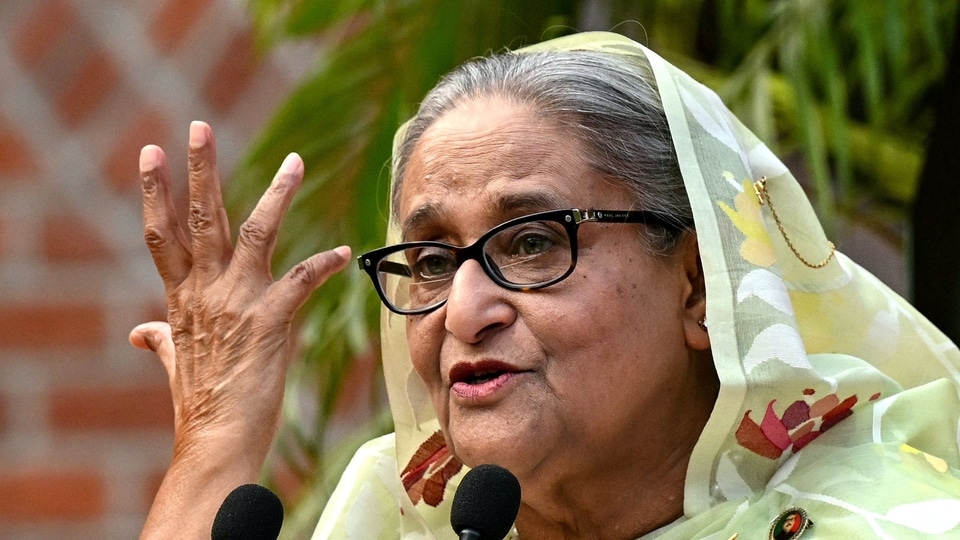
To set things right and create a conducive environment, Bangladesh has explicitly demanded her extradition, along with other fugitives who were accused of killing July-uprising. India had appointed Dinesh Trivedi, a political figure, as India's High Commissioner in Dhaka, given the sensitivity of the relations. Since his appointment, he has met Prime Minister (PM) Tarique Rahman's secretariat and the home and foreign ministries, several times highlighting the need for ‘positive, constructive and forward-looking’ engagement. Additionally, a high-level delegation from India's security establishment quietly landed in Dhaka.
Currently, much of the relationship is read purely through Hasina prism, but that would be a mistake. The changing nodes of foreign policy in Bangladesh. By choosing Malaysia and China for his first overseas trips as PM, Rahman elevated ties with China to a "Community with a Shared Future" and opened discussion on the new China-Myanmar-Bangladesh connectivity corridor. Reports of Chinese involvement near Mongla Port, barely 80 kilometres from the Indian border, have raised concerns on the Indian side. Further, the re-establishment of diplomatic and defence-adjacent contacts with Pakistan and Turkey. Bangladesh calls this as ‘Bangladesh First’ as foreign affairs adviser M Humayun Kabir noted in a recent essay that Bangladesh will work with India, China, the US or anyone else whoever can serve their interests. It is not primarily an anti-India theatre, though it will sometimes look and function that way. It is a government trying to establish, for domestic political interests as much as international ones, that it will not simply inherit the Hasina-era alignment by default.
What should worry policymakers on both sides is that the relationship risks being reduced to a single transactional question of Sheikh Hasina being in India. The larger question is that will the two sides actually address the issues that affect Bangladeshis and Indians. In recent times, India resumed visa tourist services in June and continued to supply diesel in times of energy crisis across the world, along with 1,160 MW of power.
But there are larger concerns in hand. The Ganges Water Treaty, the only river-sharing agreement between two countries connected by 54 common rivers, expires in December 2026. The long-promised Teesta project remains stalled. Economic zones promised at Mirsharai and Mongla were allocated land and then quietly abandoned. Reports on minority repression and radicalisation continue to raise concerns in New Delhi. It is equally concerning for India to see the renewed discussion on the Chinese-linked corridor, which is nothing but the BCIM Corridor excluding India. This is a cause of worry given where the geography sits.
It is, therefore, important to schedule a state visit and address the concerns that could help both sides regain trust and cooperation. India was right to keep a distance from Hasina's political, but the extradition question is the genuine hard test. India as a responsible power has to ensure Hasina isn't handed over into injustice, while simultaneously making sure the standoff doesn't become the pretext that pushes Bangladesh further toward China and Pakistan. India must also start delivering on the economic commitments. Bangladesh, in turn, should resist making every other item on the bilateral agenda hostage to the Hasina question alone, and assure that Bangladeshi territory will not be used in ways hostile to Indian security. Whether Tarique Rahman travels to Delhi for the BRICS summit next month will make headlines either way. And the relationship's real test will be whether the relations can revive and benefit the two sides and its people. India and Bangladesh are not merely neighbours in the geographic sense, but both sides' economic and security interests are closely aligned.
(The views expressed are personal)
This article is authored by Cchavi Vasisht, associate fellow, Chintan Research Foundation, New Delhi.


