
 E-Paper



Significance of Iranian foreign minister's visit to China
This article is authored by Prabhu Dayal, former ambassador, New Delhi.

 Prefer HTon Google


The recent visit of Iranian foreign minister Abbas Araghchi to Beijing on May 6, 2026, represents a high-stakes diplomatic manoeuvering ahead of a pivotal summit between US President Donald Trump and Chinese President Xi Jinping on May 14-15, 2026.
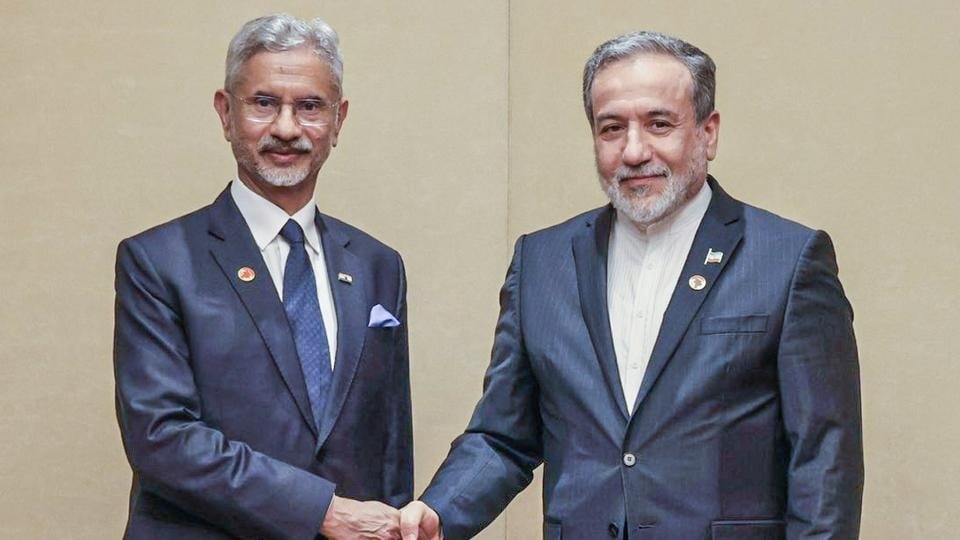
This was Araghchi's first visit to China since the outbreak of the war on February 28, 2026 and was an attempt by Tehran to secure a "diplomatic shield." This diplomatic engagement highlights China’s increasing influence as a mediator in West Asia crisis.
The timing of Araghchi’s visit—just one week before Trump's scheduled arrival in Beijing on May 14—was a deliberate move to influence the upcoming US-China agenda. The Strait of Hormuz crisis and the resulting global oil supply shock provide Beijing with significant leverage in its own negotiations with Washington over trade and regional stability.
Araghchi said that China is a close friend of Iran and bilateral “cooperation will even become stronger under current circumstances.” By aligning with Beijing now, Tehran seeks to ensure that its interests are not sacrificed in a potential US-China ‘grand bargain’ and hopes that China will continue to provide a diplomatic backstop at the United Nations.
While China has reaffirmed its support for Iran's sovereignty, the visit highlighted growing friction over maritime security. China, which buys the vast majority of Iranian oil, is deeply concerned by the current blockade of the Strait of Hormuz. Foreign minister Wang Yi explicitly called for a "prompt resumption of shipping traffic," a point notably omitted from Iran’s official summary of the meeting.
Beijing’s position remains carefully balanced: It refuses to join western sanctions or explicitly condemn Tehran, yet it is pressuring Iran to de-escalate to protect the global economy and its own energy supply. While China has been critical of the US naval blockade of Iranian ports, it is increasingly frustrated with Tehran’s continued closure of the Strait of Hormuz. According to a Chinese foreign ministry statement, “China considers that a complete cessation of fighting must be achieved without delay, that it is even more unacceptable to restart hostilities, and that continuing to negotiate remains essential.”
During Araghchi’s visit, China expressed support for a new, regional-led security framework, aiming to stabilise West Asia following recent conflicts. This initiative, welcomed by Iran, focuses on a "new postwar regional architecture" that balances security with development. Araghchi stated that "Iran after the war is different from Iran before the war," noting that Tehran demonstrated its capabilities and strength, paving the way for a new era of cooperation.
Araghchi described China as a "sincere friend of Tehran" and a comprehensive strategic partner, endorsing China's four-point proposal for regional stability. With US blockades intensifying, Tehran is increasingly dependent on the 25-year strategic partnership with China signed in 2021 for financial investments and infrastructure development.
Araghchi’s visit solidified the "strategic partnership" between Iran and China amidst profound geopolitical volatility. While China positioned itself as a constructive mediator urging an end to hostilities and the reopening of the Strait of Hormuz, the talks fundamentally demonstrated that, despite rising risks to its energy security, Beijing remains Tehran's essential, long-term partner in mitigating western isolation.
Therefore, the dialogue reflects a calculated, multifaceted effort by both nations to strengthen their mutual dependence, shaping a new regional order that challenges existing American influence in West Asia. At the same time, Araghchi’s visit underscores that while China remains a highly essential partner for Iran, that support is not unconditional. Beijing is willing to act as a "diplomatic shield" against US aggression, but only so long as Iran does not indefinitely disrupt the global energy markets upon which China depends.
(The views expressed are personal)
This article is authored by Prabhu Dayal, former ambassador, New Delhi.


