
 E-Paper



What can be expected from the Nepal’s PM’s visit
Prime Minister Balendra Shah’s first overseas bilateral visit offers India and Nepal a chance to advance projects.

 Prefer HTon Google


Nepal’s Prime Minister (PM) Balendra Shah is expected in New Delhi later this month on his first bilateral visit abroad since taking office in March 2026. The visit carries more weight than most. It is the first full engagement between India and the new leadership in Nepal that came to power on a promise of clean governance and economic results. Its success will depend on whether both sides agree on a practical agenda, one that serves Nepal’s development priorities while keeping India’s interests.
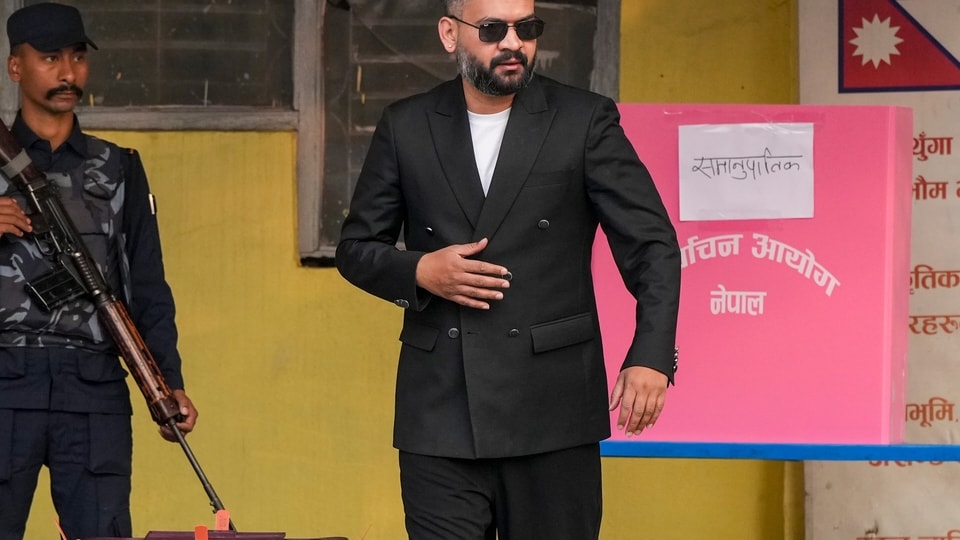
After Gen Z protests which brought down the previous government in September 2025, the Rastriya Swatantra Party (RSP) won 182 of the 275 seats in the House of Representatives. Nepal has seen numerous changes of government since 1990, and for the first time in years, Nepal had a single-party government. The new leadership has brought a youthful energy which speaks of Nepal first.
The fundamentals, however, have not changed. Being a landlocked country, Nepal was read as buffer between the two giants. Though the new leadership in Nepal has described Nepal as a “vibrant bridge” between its neighbours rather than a buffer, like every Nepali government, Nepal seeks to balance.
India’s relationship with the new government in Nepal began cautiously. Though the visit by foreign secretary Vikram Misri planned for May was postponed, RSP chairman Rabi Lamichhane along with a delegation visited India on the invitation of the BJP president. He met PM Modi, home minister Amit Shah and external affairs minister S Jaishankar, and Modi described Nepal as a priority partner under the Neighbourhood First policy. Following Lamichhane’s visit, foreign minister Khanal visited Delhi and held talks with Jaishankar and Ajit Doval before travelling to Beijing a week later.
This was also the time that PM Shah discussed the Kalapani-Lipulekh-Limpiyadhura issue with the UK and China as well. But New Delhi responded that there is no role for third parties in bilateral matters, and Khanal later clarified that Nepal had sought archival records, not mediation. After the August floods, India sent relief from the first day. Since then, engagement has steadily improved. Misri’s recent visit on November 4-5, which included meetings with the PM, senior ministers and opposition leaders, has set the agenda for the upcoming visit.
The visit can usefully be organised around three agendas. First, responding to the immediate needs, i.e. a reconstruction package. Nepal has sought about $2 billion in Indian support after the floods: $1 billion in concessional credit, $500 million in grants and $500 million for reconstruction and rehabilitation. India’s response should be generous, starting with grants for housing, schools and bridges in the affected districts. Nepal’s request for Bailey bridges to restore road links offers an early, visible deliverable. Concessional credit, for its part, should carry clear timelines as experience suggests that speed is itself a form of goodwill.
Here, the two sides could also discuss the possibility of cooperation on Himalayan Climate Resilience Mechanism as proposed by Shah in the UN General Assembly. Though a trilateral mechanism will take time given the sensitivities of data-sharing with China, a prudent path would be to begin with bilateral India-Nepal cooperation on glacial lake monitoring, flood forecasting and early warning on shared rivers, and to use existing regional platforms such as the Kathmandu-based ICIMOD, of which all three countries are members, for technical exchanges. India, as a downstream country, has a direct stake in the outcome.
On the economic side, it is essential to make cooperation and interdependence visible. Under the 2024 long-term agreement, India is to import 10,000 MW from Nepal over a decade. Today Nepal exports about 1,000 MW, largely through the Dhalkebar-Muzaffarpur line. The Inaruwa-Purnia and Lamki-Bareilly lines have been agreed, and Butwal-Gorakhpur is under construction. The visit should fix completion dates for these lines, and for the Lower Arun hydropower project and the Siliguri-Charali petroleum pipeline, both due for launch. Attempt must also be made to restart conversation over the Pancheshwar Multipurpose Project which remains stalled over the sharing of water benefits. Even participation of private players in exploring hydropower potential could be expected.
Bangladesh is the regional opportunity. India could commit to a feasibility study for a dedicated corridor to carry Nepal’s power to Bangladesh, building on the current 40 MW arrangement, since a request for a further 20 MW is held up by limited capacity on the Baharampur-Bheramara line. Further, India’s rule against buying power from projects involving investors from countries without a power agreement with India rests on sound security reasons; explaining it clearly would reduce misunderstanding in Nepal.
Additionally, new integrated check posts and the Ayodhya-Janakpur rail service, which held its trial run on November 5, will be highlights. Nepal’s long-standing request for additional air-entry routes to the Bhairahawa and Pokhara airports, pending since 2014, is now under technical discussion. An early, positive conclusion would be appreciated in Nepal.
Finally, resolving long standing challenges would be a step in the right direction. Nepal’s concerns over Lipulekh grew after India and China resumed border trade through the pass in August. Reactivating the existing bilateral boundary mechanisms, with an agreed calendar for discussing Kalapani and Susta, would keep the issue from overshadowing the wider relationship. And finally, the revised Agniveer scheme has given a ray of hope. Since 2022, no Nepal-domiciled Gorkha has joined the Indian Army. The revised version allows Agniveers not retained after four years to serve two more years and then be considered for regular enrolment. This narrows the gap with the earlier system, though questions on pensions remain. India could formally brief Nepal on the revised terms, as the tradition valued by both armies, and by thousands of families in Nepal needs to be resumed.
The measure of this visit will not be the number of agreements signed, but whether reconstruction support reaches people quickly and a first step is taken on climate cooperation. Additionally, work on transmission lines and energy sector strengthens. For Kathmandu, the visit is an opportunity to show that its new leadership can pair national pride with pragmatic partnership. For New Delhi, it is a chance to engage a young government with strengthened partnership and understanding of its interests.
(The views expressed are personal)
This article is authored by Cchavi Vasisht, associate fellow, Chintan Research Foundation, New Delhi.


