
 E-Paper



Mining, melancholia and memory in Rajhara
This article is authored by Piya Srinivasan.

 Prefer HTon Google


On a muggy afternoon, we walked into Rajhara and into India’s coal story in medias res. Rajhara colliery, in the Palamu district of Jharkhand, reveals both the continuities and ruptures of India’s energy transition. A mine closes, reopens briefly, closes again, then eventually resumes production. Even so, repeated closures do not halt the social life of coal. It continues to shape how communities live, work with and remember coal.
What happens when the temporal rhythms of a mine—the sirens, shifts, markets, and movements that shape communities—are disrupted? We had already encountered coal’s official archive through mine closure notifications, environmental permissions, production records, and repurposing plans. These documents constitute the blueprint of a post-mining future shaped by the condition of the present, the weight of the past, national ambitions and global climate imperatives.
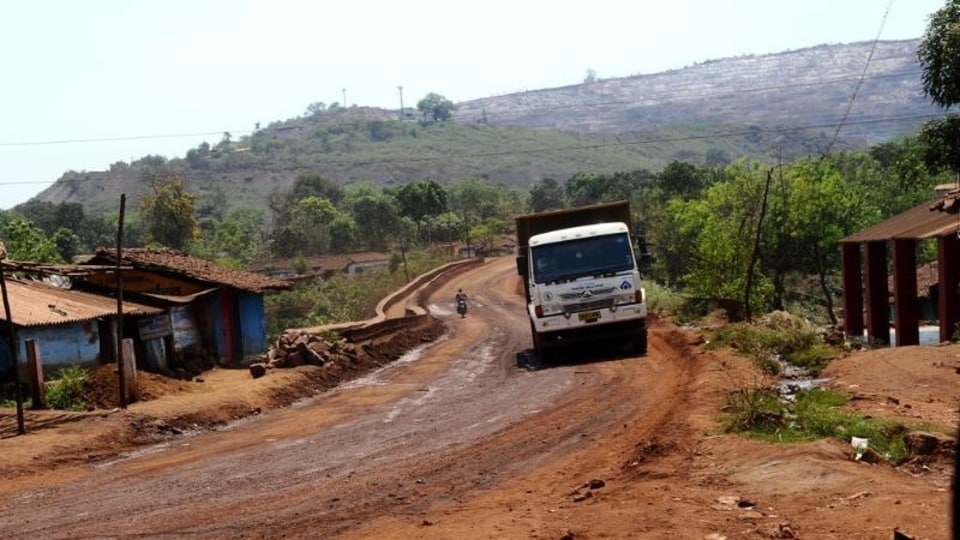
Over the next few days, we encountered an unofficial archive of coal embedded in the landscape: Scars and quagmires, exposed strata zigzagged with soot, open cast pits the size of lakes, and brutalist ecological monuments of overburden. We were in the presence of something larger than we could account for: A landscape that remembered.
Mines like Rajhara throw into relief the contradictions of India’s energy transition. Coal remains central to India’s energy security. Yet the costs of sustaining and moving beyond coal are unevenly borne. These costs linger in memory, stories, and histories that outlast the mines, reshaping landscapes, livelihoods, and communities. While the nationalisation of India’s coal mines in the 1970s offered employment to one family member for every two acres of land under the central government’s Resettlement and Rehabilitation Policy, subsequent subcontracting, mechanisation and privatisation have reduced formal employment while increasing informality among coal-dependent communities.
Rajhara colliery is one of India’s oldest operational coal mine sites. Founded after the formation of the Bengal Coal Company, the site holds a memory archive in its spaces. Outside the Rajhara panchayat ghar stands a gigantic bargad tree, pointed out to us simply as the hanging tree. Armed with weapons, tribal revolutionaries reportedly arrived in Rajhara during the First War of Indian Independence, ransacked the Bengal Coal Company factory and brought its operations to a temporary halt.
A lone Hindi newspaper article records that on November 28-29, 1857, they were captured and hanged on the tree, marking it as a Black Day for Rajhara. The bargad is perhaps the only surviving non-human witness to their martyrdom. What remains of the event is fragmentary: a local memory, an ancient tree and a single newspaper account as the only written record we could find. An erased subaltern history of anti-colonial resistance to coal might hold the threads to who gets written out when a nation rewrites its own story of extraction.
These entanglements of memory emerged further when we spoke with the village children. Their stories travelled between the real and the spectral. Their school, once a British hospital, had corpses buried in the bathroom; there were ghosts in the mine, and a spirit haunting a British bungalow carried little children away. They described, in almost forensic detail, a colonial-era cave. Water dripped from the cave’s walls, along which ran coal seams. At one point, the cave became a tunnel, sloping steeply downward.
The cave’s material reality, the ghosts, and the daldal (quagmire) where people who went to steal coal were said to perish—all this survived in the precision of the children’s telling. Their stories were peppered with fragments of Rajhara’s mining history: Flooding, blasting to access coal deposits, excavation, pumping water from the tunnel and eventually, the closure of the mine. The children became unlikely storytellers of Rajhara’s coal history.
They also spoke of retribution: how Indian workers who made mistakes could be punished by hanging. The violence of colonial extraction lives on as legend, rumour, memory. What is absent is never entirely gone. It pervades the present, unsettling any neat separation between the scarred landscapes of extraction and a clean and green energy future. India’s energy transition must account for what haunts it.
Coal, however, is more than a ghostly presence. Its afterlife produces a different social world, shaped by extreme informalisation and need. We met people bereft of livelihoods by a mineral economy whose thirst for land and water had reshaped their lives. For them, discarded coal—the dregs of extractive modernity—was a way of living with the mine.
The reopened mine announces itself through a siren every morning. Groups of women move to the dump yard where second-grade coal, discards of the formal coal economy, is offloaded. With pickaxes, they scavenge this coal and take it away to sell or light their kitchen fires. Even as the mining economy offers little formal employment, its byproduct provides a livelihood: Money to pay for children’s schooling, daughters’ weddings, debts to clear.
This shadow economy is borne of necessity. The women describe waiting all day for the coal truck, their movements suspended by the uncertainty of its arrival. Time hangs heavy, still dictated by coal’s temporal rhythms. In this afterlife, extractive modernity takes on a new, feminised form. Coal bears the melancholia of those it has left behind.
Whose histories survive when mines close, reopen, are abandoned or repurposed? The question of who has rights over mineral-bearing lands is inseparable from whose histories are deemed worthy of recognition. The Mines and Minerals (Development and Regulation) Amendment Act 2026, passed on 18 August, offers an instance of how policy sees such landscapes: through the imperatives of fiscal uniformity, mining viability, and national energy security. As amendments reorganise the administrative future of India’s mineral wealth, they also risk burying these histories.
In Rajhara, the answer lies not just in coal’s official archives but in how coal is remembered. Mines may close, but the social life of coal persists. Its records are etched in the landscape, its violence lingers in memory, its shadow economy sustains livelihoods in the absence of formal employment.
Any imagination of a post-coal future must reckon with these remnants. A truly just coal transition must account for the unofficial archives that precede the language of repurposing and the true costs of leaving coal behind.
(The views expressed are personal)
This article is authored by Piya Srinivasan, researcher and head, communications, Ashoka Centre for a People-centric Energy Transition (ACPET), Ashoka University, Delhi-NCR.


