
 E-Paper



A year after receiving world heritage status, temple in T’gana still faces neglect: Activists
It was on July 25, 2021 that UNESCO declared Ramappa temple as the world heritage site at its World Heritage Committee meeting held in China. It was the only structure from India that was considered for the world heritage site status at that meeting.

 Prefer HTon Google


A year after being declared as the UNESCO world heritage site, historic Rudreshwara temple, popularly known as Ramappa temple, at Palampet village of Telangana’s Mulugu district, still lies in a state of neglect with the state government doing little to develop the village and its surroundings leading to the temple complex, activists said on Monday.
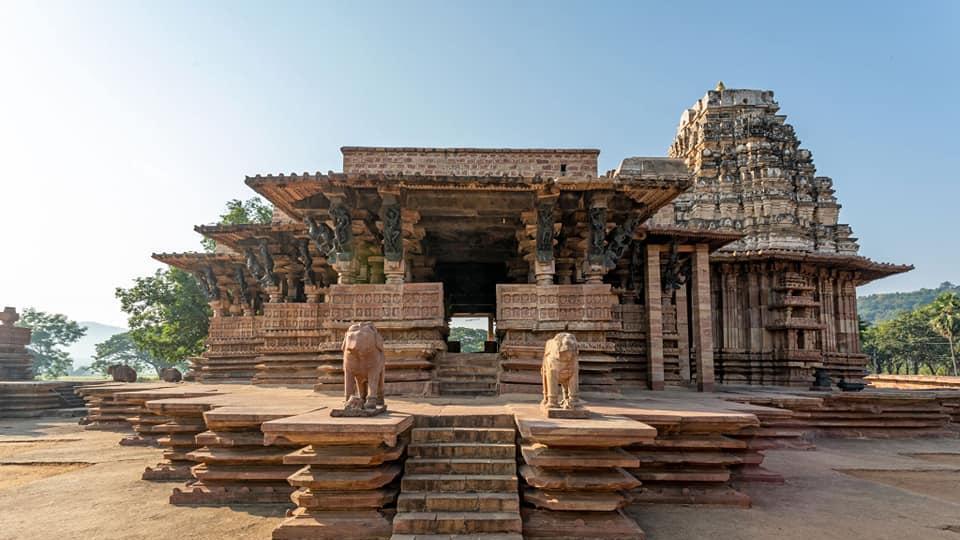
It was on July 25, 2021 that UNESCO declared Ramappa temple as the world heritage site at its World Heritage Committee meeting held in China. It was the only structure from India that was considered for the world heritage site status at that meeting.
The UNESCO recognition has brought the 13th century monument into the limelight, attracting domestic and foreign tourists in large numbers. The temple, which suffered damages due to vagaries of weather and natural calamities over a period of time, has been restored to its glory in the past 10 years by the Archaeological Survey of India.
But not much effort has been made by the state government to develop the surroundings and provide facilities for the tourists in and around the temple. “During the recent heavy rains in Mulug district, the approach roads to the temple suffered badly. There were also reports of seepage of rainwater in the temple premises,” heritage activist Pakide Aravind said.
He said nothing had changed much around the temple in the last one year, except the board is claiming that it was a world heritage site. “Even the compound wall around the temple has not been restored yet,” Aravind said.
As per the recommendations of UNESCO, the Telangana government has constituted Palampet Special Development Authority (PSDA) to ensure adequate legal protection to the temple complex and its expanded surroundings including hillocks, water bodies, buffer zone and all supporting Kakatiyan period attributes.
The authority, among other things, would take up spatial planning of the heritage zone, public infrastructure zone, residential zone, agriculture zone and forest zone related to the land use and promote conservation sensitive development in the vicinity of Ramappa temple.
The authority would be headed by Mulugu district collector and comprise nine other members including district town and country planning officer, ASI conservation assistant, regional joint director of endowments department etc.
In February, the union ministry of tourism proposed to include the Ramappa temple under Pilgrimage Rejuvenation And Spiritual Augmentation Drive (PRASAD) scheme, as part of promoting religious tourism. Under the scheme, the Centre is expected to release around ₹50 crore for creation of facilities at the temple and another ₹7 crore on beautification works.
“We have sent the detailed project report to the Centre, which has agreed for the same in principle. But so far, no money has been released. Once it starts, it will take at least two years to complete the works,” state tourism development corporation managing director B Manohar Rao told HT.
The Ramappa temple dates back to 1213 AD and it was built by Recharla Rudra Deva, during the period of emperor Ganapathi Deva of Kakatiya Dynasty. The deity in the sanctum sanctorum is Lord Shiva.
The temple, built completely with sandstone and has decorated beams and pillars of carved granite and dolerite, is known for its architectural splendour and engineering marvel. The dome of the temple is made of lightweight bricks, which can float on water; hence, known as floating bricks.
A senior ASI official, who refused to be named, said the UNESCO has suggested certain steps to be taken by December 2022. “They include finalisation of the integrated conservation and management plan as well as updating the tourism development plan, conservation of additional architectural and engineering features, including Ramappa Lake bund and development of smaller temples in the complex,” the official said.
Another major suggestion made by the UNESCO is the reassembling and conservation of Kameshwara temple on the right side of main Ramappa temple. “This Kameshwara temple was completely dismantled around 2000, and we have started restoration of it as per the UNESCO guidelines,” the ASI official said, adding that “restoration and conservation of any world heritage monument cannot be done overnight. It takes at least two to three years”.
Admitting that the central portion of the roof of the main temple, which was profusely leaking, the official said it was plugged and water-tightened now. “We have also taken up upgradation of the surroundings such as filling of low-lying areas to prevent water logging and provided cross drainages for easy discharge of rain water,” the official said, adding an amount of ₹82 lakh was spent on the temple during the year.


