E-Paper



Assam indigenous bodies want change in term ‘Assamese people’ in Assam Accord
Indigenous bodies in Assam have opposed constitutional safeguards for those who became citizens after 1951. A high-level committee on Clause 6 of Assam Accord is seeking suggestions for such safeguards for Assamese people.

 Prefer HTon Google


The umbrella organisation of literary bodies of eight prominent tribes in Assam has sought the modification of the term “Assamese people” mentioned in Clause 6 of the Assam Accord signed more than three decades ago.
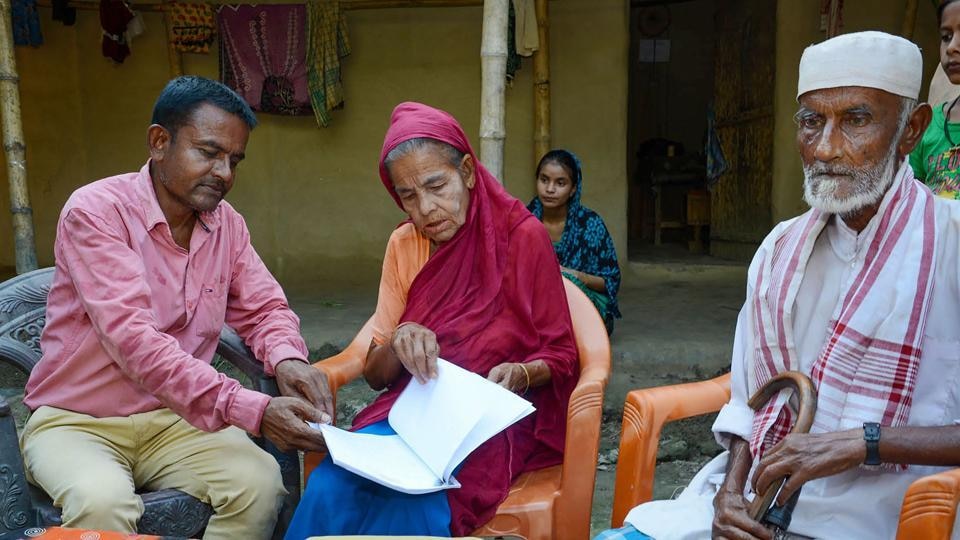
Members of the Indigenous Tribal Sahitya Sabha Assam (ITSSA) submitted a memorandum to the chairperson of the high-level committee on Clause 6 of Assam Accord and retired chief justice of Gauhati High Court, Biplab Kumar Sarma, on Thursday.
“We want the term ‘Assamese people’ in Clause 6 of the accord to be replaced by the terms ‘indigenous tribal people of Assam’ and ‘indigenous Assamese people of Assam’,” said ITSSA president Govinda Taid.
‘Sahitya sabhas’ (literary bodies) of eight tribes of Assam—Bodo, Tiwa, Dimasa, Karbi, Mising, Deori, Rabha and Garo—comprise ITSSA.
The Assam Accord was a tripartite agreement signed in 1985 between the Centre, All Assam Students Union (AASU) and All Assam Gana Sangram Parishad (AAGSP) that brought the six-year-long anti-foreigner movement in the state to an end.
Clause 6 of the accord states, “Constitutional, legislative and administrative safeguards, as may be appropriate, shall be provided to protect, preserve and promote the cultural, social, linguistic identity and heritage of the Assamese people”.
But since the accord doesn’t clearly define who would be considered as “Assamese people”, there is slight confusion on who would enjoy the constitutional safeguards.
The ITSSA memorandum stated that while constitutional safeguards should be provided to indigenous tribal people and indigenous Assamese people based on the National Register of Citizens (NRC), 1951, those who acquired Indian citizenship between 1951 and March 25, 1971, should not be given any such benefits.
“As per Assam Accord, those who entered Assam before March 25, 1971, got Indian citizenship. But constitutional safeguards should be provided only to the indigenous tribals and indigenous Assamese, not others,” Taid said.
The implementation of Clause 6 had remained in the back-burner for over three decades till the Narendra Modi government formed a six-member committee this January for the purpose.
But due to widespread opposition in Assam to the Centre’s move to implement the Citizenship Amendment Bill, 2016, which sought to give citizenship to religious minorities from neighbouring countries, all members resigned from the committee.
The new committee, which was formed after the NDA returned to power in May, has 14 members. It has a term of six months and has to submit its recommendations by January 31 next year. At present, it is seeking suggestions from the public to prepare its report.
Among other things, ITSSA wanted the introduction of four-language education policy in Assam schools instead of the existing three-language policy and eviction of all encroachers from tribal belts and blocks.
On Thursday, senior Congress leader and former chief minister Tarun Gogoi suggested the amendment of the Assam Accord to include the term “indigenous” along with “Assamese people” in order to ensure effective implementation of the Clause 6.