
 E-Paper



Battery swapping policy will boost state EV sector: Firms
The new business model, termed Battery or Energy as a Service, has been introduced to improve efficiency in what remains a largely untapped industry in a country, among the largest and most promising automobile markets in the world.

 Prefer HTon Google


The Centre’s plans to bring a battery swapping policy with inter-operability standards for Electric Vehicles (EVs) will benefit a state like Karnataka that has come out with policies and plans to attract investments in this industry and is home to some of India’s largest mobility start-ups, automobile industry giants said on Tuesday.
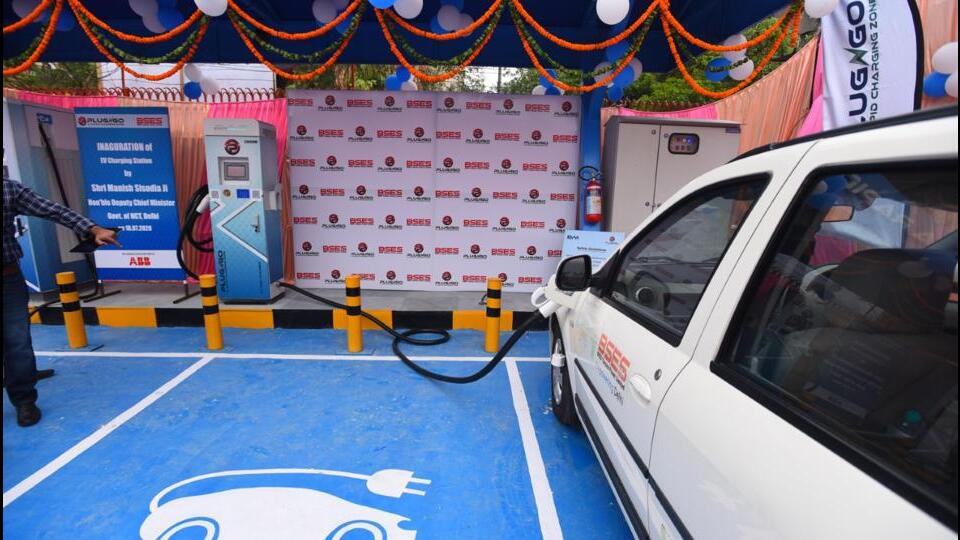
Presenting the Union Budget for 2022-23 on Tuesday, finance minister Nirmala Sitharaman said that considering space constraints in urban areas for setting up charging stations at scale, a battery swapping policy will be brought out, and inter-operability standards will be formulated.
The new business model, termed Battery or Energy as a Service, has been introduced to improve efficiency in what remains a largely untapped industry in a country, among the largest and most promising automobile markets in the world.
“Considering the constraint of space in urban areas for setting up charging stations at scale, a battery swapping policy will be brought out and inter-operability standards will be formulated. The private sector will be encouraged to develop sustainable and innovative business models for ‘Battery or Energy as a Service’. This will improve efficiency in the EV ecosystem,” Sitharaman said.
The proposal comes when many large, new and old players in the automobile market are looking to capitalise on the opportunity in the EV space.
Operators like Chetan Maini-run SUN Mobility have introduced offerings like MaaS (Mobility-as-a-Service), which encourages e-commerce delivery companies in cities like Bengaluru, Delhi and Chandigarh to use electric vehicles (EVs) in a pay-as-you-go model.
“The announcement of Battery Swapping policy as a way forward to accelerate the penetration of EVs is a step much ahead than others and will enable technology-agnostic options for a potential EV customer.
Karnataka has several billion-dollar proposals in the works for EV-related manufacturing and services. But battery swapping would work more effectively if batteries are standardised. It will allow service providers to install these swapping stations that would help mitigate range anxiety,” Maini told HT on Tuesday.
Since December of 2020, the state government has approved at least $3 billion worth of EV-related investments, many of which are yet to see any real work on the ground.
“The state government that announces investment interest with great flair and pomp are often accused of creating more hurdles while giving requisite clearances. This part of the approval process is also plagued with corruption, delays in land acquisition and several other challenges which have led to Karnataka losing out on thousands of crores in investments and the jobs that it can generate to help the calamity-prone state. Battery swapping technology addresses key challenges around upfront cost, range anxiety and long charging time enabling faster adoption of EVs,” Maini added.
“As the policy unfolds, it would be great to see the govt addressing key points around how customers can access subsidies (currently available for EVs), range per charge criteria (as swap batteries, by definition, are smaller and with less range) and GST for swapping services in line with EVs. It’s encouraging to see steps being taken on interoperability standards,” Maini said.
“While we await the policy details on Battery Swapping & Land allocation for public charging systems, the announcement and focus of the Government to promote Zero Emission mobility will benefit sectors like MaaS, E-Commerce, Food delivery who are focused on optimizing the last mile delivery in India,” Vinay Raghunath, Partner and Automotive sector leader, EY India said.
According to a written reply in the Rajya Sabha by the road transport and highways minister Nitin Gadkari in December last year, there are a total of 870,141 EVs that have been registered in India, of which Karnataka accounts for 72,544, PTI reported.


