
 E-Paper



Businesses shut as Delhi clamps down border to all but essentials
The Delhi administration said there was no need to panic because essentials services such as general stores, grocery shops, milk outlets, ration shops, pharmacies, hospitals, dispensaries and ATMs (including cashier and teller operators of banks) will remain open.

 Prefer HTon Google


Delhi chief minister Arvind Kejriwal urged people in the Capital to stay home as much as possible as he announced a complete lockdown on Sunday and said that “extraordinary times called for extraordinary measures” to fight the public health threat triggered by the coronavirus disease (Covid-19).
Under the lockdown, which began from 6am on March 23, all public transport services, except 25% of DTC buses, will remain suspended. These include the Delhi Metro, private buses, taxis and auto-rickshaws.
Kejriwal said that India needed to learn from the mistakes of nations such as Italy and Iran, which have been ravaged by the Covid-19 pandemic, reporting thousands of deaths. Italy now has the highest death toll, surpassing China, where the disease originated and has affected about 82,000 people.
Addressing a news briefing along with Lieutenant Governor Anil Baijal, the Delhi CM said the lockdown will be in place till March 31. Other than public transport, private and commercial establishments, construction activities and interstate movement will be shut for the rest of the month.
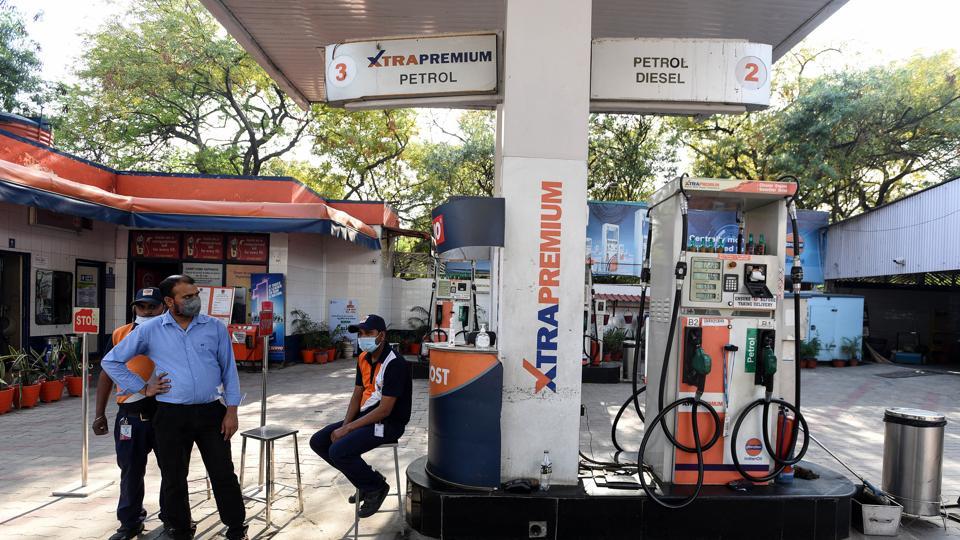
The Delhi administration said there was no need to panic because essentials services such as general stores, grocery shops, milk outlets, ration shops, pharmacies, hospitals, dispensaries and ATMs (including cashier and teller operators of banks) will remain open. No restrictions have been clamped on the services provided by fuel stations, LPG cylinder dealers, pipeline gas providers, water and electricity supplies, and food, medical and grocery delivery persons from restaurants, general stores, cloud kitchens or ecommerce firms.
Kejriwal said no certificate will be required from the people if they move about during the lockdown with valid needs and reasons. “No certificate will be required to move across the city. Gathering of five or more people will be barred. All the private establishment will be shut, while the employees should be paid,” he said. Both permanent and contractual employees will continue to be paid for the month of March, the CM said.
“Certain exceptions have been made to ensure essential items are available for purchase and basic services continue to operate,” Kejriwal added.
On the hoarding of masks and sanitisers, he said it is not just against the law but humanity. “We did 327 raids and 437 cases have been filed so far. We will be continuing raiding for hoarding,” he said.
Shortly before the announcement, the Delhi Police on Sunday afternoon imposed prohibitory orders under section 144 of the Code of Criminal Procedure (CrPC), according to which the assembly of four or more people in one place, protests and other gatherings are banned.
The lockdown will also mean that all borders of Delhi with Uttar Pradesh and Haryana will be sealed. All interstate buses and private transport will be prohibited. However, the movement of those working to provide essential services will be allowed. These services include the police, health care professionals, fire department workers, media professionals, etc. The movement of others in need of essential services such as buying groceries and filling fuel in vehicles will be considered by the police on “trust basis”.
Explaining the need for the lockdown at this moment, the chief minister said any further delay in taking such a stringent action would not only provide a conducive environment for the spread of the virus but will also put a massive load on the health care infrastructure, which may not be able to handle an Italy-like situation, where the death toll has surged past 4,000.
As per the order, issued by secretary (health and family welfare) Padmini Singhla on Sunday, no public transport services will be available from Monday. Taxis, including those under cab aggregators, private buses, auto-rickshaws, e-rickshaws, gramin sewas and all lines of the Delhi Metro will not operate till March 31.
The only transport that will be available will be the Delhi Transport Corporation (DTC) buses, which also will operate at only 25% of the strength. This means that out of the Delhi government’s total fleet of over 6,200 buses (including cluster buses), 945 buses will ply on city roads.
Special secretary to the L-G, Chanchal Yadav, said the bus service was allowed keeping in mind those who have to come to travel to work for essential services.
The order mandates closure of all private companies, shops, commercial establishments, factories workshops, godowns, weekly markets and any other office during this period. While all liquor shops will be shut, stores providing groceries, medicines and other essential items will remain open.
“The employees of private establishments (including temporary/contractual/outsourced, etc.) required to stay at home in view of this order shall be treated as ‘on duty’ and be paid in full,” read the order.
While the Delhi government has already asked half of its staff to work from home, Kejriwal said the work model for central government employees will be given by the Centre.
The order also resulted in some confusion as it mentioned that all domestic and international flights arriving in Delhi during this period will be suspended. While all international flights to the Capital are already suspended as per the central government’s orders, aviation regulator Directorate General of Civil Aviation (DGCA) issued a clarification saying that all domestic flights to and from the national capital will continue to operate as usual.
When asked how those arriving at the airport or wanting to board flights will travel to and from the airport, a senior government official said on condition of anonymity: “The reason for shutting all public transport, all offices including private ones and closing all borders is to ensure that people do not move around and stay at homes to avoid the spread of coronavirus. The order implies that those engaged in essential services will invariably be allowed to travel and thus, they may use their private vehicle and arrive at the airport. Others are anyway advised to stay at home.”
The restrictions under the lockdown imposed by the government will have to be enforced by the Delhi Police, the district magistrates and other officials.
Delhi Police commissioner SN Shrivastava said that all the restrictions imposed by the Delhi government will be enforced by the police personnel, keeping in mind that it does not cause any “inconvenience” or “unnecessary harassment” to the public.
“Our basic objective is to prevent the spreading of Covid-19. We appeal to the people to follow the restrictions as they have been issued for our own safety. The people should voluntarily participate in the mission and assist us by complying with the orders. Those found violating it without any valid reason will be dealt as per law,” said Srivastava.
“We will put iron barricades and deploy personnel on the border points. No vehicles carrying essential commodities will be stopped. Anybody stuck in other states and coming back to their homes in Delhi will be allowed. Those who would unnecessarily try crossing the border will be stopped,” he added.
About restrictions on various modes of transports such as private vehicles, auto-rickshaws and e-rickshaws, Shrivastava said that the police personnel deployed on streets will ensure that the order is enforced. He also said that the police will work in coordination with other agencies to check that non-essentials shops are not violating the government’s order.


