
 E-Paper



CAA law rolls out as portal launched for citizenship requests
Migrants from six minority communities in Pakistan, Afghanistan, and Bangladesh granted citizenship under CAA with retrospective effect, sparking controversy.

 Prefer HTon Google


Migrants from six minority communities in Pakistan, Afghanistan and Bangladesh will be granted citizenship under the Citizenship (Amendment) Act , or CAA, with retrospective effect, the Union home ministry said on Tuesday as it launched an online portal amid mounting political controversy over the law that was passed four years ago but implemented just weeks before general elections.
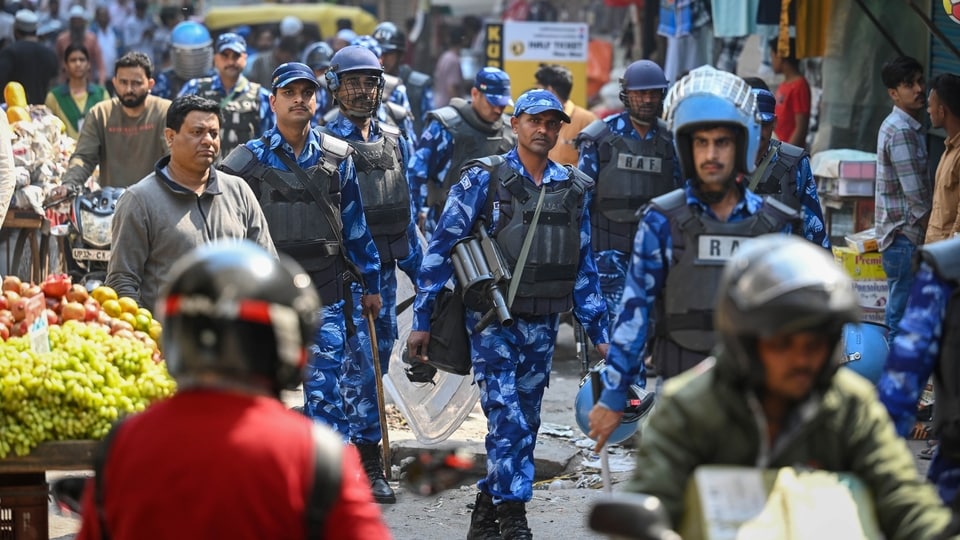
Read here: Flag marches in parts of Delhi after CAA comes into force
The controversial law — which fast-tracks citizenship to Hindu, Sikh, Jain, Buddhist, Parsi and Christian communities who entered India from three neighbouring countries on or before December 31, 2014 — was implemented on Monday.
“Persons granted citizenship by registration or naturalisation under section 6B of the Citizenship Act shall be deemed to be a citizen of India from the date of his/her entry into India,” stated a document posted by the ministry on the portal — https://indiancitizenshiponline.nic.in/#caa — also launched on Tuesday.
This means there’s no start date for citizenship under CAA, and only an end date.
Section 6B was inserted in the Citizenship (Amendment) Act for acquisition of citizenship by naturalisation by migrants under CAA, which triggered sweeping protests across India, but especially in the Northeast and Bengal, when it was first passed in 2019.
The law was implemented on Monday after the government issued its rules, more than four years after it was passed by Parliament. The 39-page notification issued by the home ministry stated the rules will come into force from Monday, the date of publication in the official gazette.
The announcement, in keeping with the Bharatiya Janata Party’s (BJP) promise in its 2019 manifesto, was criticised by Opposition parties who said the timing of the notification is linked to the coming elections. The law was passed in December 2019, but the underlying rules were not framed. Its passage resulted in protests, which petered out only with the Covid-19 pandemic, and a clutch of petitions that are pending before the Supreme Court.
On Tuesday, an application was filed in the Supreme Court seeking a direction to the Centre to stay the implementation of the CAA rules till the pendency of petitions challenging the constitutional validity of the law. The application, filed by the Indian Union Muslim League (IUML), which is one of the petitioners who have challenged the citizenship law, sought the court’s direction to ensure no coercive action is taken against people belonging to the Muslim community pending adjudication of the writ petitions.
The online portal allows individuals to create a login and then submit their applications. “The Citizenship (Amendment) Rules, 2024 under the CAA-2019 have been notified. A new portal has been launched; persons eligible under CAA-2019 can apply for citizenship on this portal,” said the ministry on X.
A mobile application, CAA-2019, will also be launched shortly to facilitate applications through mobile, the ministry said.
The list of frequently asked questions (FAQs), seen by HT, further asserts that a person from six minority communities in Pakistan, Afghanistan and Bangladesh applying for citizenship will be eligible for it if they fulfil the following criteria: “he/she has either resided in India or been in the service of a government in India or partly the one and partly the other, throughout the period of 12 months immediately preceding the date of the application”; “during the 14 years immediately preceding the said period of 12 months, he/she has either resided in India or been in the service of a government of India, or partly the one and partly the other, for periods amounting in the aggregate to not less than five years”; “he/she is a good character”; “he/she have an adequate knowledge of a language specified in the eighth schedule to the constitution of India”.
In a case where a valid passport or visa is not available, the FAQs state the person will be eligible only if he or she has entered India before December 31, 2014, and have been exempted under passport act or foreigners act. The applicants must also provide an eligibility certificate from the locally reputed community institution stating that the person “belongs to Hindi/ Sikh/ Buddhist/ Jain/ Parsi/ Christian community and continues to be a member of the community”.
The BJP sought to take credit for fulfilling a key promise and hit out at the Opposition.
Speaking on the law at a social media volunteers meeting of the BJP in Secunderabad on Tuesday, Union home minister Amit Shah said the Congress had ignored minorities from these three countries since Independence.
“We had said we will bring CAA. The Congress party opposed it. Since Independence, it was a promise of the Congress and makers of our Constitution that citizenship will be granted to those persecuted on religious grounds in Bangladesh, Afghanistan and Pakistan, who come to India. But, due to appeasement and vote-bank politics, the Congress party opposed the CAA,” Shah said.
The home minister said millions of people from Pakistan and Bangladesh who came to India felt insulted as they were not granted citizenship. “Prime Minister Narendra Modi honoured them (the refugees) by implementing CAA,” Shah added.
The home ministry also clarified that CAA will not take away anyone’s citizenship. “Many misconceptions have been spread regarding CAA. It will not take away citizenship of any Indian citizen, irrespective of religion,” said a MHA spokesperson on Tuesday.
“CAA removes legal barriers to rehabilitation and citizenship to members of these six communities. It will give a dignified life to refugees who have suffered for decades, and such citizenship rights will protect their cultural, linguistic, and social identity. Besides, it will also ensure economic, commercial, free movement, and property purchase rights,” said a MHA official who didn’t want to be named.
But the Opposition maintained that the rules were a poll gimmick that would hurt minorities and the constitutional framework.
Read here: ‘Discriminatory’: Opposition looks to corner government amid CAA row
“Why did they do it when elections were around? They have done it for the elections. We oppose religion-based citizenship,” Karnataka chief minister Siddaramaiah told reporters.
Tamil Nadu CM MK Stalin dismissed CAA as “divisive and bereft of any use” and asserted that it will not be implemented in the state.


